

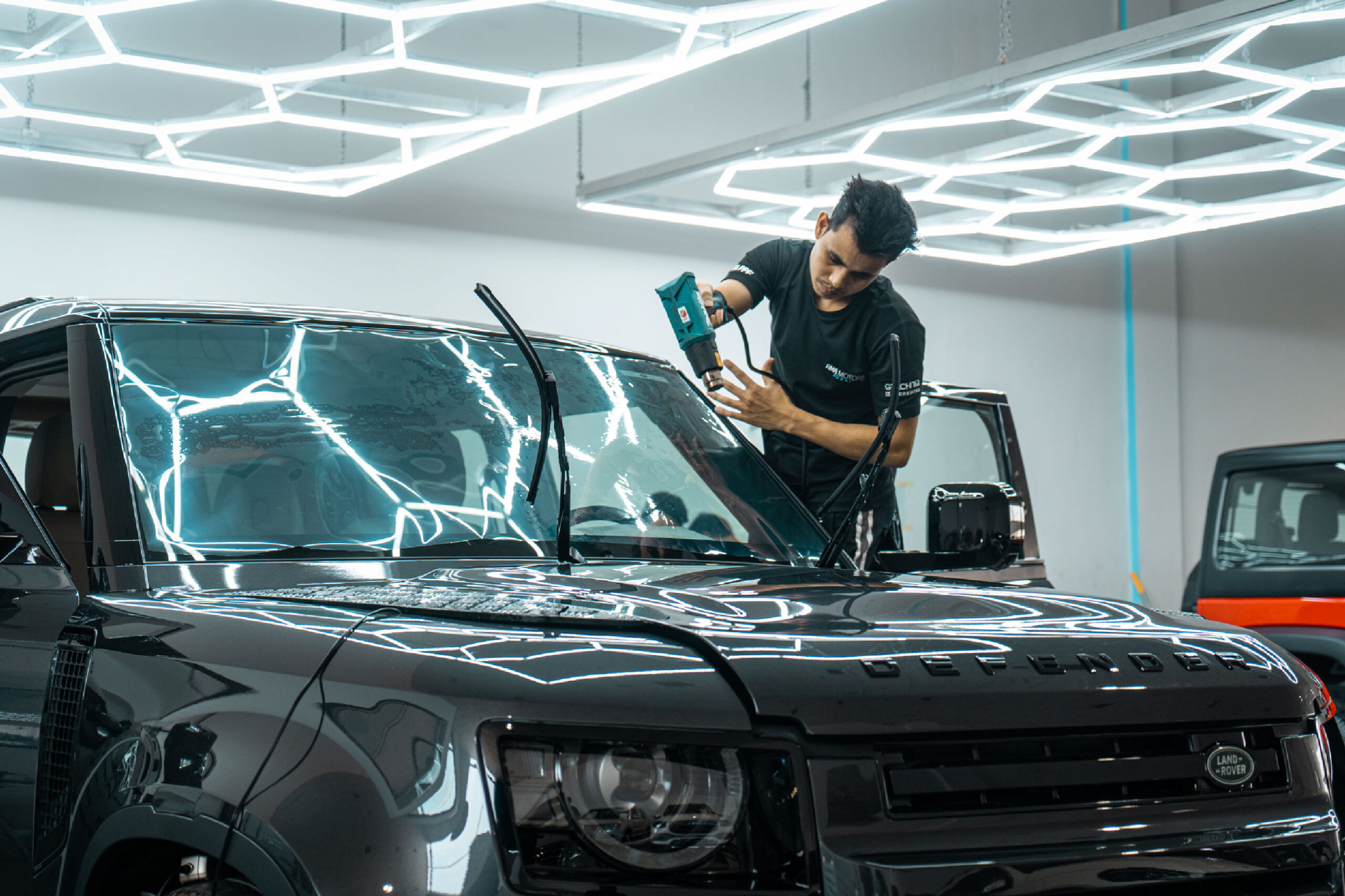
In the Dubai car scene, there’s an unwritten rule: if you want to survive the summer, you go dark. We’ve all seen the cars crawling through Al Quoz with film so black it looks like the windows were painted shut. The common logic is that if you can’t see into the car, the heat can’t get in either.
But as a self-proclaimed petrolhead, I’ve always hated the “cave” feeling of a 5% or even a 20% tint. I love the “fishbowl” aesthetic of modern luxury cars, and more importantly, I value my ability to see a delivery bike in my blind spot at 10 PM.
Last summer, I decided to run an experiment. I stripped off my old, dark film and replaced it with a window tint boasting a 70% VLT (Visible Light Transmission). Here is the technical reality of how I kept my car cool while staying 100% legal and 100% transparent.
The Science: Why Darkness is a Distraction
The biggest lesson I learned from this experiment is that our eyes are terrible at measuring heat. We equate “brightness” with “heat,” but in the electromagnetic spectrum, they are two very different things.
- Visible Light (VLT): This is the 400nm to 700nm range that we see. It only accounts for about 44% of the sun’s total energy.
- Infrared Radiation (IR): This is the invisible energy from 700nm to 2500nm. This is the “heat” you feel burning your skin. It accounts for roughly 53% of the solar energy entering your car.
By choosing a high-end nano-ceramic car window tint, I was able to select a film that is “spectrally selective.” This means it allows 70% of the visible light through (keeping the car looking clear and legal) while blocking over 90% of the infrared heat. In short: I kept the light, but I killed the fire.
The “Fishbowl” Advantage
Driving with 70% VLT in Dubai feels like a superpower. While everyone else is squinting through dark film or rolling their windows down to park, I have crystal-clear high-definition vision.
- Safety First: Night driving on the E11 became significantly less stressful. Without the artificial “dimming” of a dark tint, my peripheral vision was restored.
- The Aesthetic: On a modern car, clear glass looks expensive. It shows off the interior craftsmanship and the ambient lighting that manufacturers spend millions designing.
- RTA Compliance: With a 70% film, there is zero anxiety at a police checkpoint. It is well within the legal threshold, meaning I never have to worry about the dreaded “remove on the spot” order.
The Installer’s Role in the “Nitty-Gritty”
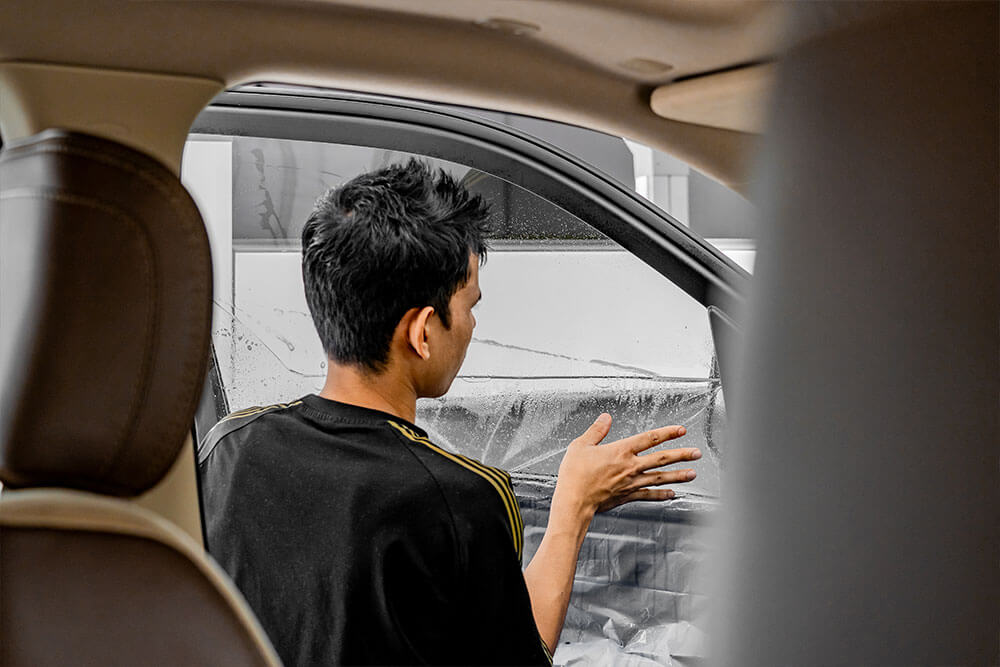
This experiment would have failed if I had used a low-grade film from a mall parking lot. High-VLT films are actually harder to install perfectly because there is no dark pigment to hide imperfections. Every speck of dust or uneven edge is magnified.
I consulted with the team at RMA PPF to find the right material. What I appreciate about them is that they aren’t just a service center; they are an enthusiast-led studio. These are petrolheads who actually understand the nitty-gritty physics of TSER (Total Solar Energy Rejected) versus IRR (Infrared Rejection).
They explained that for a 70% VLT experiment to work, the film had to have a high-performance ceramic density. Their expertise in the “nitty-gritty” of glass preparation ensured that the film bonded at a molecular level with zero “haze”—a common side effect of cheap light tints. Their reputation for excellence comes from this technical obsession; they didn’t just give me a shade; they gave me a thermal solution.
The Verdict: Did it Stay Cool?
The results were staggering. Even on a 48°C afternoon in July, my steering wheel was cool to the touch. Because the film was blocking the majority of the IR energy, my AC reached a comfortable temperature in half the time it used to.
I’ve proved to myself that you don’t need to live in a dark cave to survive the UAE summer. By prioritizing the “nitty-gritty” specs over the shade of the film, you can have a car that is safe, legal, and freezing cold.

Get In Touch
Stay Connected For Ultimate Car Care
 sales@rmappf.ae