

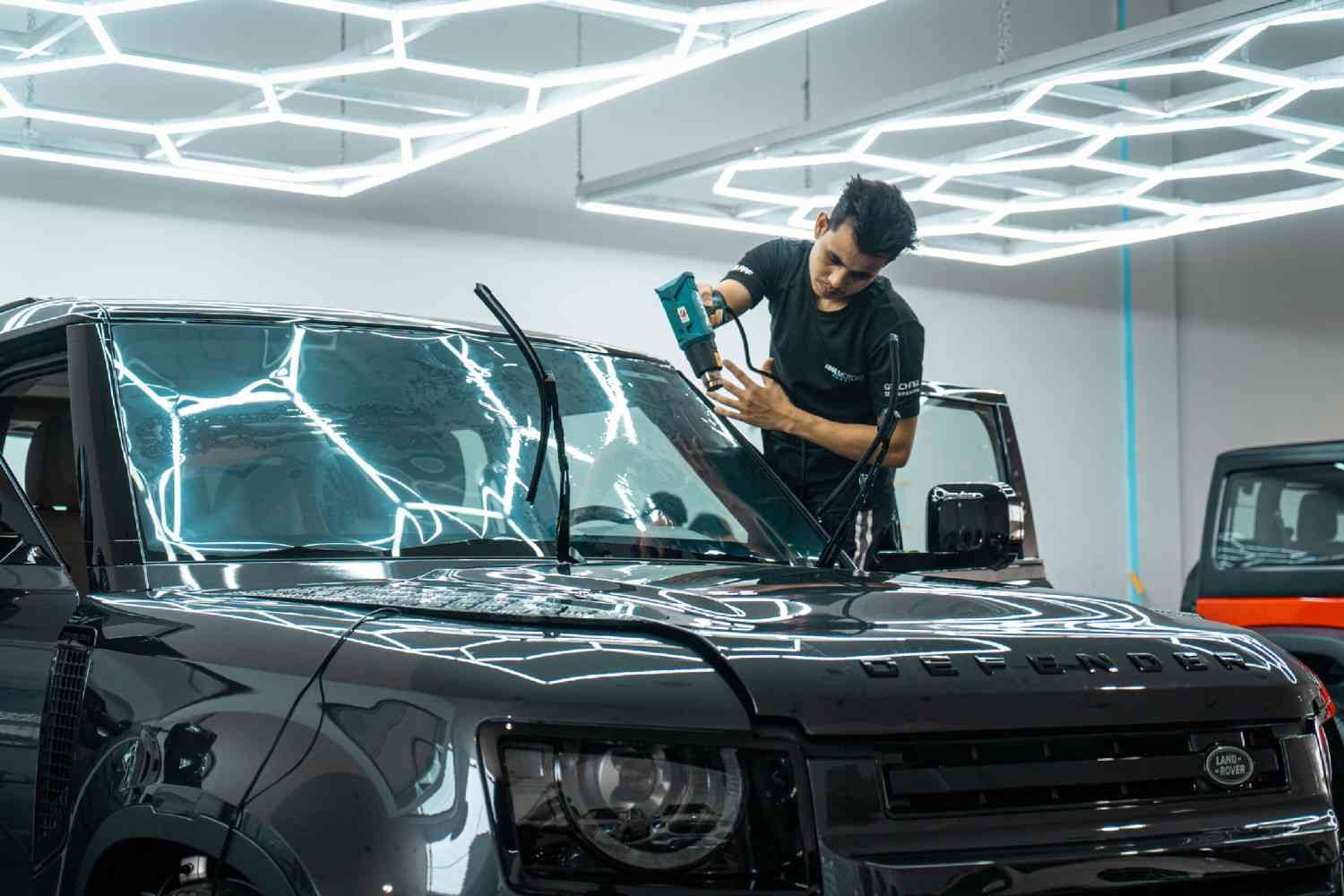
Most of us view window tinting as a simple transaction: you pick a shade, wait an hour in a lounge, and drive away with a cooler car. But after years of owning different vehicles in Dubai, I’ve realized that there are several “nitty-gritty” details that even the best shops often forget to mention until the film is already on the glass.
If you’re planning on upgrading your ride this season, here is the technical reality check I wish someone had given me years ago.
1. The “Dot Matrix” Mystery
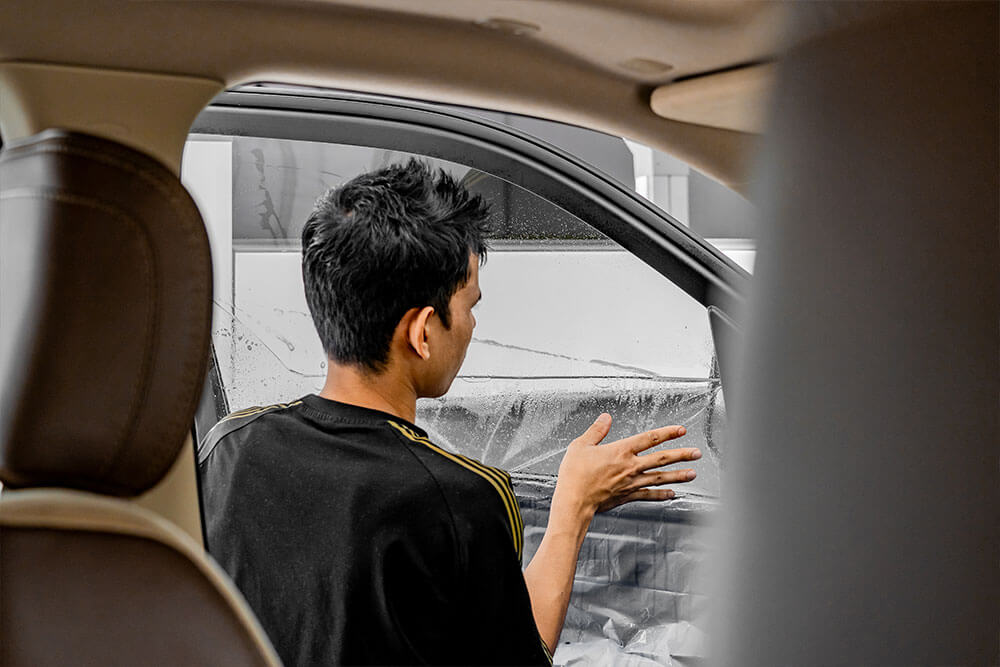
Have you ever noticed those tiny black ceramic dots around the edges of your windows? That’s called the “frit” or dot matrix. Because these dots are raised slightly off the glass, the window tint cannot physically bond to the spaces between them.
The result is often a thin, silver-looking border around the edge of the film. It’s not a defect or a “bad install”—it’s physics. While some enthusiast-led studios use specialized techniques to minimize this look, you should expect a slight visual difference where the glass meets the trim.
2. Tint is a “Magnifying Glass” for Scratches
A common myth is that car window tint will hide pre-existing scratches on your glass. In reality, it does the exact opposite.
Because the film is applied to the inside, the dark background creates a high-contrast environment that makes even the tiniest “hairline” scratch on the exterior glass stand out.
Before you commit to a high-end film, do a thorough inspection of your glass under a shop light. If your glass is heavily pitted from years of sand abrasion, the tint might highlight those battle scars.
3. The “Low-Haze” Period is Real
For the first 3 to 7 days after installation, your vision through the glass might look slightly “milky” or hazy. This is especially true with high-performance nano-ceramic films.
Don’t panic and don’t try to “push” the haze out. This is simply the residual mounting solution evaporating through the porous structure of the film. In the Dubai heat, this usually clears up quickly, but during the winter months, it can take a bit longer. Patience is the key to a perfect cure.
4. Ammonia is the “Tint Killer”
Once you have a car window tint installed, your relationship with standard household glass cleaners must end. Most “blue” glass cleaners contain ammonia, which is a chemical solvent that eats through the scratch-resistant top coat of the film.
Over time, ammonia will cause the film to become brittle and lose its luster. To keep your tint looking factory-fresh, stick to pH-neutral, ammonia-free cleaners or simply a damp microfiber cloth.
5. Why the “Enthusiast” Approach Matters
In a market saturated with “quick-fix” shops, the difference lies in the hands of the person holding the squeegee. Most shops see a car as a job number; a specialized studio sees it as a technical challenge.
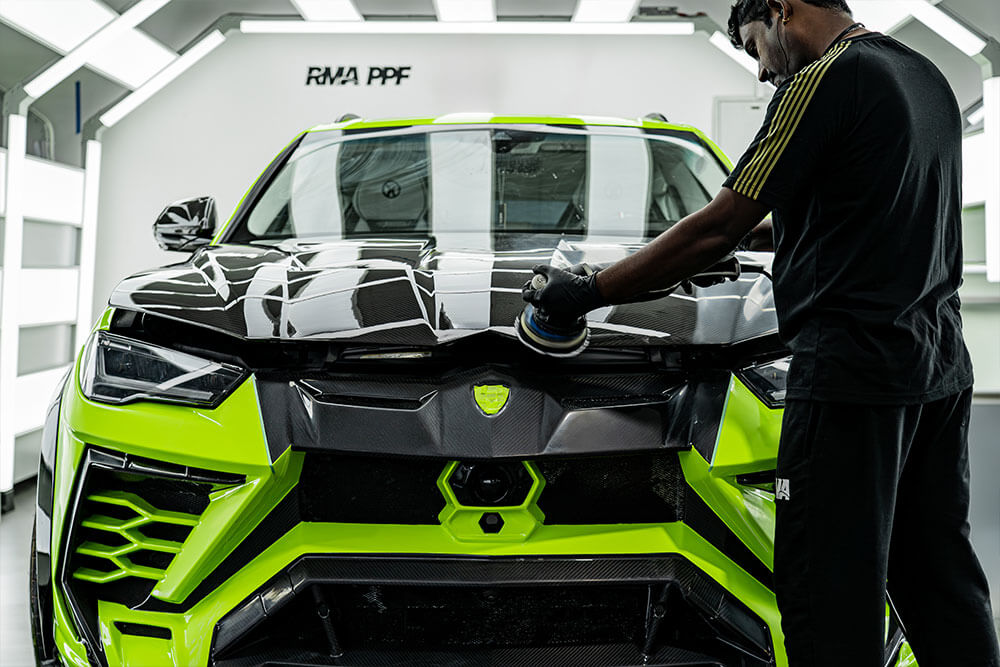
For instance, the team at RMA PPF approaches tinting from a pure petrolhead perspective. They are car enthusiasts who understand the nitty-gritty of why a specific edge needs to be heat-shrunk or why a certain gasket needs to be cleared of sand before the film is laid. They don’t just “tint windows”—they understand the chemical evolution of the adhesives and how they react to the thermal expansion of high-end automotive glass. Their reputation for excellence isn’t built on marketing; it’s built on these small, technical obsessions.
The Verdict
Window tinting is one of the best investments you can make for your comfort in the UAE, but going in with the right expectations makes the experience much smoother. Know your glass, understand the curing process, and most importantly, choose a team that obsesses over the details as much as you do.

Get In Touch
Stay Connected For Ultimate Car Care
 sales@rmappf.ae