

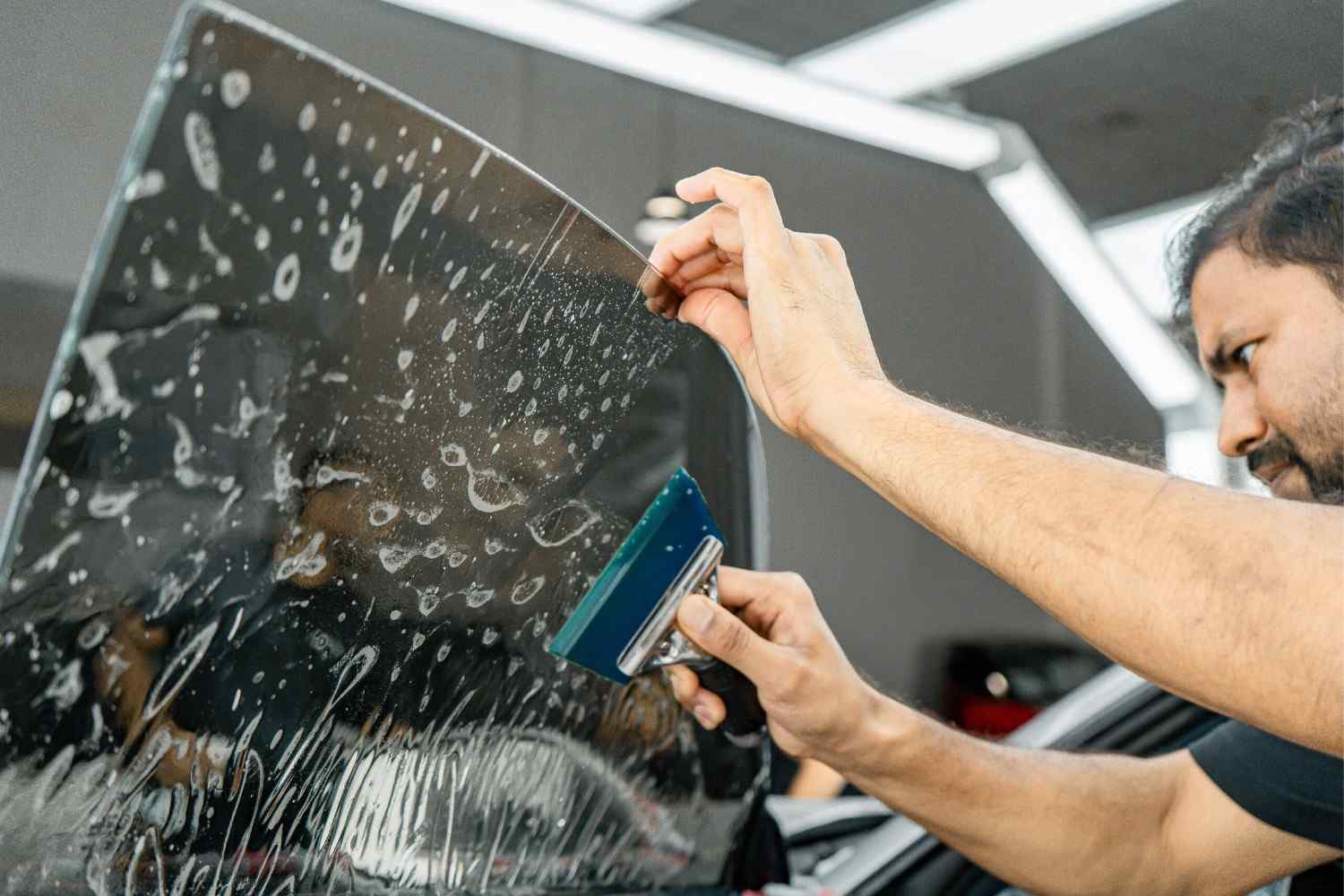
When most drivers shop for window tinting, they are focused on two things: how cool the car stays and how dark the windows look. But there is a third, “invisible” factor that rarely gets discussed in the showroom but matters immensely in the event of an accident or a break-in: Structural Glass Reinforcement.
In a city like Dubai, where high-speed highway driving and extreme thermal expansion are daily realities, your window film acts as a secondary “skin” for your glass. While neither is a substitute for dedicated ballistic security film, the way Ceramic and Carbon films are constructed changes how they reinforce your windows.
Today, we’re looking at the structural science behind these two premium contenders.
The Carbon Matrix: Flexible Strength
Carbon window films are constructed using microscopic carbon particles infused into the polyester layer. From a structural standpoint, carbon is a fascinating material.
- Tensile Flexibility: Carbon films are remarkably “stiff” yet flexible. In the event of a window shattering—perhaps from a stray rock on the E11—the carbon layer acts as a high-tensile web.
- The “Safety Net” Effect: Carbon particles are excellent at holding the polyester together. If the tempered glass “cubes” upon impact, a high-quality carbon film is very effective at keeping those shards attached to the film, preventing them from spraying into the cabin and injuring passengers.
- Durability: Carbon doesn’t break down easily, meaning its reinforcing properties stay consistent for the life of the film.
The Ceramic Lattice: The Rigid Guardian
Ceramic films take a different approach. They use nano-ceramic particles that are chemically bonded into a dense, incredibly strong lattice structure.
- Increased Rigidity: Ceramic particles are inherently harder than carbon. When applied to glass, ceramic film increases the overall “stiffness” of the window pane.
- Thermal Stress Resistance: Because ceramic film is the king of heat rejection, it actually protects the glass from “thermal shock.” In the UAE, glass can expand and contract rapidly when moving from 50°C outdoor heat into a 18°C basement garage. Ceramic film helps distribute this heat more evenly across the glass surface, reducing the risk of stress cracks.
- Laminated Bond: The adhesive technology used in premium ceramic window tinting is often more advanced, creating a near-permanent bond that makes the glass significantly harder to punch through compared to an untreated window.
The Verdict: Which Wins for Safety?
If we are talking purely about reinforcement, the winner is often Ceramic, but with a caveat.
- Ceramic offers better protection against the causes of glass failure (like thermal stress) and provides a slightly more rigid barrier against blunt force. Its high-tech construction makes the glass feel more “solid.”
- Carbon is an excellent choice for those who want a “shatter-trap” that remains flexible. It is a massive upgrade over cheap dyed films, which offer almost zero structural integrity.
More Than Just a Shade
At the end of the day, any high-quality window tinting is better than none. A car without film is protected only by the factory tempering. By adding a layer of Carbon or Ceramic film, you are adding a layer of shatter protection that could save your skin—literally—in an emergency.
While we always recommend Ceramic for the ultimate in heat rejection, the added peace of mind knowing your glass is structurally reinforced is a benefit that you’ll hopefully never have to test, but you’ll be glad is there.


Get In Touch
Stay Connected For Ultimate Car Care
 sales@rmappf.ae