


There is a specific stage of “car ownership regret” that only hits when you’re standing in a bright parking lot and realize your windows are no longer charcoal grey. They are a distinct, sickly shade of grape juice.
When I first got my window tint installed, I was proud of the deal I’d found. I paid about a quarter of what the “premium” studios were asking. It looked fine for the first summer. But by the time the second Dubai summer rolled around, the transformation was complete. I wasn’t driving a modern car anymore; I was driving a rolling throwback to a 1994 sedan with failing film.
If you’re currently looking through a violet-hued windshield, here is the technical breakdown of what is actually happening to your glass and how I finally managed to resolve it.
The Science of the “Purple Shift”
I used to think the purple color was just “sunburn.” It turns out, it’s a total chemical failure.
Cheap car window tint is typically made by layering dyes onto a polyester film. To get that grey or black look, manufacturers mix primary colors—usually yellow, red, and blue. In the extreme UV environment of the UAE, the yellow and red dyes are the first to break down molecularly because they are less stable under high-energy radiation.
When the yellow and red pigments vanish, you’re left with the blue/purple base. This isn’t just an aesthetic issue; it’s a sign that the film has lost its ability to block heat. When your tint turns purple, the UV inhibitors have likely failed, meaning your interior plastics and your skin are now being blasted with radiation.
The “Management” Phase: A Losing Battle
For a few months, I tried to ignore it. But the “nitty-gritty” reality of a failing tint is that it becomes a safety hazard.
- Visibility Loss: The dye breakdown causes the film to become “cloudy,” which creates a massive glare from oncoming headlights at night.
- The Sticky Situation: As the dyes fail, the adhesive usually starts to “gas out,” which is the precursor to those ugly bubbles that are impossible to remove.
I realized that “managing” a purple tint isn’t about living with it; it’s about realizing that the film is now doing more harm than good.
How I Fixed It (The Right Way)
I learned the hard way that you cannot “fix” a purple tint. You have to perform a total reset. I decided to stop hunting for a bargain and started looking for a team that understood the material science of automotive surfaces.
I ended up at RMA PPF.
The difference was in the “nitty-gritty” of the process. They explained that the most dangerous part of a purple tint is the removal. Cheap, degraded film often leaves a thick, toxic layer of adhesive on the glass that can ruin rear-defroster lines if handled by an amateur with a scraper.
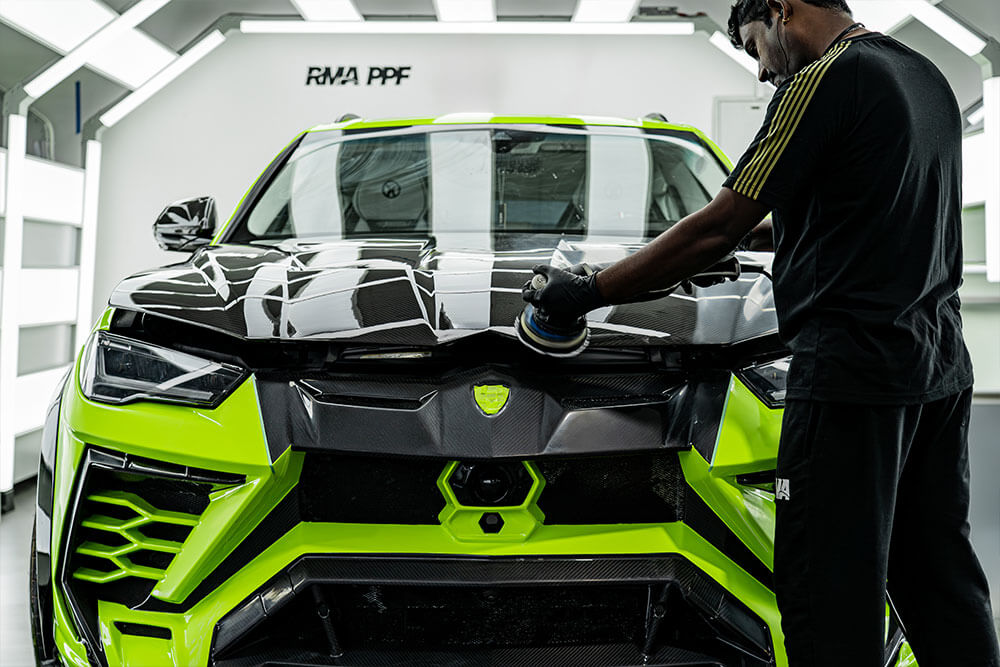
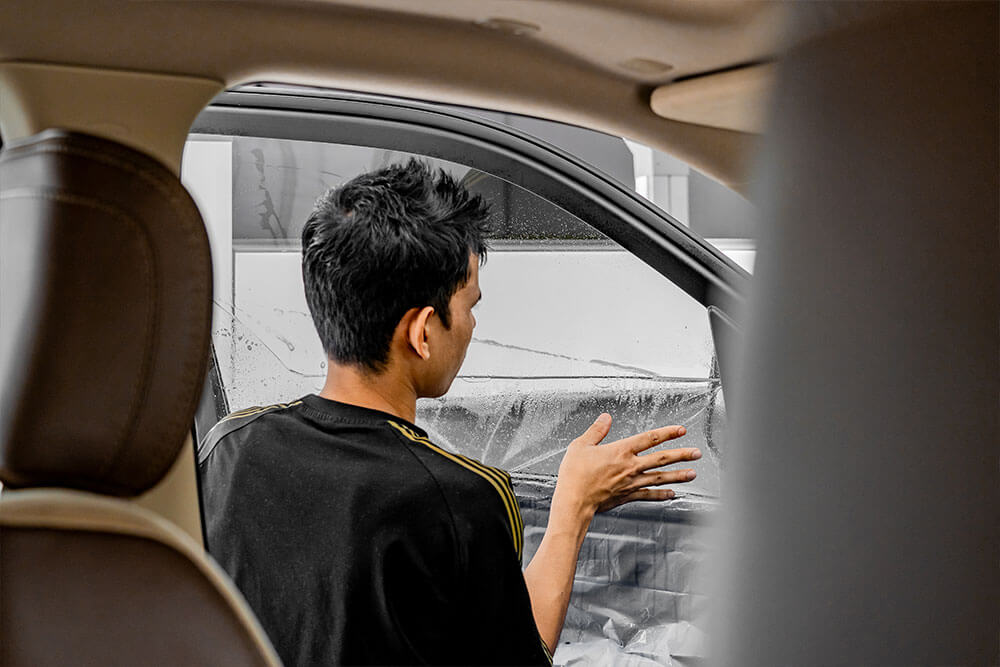
The team at RMA are genuine car enthusiasts who treat the removal as a surgical procedure. They used controlled steam and specialized non-abrasive cleaners to ensure the glass was returned to a factory-pure state before applying new film.
The Upgrade: Why Ceramic Wins
To ensure I’d never see purple again, I swapped the old dyed film for a high-performance nano-ceramic window tint. Because ceramic films use non-organic, spectrally selective particles instead of unstable dyes, they are physically incapable of turning purple. They don’t rely on color to block heat; they rely on science.
The Verdict
If your tint is turning purple, your car is effectively telling you that its protection has expired. Don’t wait for it to start bubbling or peeling.
The lesson I learned is that “cheap” is the most expensive way to tint a car. By choosing a team of petrolheads who obsess over the technical details, I finally got the deep, neutral finish I wanted—and more importantly, a cabin that actually stays cool in the Dubai heat.

Get In Touch
Stay Connected For Ultimate Car Care
 sales@rmappf.ae