

In the shimmering metropolis of Dubai, we spend approximately 90% of our time in climate-controlled environments. While the air conditioning provides a necessary sanctuary from the 45°C heat, it creates a silent crisis for our skin’s structural integrity.
To understand collagen restoration, we must first understand the unique “desiccation” effect of the Dubai indoor lifestyle.
The “Dry Room” Effect: Why Indoor Air is the Enemy
Air conditioning functions by removing moisture from the air. In a typical Dubai office or high-rise apartment, humidity levels can drop below 20%. This creates a steep “osmotic gradient” between your skin and the environment.
When the air is thirsty, it drinks from your dermis. This leads to Transepidermal Water Loss (TEWL). But the damage isn’t just surface-level dryness; it is a direct assault on the collagen matrix.
The Mechanobiology of Collagen
Collagen fibers are the “scaffolding” of the skin. They require a hydrated environment to maintain their elasticity and tensile strength.
- Dehydrated Fibroblasts: The cells responsible for producing collagen (fibroblasts) become sluggish in dry conditions.
- Micro-Inflammation: Chronic dryness triggers low-grade inflammation, which activates enzymes called Matrix Metalloproteinases (MMPs). These enzymes act like microscopic scissors, chopping up healthy collagen chains.
The Pillars of Collagen Restoration in a Desert Climate
Restoring a youthful “bounce” in a desiccated environment requires more than a thick moisturizer. It requires a multi-phasic scientific approach.
1. Re-establishing the Hydration Reservoir
Before we can build collagen, we must stabilize the environment. Medical-grade Hyaluronic Acid (HA) treatments—often referred to as “Skin Boosters”—are the gold standard in Dubai.
- The Science: Unlike topical creams, injectable HA acts as an internal sponge, holding 1,000 times its weight in water directly within the dermis. This “re-inflates” the extracellular matrix, giving fibroblasts the hydrated playground they need to function.
2. Bio-Stimulatory Interventions
To truly restore collagen, we must “trick” the skin into a healing state.
- Polynucleotides & PLLA: Advanced bio-stimulators like Poly-L-Lactic Acid (PLLA) act as a chemical signal. They tell the body to ramp up collagen production over a period of 3-6 months.
- Radiofrequency (RF) Microneedling: This technology uses controlled thermal energy to create “micro-wounds.” The heat denatures old, damaged collagen, triggering a massive regenerative response that replaces brittle fibers with fresh, supple Type I collagen.
3. The Antioxidant Shield
Dubai’s interiors are often flooded with “High Energy Visible” (HEV) blue light from screens and artificial lighting.
- Restoration Secret:
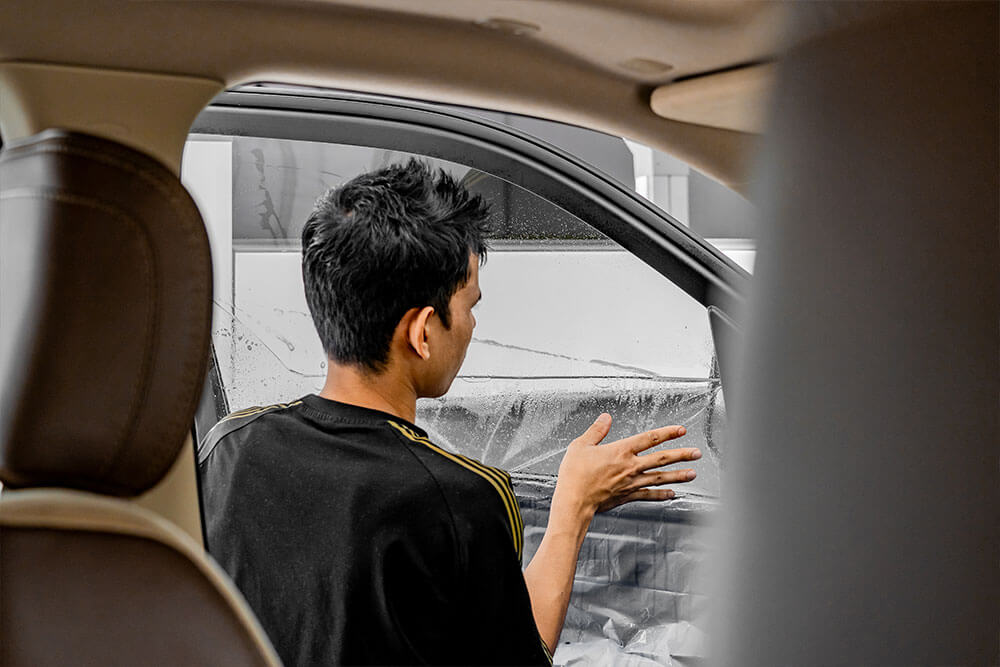
- Integrating Vitamin C and Ferulic acid into your routine is essential. These antioxidants neutralize the free radicals generated by both UV seepage and indoor pollutants—much like UV protection window tint in Dubai shields against environmental exposure—preventing the “browning” and degradation of newly formed collagen.
The Dubai Protocol: A Daily Strategy
Restoration is a continuous process. To combat the desiccated interior air, your regimen should follow the Protect-Hydrate-Stimulate model:
- Morning: Vitamin C serum + a lipid-rich barrier cream to “lock in” moisture against the AC.
- Evening: Retinoids or Peptides to signal collagen synthesis during the circadian repair cycle.
- Environment: A dedicated humidifier in the bedroom is the unsung hero of collagen preservation, maintaining a 40-50% humidity “sweet spot” while you sleep.
Conclusion: Engineering Resilience
Collagen restoration in Dubai is an engineering challenge. We are fighting an environment designed for machines, not biological tissue. By combining clinical bio-stimulation with a rigorous focus on moisture retention, it is possible to maintain a radiant, high-density complexion even in the driest of skyscraper interiors.

Get In Touch
Stay Connected For Ultimate Car Care
 sales@rmappf.ae