

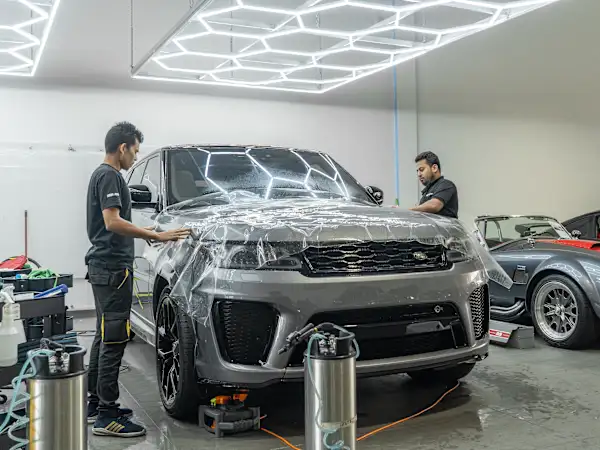
It’s a common misconception that once you’ve installed paint protection film on your car, you need to treat it with a level of delicacy that makes washing a chore. The thought of a powerful pressure washer aimed at your PPF car can be intimidating, conjuring up images of peeling edges and a ruined finish. But is this fear justified? Can a pressure washer really damage a high-quality PPF?
The short answer is yes and no. A properly installed, high-grade PPF is incredibly durable and designed to withstand the rigors of modern car care. However, improper technique or a careless approach can absolutely compromise the film. We’re here to clear up the confusion and give you a simple guide on how to safely and effectively pressure wash your PPF-protected car.
The Power of Precision: When Pressure Washing is Safe
The idea that pressure washing a PPF car is dangerous often stems from experiences with low-quality film or improper installation. A premium PPF applied by a skilled technician, such as those at RMA PPF in PPF Dubai, is a robust, seamless shield. It’s designed to be cleaned with the very tools you use for regular maintenance.
A pressure washer, when used correctly, is actually one of the most effective tools for cleaning a PPF-protected vehicle. The high-pressure water stream is excellent at dislodging dirt, dust, and grime without requiring any physical contact with the film. This minimizes the risk of introducing fine scratches and swirl marks that can be caused by rubbing a wash mitt over a dirty surface.
The key is to follow a few simple, non-negotiable rules.
The Rules of Safe Pressure Washing: Your Go-To Guide
To ensure you maintain the integrity of your paint protection film and get a perfect, scratch-free wash every time, follow these guidelines:
Keep Your Distance: This is the most important rule. Never place the pressure washer nozzle too close to the surface of the film. A distance of at least one to two meters is a safe starting point. This gives the water stream enough space to fan out and reduce its focused pressure, effectively cleaning the surface without putting stress on the film’s edges.
Angle Matters: Always spray the water at a wide angle to the car’s surface. Avoid pointing the nozzle directly at the edges or seams of the film. Directing a high-pressure stream at a delicate edge is the fastest way to cause it to lift and peel.
Know Your Washer’s Power: A residential pressure washer is usually fine. However, industrial-grade washers with extremely high PSI can be a different story. If you’re unsure about the power of your machine, start with a lower pressure setting and maintain a safe distance.
Use a Wide-Angle Nozzle: The narrower the nozzle’s angle, the more concentrated and powerful the water stream. Using a 25-degree or 40-degree nozzle tip will give you a wider, safer spray pattern. A “zero-degree” nozzle is too aggressive and should be avoided at all costs.
Let the Film Cure: In the first 48 hours to a week after installation, avoid pressure washing completely. The film’s adhesive is still curing, and the force of a pressure washer can cause the film to shift, bubble, or lift prematurely.
The Verdict: Fact Over Fiction
The fear of pressure washing a PPF-protected car is largely a myth rooted in old-school film technology and poor installation practices. Modern PPF is an incredibly resilient product designed to make your life easier. By following these simple rules of distance and angle, you can use a pressure washer as an effective and safe tool to maintain your car’s impeccable finish. Don’t let misinformation stop you from giving your investment the professional-level wash it deserves.


Get In Touch
Stay Connected For Ultimate Car Care
 sales@rmappf.ae