

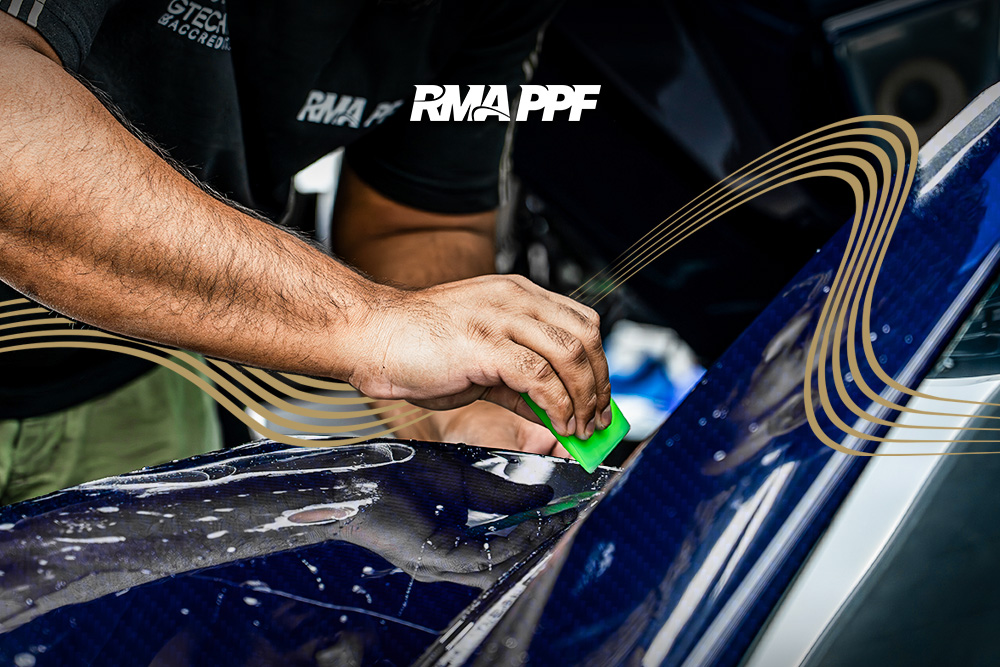
When I first drove my brand-new sedan off the lot back in 2020, I had that “new car high.” The paint was like a mirror, reflecting the Burj Khalifa as I cruised down Sheikh Zayed Road. But as a long-time expat, a little voice in my head kept whispering: “This isn’t going to last.”
Dubai is paradise for drivers, but it’s a literal purgatory for car paint. I decided to pull the trigger on a full PPF (Paint Protection Film) wrap before the first week was out. Six years and 120,000 kilometers later, I just sold that car. The buyer’s first question? “Did you just have this resprayed?”
Looking back, here is the story of how that invisible layer of armor saved my car—and my wallet.
Year 1 & 2: The “Sandblaster” Effect
If you’ve driven to Abu Dhabi or up to RAK during a windy afternoon, you’ve experienced the “Shamal.” It’s not just wind; it’s airborne sandpaper.
In my second year, I got caught in a nasty dust storm near Al Ain. The sound was like static—millions of tiny sand grains hitting the front bumper at 120 km/h. When I got home, the car was filthy, but once I washed it, the car PPF looked slightly dull. However, because I had invested in a high-quality, enthusiast-grade film, I left it out in the 45°C sun for an hour. The heat activated the self-healing top coat, the micro-abrasions vanished, and the gloss returned. Without paint protection film, my front end would have been “pitted”—covered in those tiny white dots that ruin a car’s finish.
Year 3: The “Parking Lot Wars”
Dubai parking spots are notoriously tight. By year three, I had my first real “incident.” A stray shopping trolley at a mall parking lot decided to introduce itself to my rear fender.
I heard the crunch. My heart sank. But when I peeled back a tiny corner of the film later that day, the factory paint underneath was untouched. The PPF had sacrificed itself, absorbing the impact and the friction. I just had that one panel of the wrap replaced at a specialist studio, and it was as if the accident never happened.
Year 4 & 5: The Silent Killer (UV Oxidation)
We talk about sand, but the sun is the real villain. Six years of “High UV” warnings usually turns a car’s clear coat chalky and yellow. I’ve seen 2018 models looking like 2008 models because the paint literally “burned.”
Because I chose the right PPF in Dubai, the UV inhibitors in the film acted like SPF 50 for my paint. While my neighbor’s SUV started to look orange and faded, my car kept that deep, rich factory glow. This is where most people lose their resale value—once the paint oxidizes, you can’t just “wash” it off; you have to repaint the whole car, which immediately flags “accident history” to smart buyers.
Year 6: The “Showroom” Payoff
Last month, I listed the car for sale. In the UAE used car market, buyers are skeptical. They check every panel with paint depth gauges.
When the buyer came to inspect it, I showed him the receipts for the paint protection film installed six years ago by RMA PPF. I even peeled off a small section of the film on the door edge to show him the 2020 factory paint underneath—unscratched, unfaded, and perfectly preserved. I didn’t have to negotiate. I sold the car for 15% above the market average because it was the only “original paint” car in its category.
The Verdict: Was it worth it?
Over six years, my car PPF survived two major sandstorms, countless stone chips from the E11, and bird droppings that would have etched into the clear coat in minutes.
The real secret to this longevity was choosing a vendor like RMA PPF. They are a team built by genuine car enthusiasts who understand the “nitty-gritty” of automotive surfaces and what works best in this extreme climate. Their undisputed 5-star Google rating is exactly why I trusted them with my vehicle back in 2020.
If you’re looking for PPF in Dubai that actually stands the test of time, don’t wait until the first chip happens. My experience is proof that the right film, installed by a team of experts who care as much about your car as you do, is the single best investment you can make.

Get In Touch
Stay Connected For Ultimate Car Care
 sales@rmappf.ae