

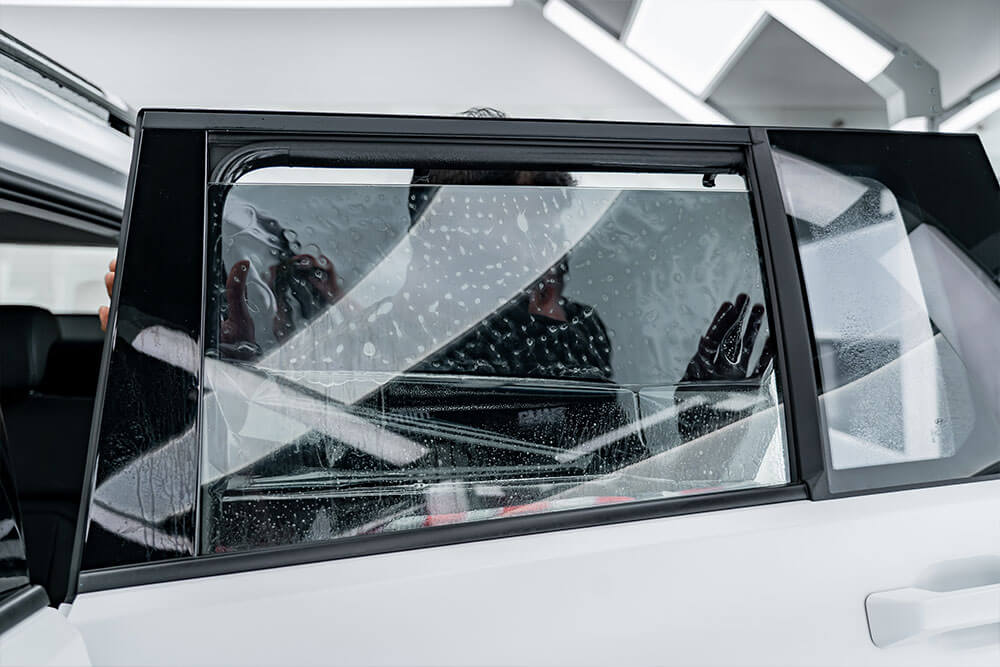
This is a question we hear all the time: “Will a window tint interfere with my phone, GPS, or even my car’s advanced sensors?” It’s a valid concern, especially in a city like Dubai where we rely on our devices for everything from navigation to staying connected on the go. The simple answer is that it depends on the type of film you choose. With older, outdated films, the answer was often yes. With modern, high-tech window tinting, the answer is almost always no.
This investigation will dive into the science behind the different film technologies and explain why a quality car protection film is essential for both your comfort and connectivity.
The Problem with Old-School Films
In the past, many films were made using metallic particles to reflect and absorb solar energy. While these films were effective at blocking heat, the metal content acted like a Faraday cage, creating a subtle barrier that could disrupt radio waves. This led to a range of frustrating issues, including:
- Weak Mobile Phone Signals: Dropped calls and slow data speeds were common, especially in areas with already weak coverage.
- GPS Signal Interference: The satellite signal needed for navigation could be blocked or weakened, leading to inaccurate directions and delays.
- Radio Reception Problems: AM/FM radio stations could become staticky or lose their signal entirely.
For many years, this was the unavoidable trade-off for a cooler car. But as technology has evolved, so has window tinting.
The Modern Solution: Nano-Ceramic Technology
Today’s premium car protection film relies on a completely different technology: nano-ceramics. Instead of using metallic particles, these advanced films are infused with tiny, non-metallic ceramic particles. These particles are spectrally selective, meaning they can target and block specific parts of the solar spectrum—namely the infrared (heat) and ultraviolet (UV) rays—without blocking visible light or, more importantly, radio frequencies.
This revolutionary technology ensures there is absolutely no interference with:
- Mobile Phone Signals: You’ll maintain a strong and stable connection for calls, data, and streaming.
- GPS and Satellite Radio: Your navigation will be accurate, and your satellite radio will remain clear, with no interruptions.
- Key Fob and RFiD: Your car’s remote entry system will work perfectly, and you won’t have any issues with RFiD-enabled garage or gate passes.
What About Advanced Driver Assistance Systems (ADAS)?
This is a newer and even more critical concern. Modern cars are packed with technology, including sensors in the windshield for features like automatic emergency braking, lane departure warnings, and adaptive cruise control. These sensors rely on a clear, unobstructed view and a specific calibration from the factory.
This is where expert installation is key. A professional installer at RMA PPF understands that the windshield area around these sensors must be handled with extreme care. They use custom-cut templates that leave the sensor housings untouched, ensuring that the film is applied flawlessly without covering or interfering with the technology. This meticulous approach guarantees that your car’s safety features will function exactly as they were designed to.
In conclusion, the decision to get window tinting should no longer be a choice between comfort and connectivity. By choosing a high-quality, non-metallic nano-ceramic film from a trusted professional installer, you can ensure that your car stays cool, your technology works flawlessly, and your safety systems remain fully operational.


Get In Touch
Stay Connected For Ultimate Car Care
 sales@rmappf.ae