

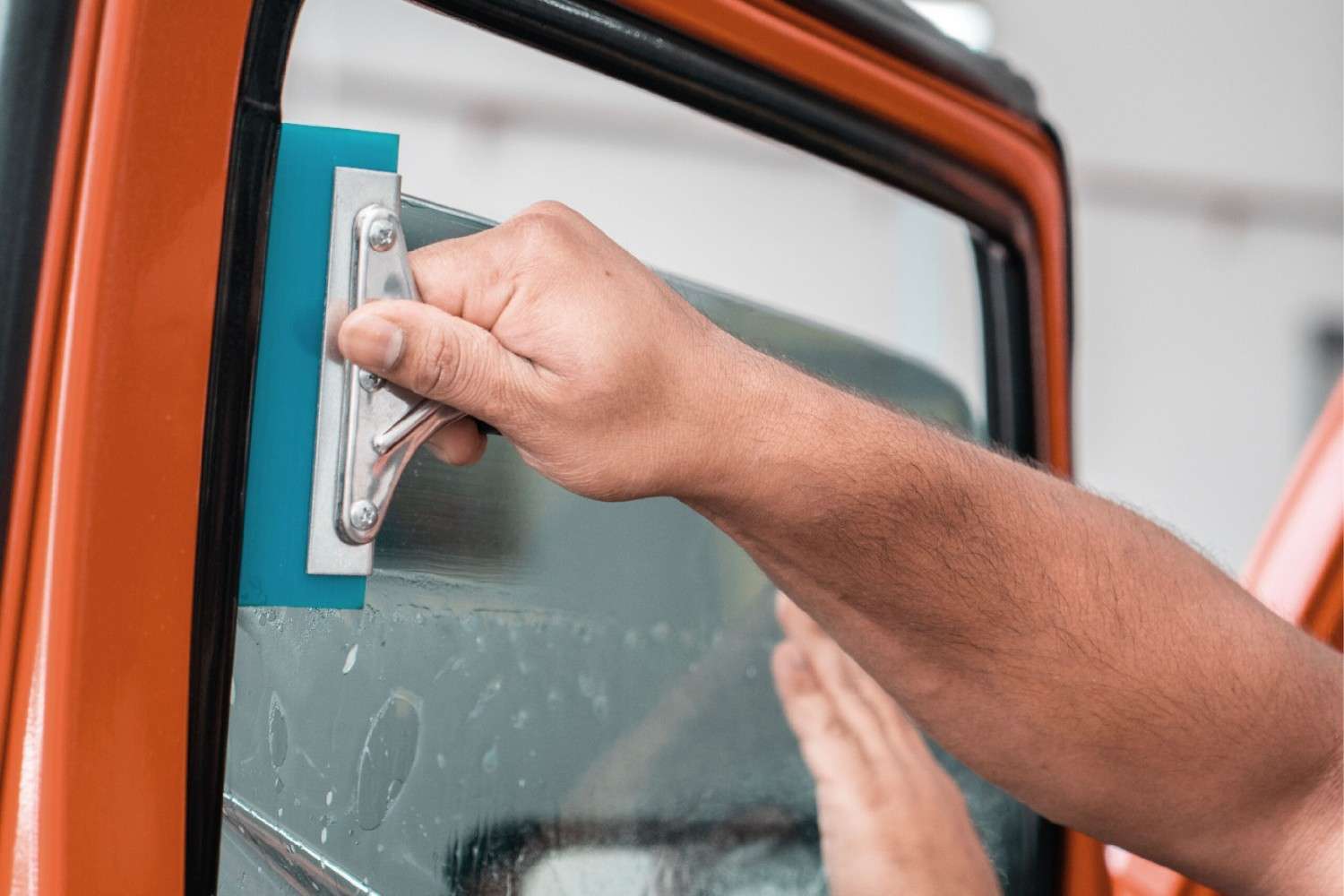
When you look at a car with window tinting, how can you tell the difference between a “budget” job and a world-class installation? Most people look for bubbles or purple fading, but the real pros look at one specific place: the top edge of the roll-down windows.
If you see a visible gap of clear glass—usually 2 to 5 millimeters wide—between the top of the film and the top of the window, you’re looking at a standard installation. But if the film seems to be part of the glass itself, perfectly flush with the edge, you’ve found the “Gold Standard” of the industry: Micro-Shaving.
The Gap Problem: Standard vs. Premium
Standard window tinting shops often leave a small gap at the top to prevent the film from peeling. Because the rubber seals at the top of the door frame are tight, a film that is “too close” to the edge might catch on the seal every time you roll the window up, eventually causing the tint to lift or “finger.”
To avoid this, average installers play it safe by leaving a gap. While functional, it looks unfinished and creates a distracting “light leak” that breaks the visual flow of the car’s profile.
The Art of Micro-Shaving (Edge Contouring)
Micro-shaving, also known as edge contouring, is a high-skill manual technique where the film is applied slightly past the edge of the glass and then meticulously trimmed away.
- Over-Filing: The installer applies the film so it hangs just a fraction over the top edge of the window.
- The Surgical Cut: Using a specialized stainless steel blade held at a precise 45-degree angle, the installer “shaves” the excess film. This doesn’t just cut the film; it follows the microscopic curve of the glass edge.
- Smooth Transition: The result is a film edge that is tapered perfectly to the glass. It’s so flush that you can run your finger across the top of the window and won’t even feel the transition from glass to film.
Why It Matters for Your Vehicle
Beyond the obvious aesthetic boost, micro-shaving offers several functional benefits for high-end window tinting:
- Zero Light Gaps: When you’re driving under the intense Dubai sun, even a tiny gap at the top of the window can create a “prism effect,” letting in a sliver of blinding light that reflects off your interior trim.
- Reduced Friction: Because the film is contoured to the glass, it is less likely to catch on the window weatherstripping. This actually increases the longevity of the install, as there is no “lip” for the rubber seal to snag on.
- The “Factory Glass” Illusion: For luxury car owners, the goal of any modification is for it to look original. Micro-shaving makes the tint look like “privacy glass” that was tinted at the factory, rather than a film that was stuck on later.
The Mark of a Master Installer
Micro-shaving is a high-risk, high-reward technique. It requires a steady hand and years of experience; if the blade slips, the glass can be etched or the film ruined. This is why you rarely see it offered at “quick-tint” shops.
When you choose a premium window tinting service, you aren’t just paying for the material—you are paying for the craftsmanship of the edge. It’s a subtle detail that most people won’t notice immediately, but it’s exactly what separates an elite vehicle from the rest of the pack.


Get In Touch
Stay Connected For Ultimate Car Care
 sales@rmappf.ae