

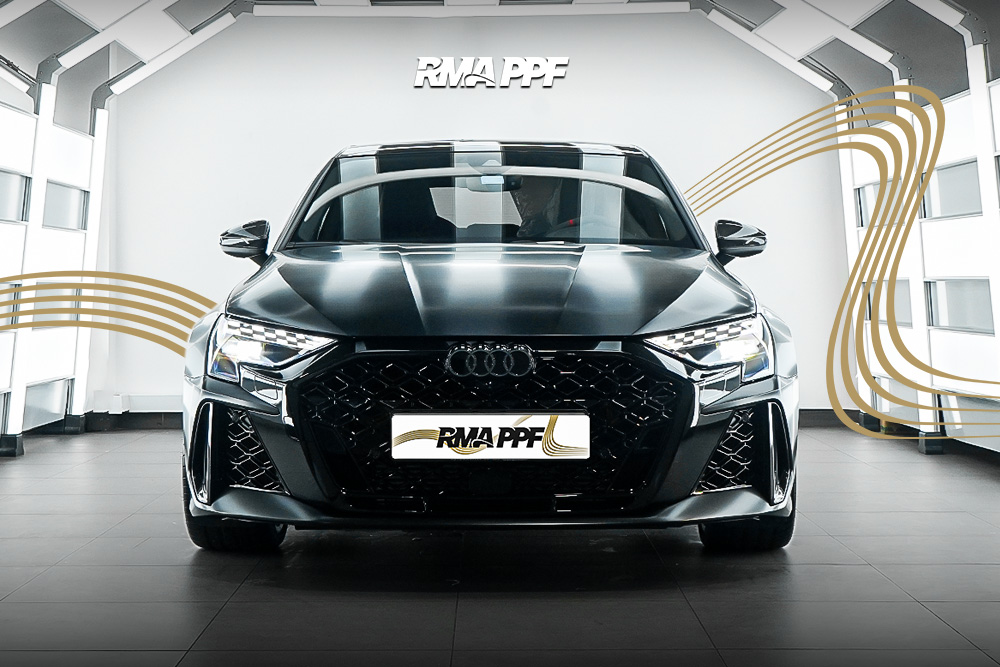
As the automotive world shifts toward a sustainable future, Electric Vehicles (EVs) have become a common sight on the roads of the UAE. While many owners focus on charging infrastructure and range, there is a critical aesthetic and structural detail often overlooked: the vulnerability of EV paintwork. In the harsh climate of dubai, electric vehicles actually require a paint protection film more urgently than their petrol-powered counterparts.
Here is why your EV is a prime candidate for the best PPF.
1. Aerodynamics and “The Flat Face”
Traditional petrol cars require large front grilles to cool internal combustion engines. In contrast, EVs are designed for maximum aerodynamic efficiency to preserve battery range. This often results in a “flat” or “shield-like” front fascia with more painted surface area and fewer openings.
Because there is more exposed paint and less “open space,” your PPF car is effectively a larger target for sandblasting and road debris. Every square inch of that sleek, aerodynamic front is vulnerable to the high-velocity gravel common on Dubai’s highways.
2. The Weight Factor and Tire Debris
EVs are significantly heavier than petrol cars due to their massive battery packs. To handle this weight and maintain efficiency, EVs often use specialized high-torque tires. These tires can be “stickier” and prone to kicking up more road debris, stones, and asphalt chunks. Without car paintwork protection, the rocker panels and lower doors of an EV are subjected to a constant barrage of micro-impacts that can pepper the paint in just a few months of driving.
3. Silent Operation, Higher Speed Perception
Because EVs operate almost silently, drivers often find themselves cruising at higher speeds without the auditory cue of a revving engine. Higher speeds mean higher kinetic energy for every pebble that strikes your hood. Paint protection film acts as a shock absorber, dissipating that energy and preventing the deep pitting that occurs when debris hits at 120 km/h.
4. Resale Value in a Tech-Driven Market
The EV market moves fast, and tech-savvy buyers are meticulous about condition. A used EV with a “sand-blasted” front end or faded paint from UV exposure will struggle to command a premium price. Applying a high-quality PPF on car ensures that when it’s time to upgrade to the next model, your vehicle looks as pristine as the day it left the showroom. Using a TPU-based car protection film prevents the yellowing and cracking that inferior products suffer from in the Middle Eastern heat.
5. Instant Torque and Rear-Arch Wear
The instant torque of an electric motor provides thrilling acceleration, but it also increases the “thrust” of debris from the rear tires against the rear wheel arches. This is a high-impact zone that is often ignored on petrol cars but is a critical area for car paint protection on high-performance electric models.
Conclusion: The Expert Touch
Protecting an EV requires more than just a standard kit; it requires an understanding of the vehicle’s unique lines and high-impact zones. To get the most out of your investment, it is essential to visit a studio that specializes in high-end Aliphatic TPU films and precision installations. By choosing a team that prioritizes premium PPF coating and seamless edge-tucking, you ensure your silent, high-tech machine remains a visual masterpiece long after its first charge. When it comes to your EV, settling for anything less than the best PPF isn’t just a risk to your paint—it’s a risk to your car’s future value.


Get In Touch
Stay Connected For Ultimate Car Care
 sales@rmappf.ae