


I’ve spent the last year running an experiment that most people would think is crazy. In early 2025, I took delivery of two identical silver sedans for my business. Instead of choosing one protection path, I decided to settle the ultimate car detailing debate once and for all.
I had one car treated with a professional-grade ceramic coating and the other with a cutting-edge graphene coating.
Living in Dubai, our cars don’t just “get dirty;” they face a 12-month gauntlet of 50°C heat, abrasive sandstorms, and that strange, salty humidity that eats through a clear coat for breakfast. Here is my honest, “no-marketing-fluff” review of which one actually survived the desert.
The Baseline: The “Invisible” Prep
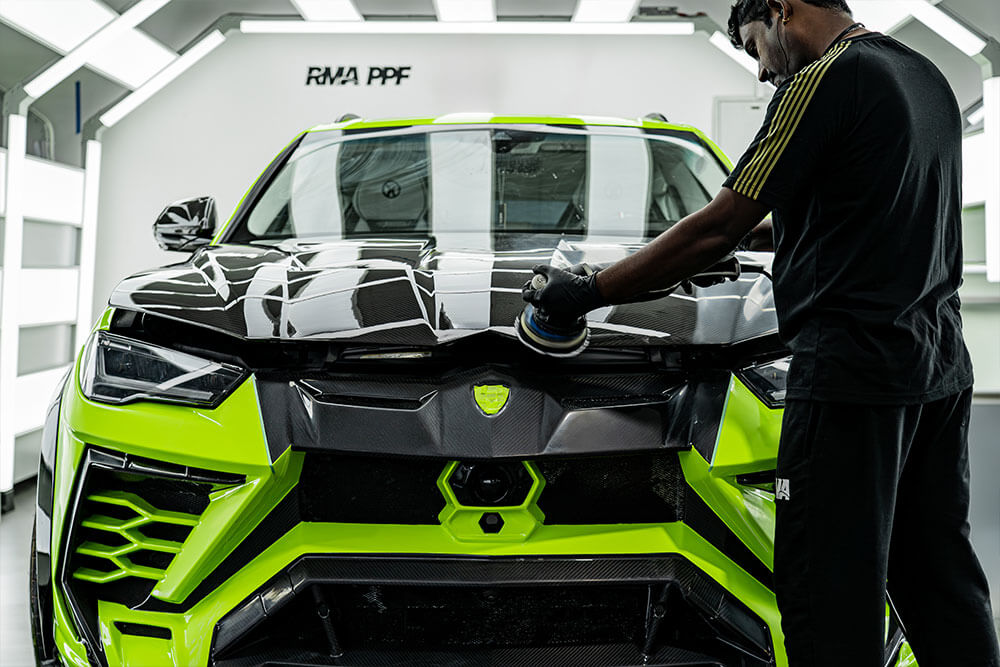
Before either coating touched the cars, I sent them both in for a full paint correction. As any enthusiast knows, a coating is only as good as the surface beneath it. Even though the cars were new, they had transport scratches and iron contamination. After a deep decontamination wash and a two-stage polish, the “canvas” was ready.
Months 1–4: The Honeymoon Phase
For the first few months, both cars were an absolute joy to own. The hydrophobicity on both was staggering. During those rare winter rains, water didn’t just bead; it practically leaped off the car.
- The Ceramic Car: Had a slightly “sharper” gloss. It looked like the car was encased in a thin layer of glass.
- The Graphene Car: Had a “warmer” glow. It wasn’t as reflective as the ceramic, but the color looked deeper, almost like the paint was wet.
Months 5–9: The “Shamal” Reality Check
This is where the desert started to separate the contenders. During the peak of the sandstorm season, I noticed a distinct difference in car detailing maintenance.
One of the biggest claims about graphene coating is its anti-static properties. In Dubai, dust is our primary enemy. I found that the graphene-coated car stayed noticeably cleaner between washes. While the ceramic car seemed to “magnetize” a fine layer of dust by day three, the graphene car was much more resistant to the static charge that usually traps desert sand on a hot panel.
The 12-Month Revelation: The Survivor
After a full cycle of the Dubai seasons, I took both cars back into the light for a final inspection.
The Ceramic Results: The gloss was still 10/10. However, I noticed more “water spotting” on the horizontal surfaces (the hood and roof). Ceramic coatings are famous for water beading, but if those beads dry under the 1:00 PM sun, they can leave mineral deposits.
The Graphene Results: While the “glass-like” pop wasn’t as sharp as the ceramic, the surface was much more uniform. There were significantly fewer water spots, and the coating felt slicker to the touch even after a year of abuse.
Which One Should You Choose?
If I had to do it again, my choice would depend entirely on how you use your car:
- Choose Ceramic if: You want that absolute “Showroom Pop.” If your car is a weekend cruiser or you have a dedicated indoor parking spot, the mirror-like finish of a ceramic coating is hard to beat.
- Choose Graphene if: You have a daily driver that sits outside. The reduced water spotting and dust-repellent nature make it the superior “real-world” shield for the UAE.
Regardless of the chemistry, I’ve learned that the “nitty-gritty” of the application is what truly determines longevity. I consulted with the team at RMA PPF before starting this test, and their insight into UV protection and surface bonding was invaluable. They are a team built by enthusiasts who understand that in this climate, you need more than just a brand name; you need a precision install.

Get In Touch
Stay Connected For Ultimate Car Care
 sales@rmappf.ae