

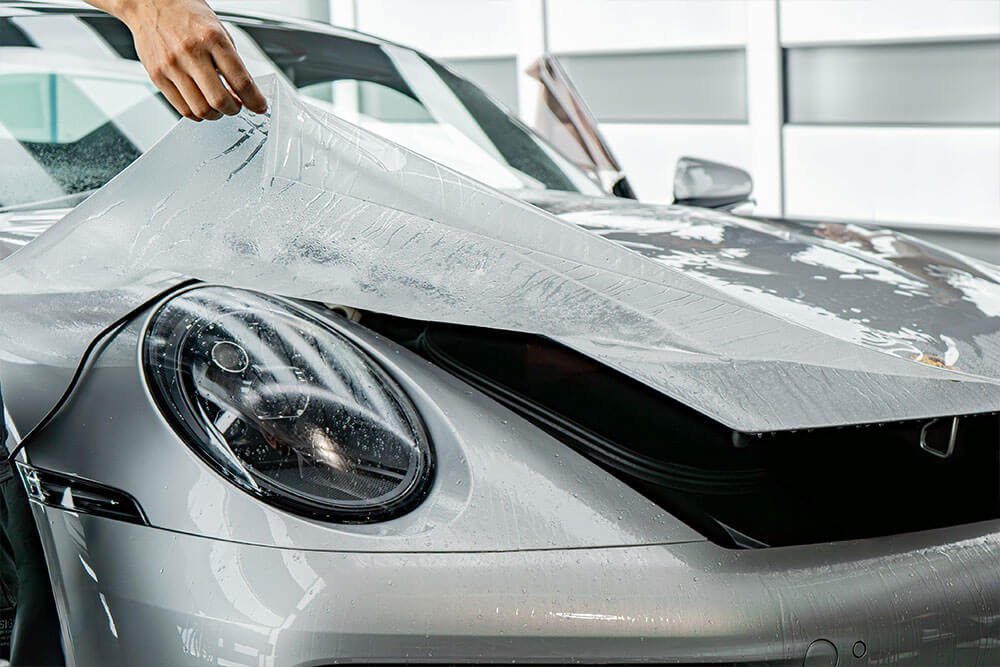
For years, the conversation around paint protection film was focused entirely on the vehicle’s nose and hood. But as automotive design has shifted toward high-gloss “Piano Black” plastics and massive, hyper-sensitive infotainment displays, the battleground for preservation has moved inside the cabin.
At RMA PPF, we are seeing a massive surge in the “Interior PPF” trend. Modern luxury interiors in the UAE are stunning, but they are also incredibly fragile. Here is why applying car PPF to your center console and screens is the only way to keep your cabin looking showroom-fresh.
1. The “Piano Black” Problem
Piano Black trim is a staple of modern interior design, found in everything from a Tesla to a Rolls-Royce. While it looks elegant on day one, it is arguably the most “unforgiving” surface in any car.
- The Issue: Even a clean microfiber towel or the softest touch of a finger can leave behind “spider-web” swirl marks. Within six months of daily use, the high-gloss finish often looks dull and scratched.
- The PPF Fix: Applying a precision-cut paint protection film over these panels creates a deep, permanent gloss. Because the film features “self-healing” technology, any micro-scratches caused by keys, coins, or cleaning will vanish under the heat of the Dubai sun.
2. Protecting the “Digital Cockpit”
The average luxury vehicle features more screen real estate than a laptop. These touchscreens are the primary interface for your AC, navigation, and media, meaning they are constantly subjected to oils, acidity from fingertips, and physical impact.
- The Risk: Standard glass is prone to “glare” and can easily be scratched by rings or jewelry. Furthermore, a replacement screen can be an incredibly costly repair.
- The Solution: Specialized PPF Dubai installers use matte or “satin” finish films for screens. This not only protects the glass from impact but also significantly reduces fingerprints and glare, making the screen easier to read in the bright UAE light.
3. Why “Precision-Cut” Matters for Interiors
Interior car protection film is a game of millimeters. Unlike a hood, where you have large flat surfaces, an interior is a maze of buttons, knobs, and vents. At RMA PPF, we utilize advanced CNC-cutting software to ensure:
- Zero Blade Use: We never cut the film on your delicate leather or wood trim.
- Perfect Fitment: The paint protection film Dubai experts apply will have “zero-gap” tolerances around volume knobs and start buttons.
- OEM Look: Once installed, the film is virtually invisible, preserving the original design intent of the manufacturer.
PPF for EVs: Why Efficiency Starts with a Protected Surface
As Electric Vehicles (EVs) dominate the roads of the UAE, a new benefit of paint protection film has emerged: aerodynamic efficiency. While internal combustion engines rely on air intake for cooling, EVs are designed to be as “slippery” as possible to maximize battery range.
The “Drag” of a Damaged Front End
Every stone chip and “pockmark” on the front bumper of an EV creates microscopic turbulence. On a high-performance EV, the smooth, closed-off grille is essential for maintaining a low coefficient of drag.
- Surface Tension: When your paint is pitted by desert sand, it loses its “slick” properties.
- The PPF Advantage: A high-quality car PPF installation provides a perfectly smooth, hydrophobic surface. By preventing the “sandblasting” effect of Dubai’s highways, PPF Dubai helps maintain the factory-engineered aerodynamics of your Tesla, Lucid, or Taycan.
Protecting the Charging Port and Flaps
The most handled part of an EV is the charging port area. Constant plugging and unplugging, often in dusty conditions, leads to heavy scratching around the port flap. Applying car protection film to these high-traffic areas prevents the paint from wearing down over thousands of charging cycles.
Thermal Management and UV Rejection
The large glass roofs common in EVs contribute to “heat soak,” forcing the battery to work harder to run the AC. While window tinting handles the glass, paint protection film Dubai specialists apply to the body panels helps reject a portion of solar heat before it reaches the metal or composite structure, indirectly supporting better battery health and range.


Get In Touch
Stay Connected For Ultimate Car Care
 sales@rmappf.ae