

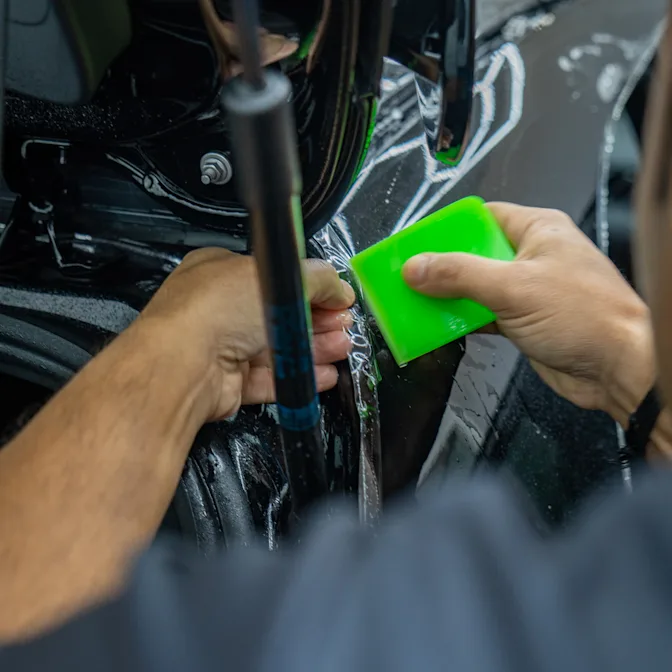
You’ve seen the ads, the YouTube installs, maybe even a TikTok where someone rolls out PPF on their hood and suddenly their car looks bulletproof. The idea is simple: buy some paint protection film, spend a weekend in the garage, and boom—your PPF car is ready to face the road.
But is it really that easy? Or does DIY car protection film come with hidden risks that could cost you more than you save?
The Appeal of DIY PPF
The biggest reason people try to install car protection film themselves comes down to cost. Professional installation isn’t cheap—it can run into thousands depending on coverage. Doing it yourself seems like the budget-friendly way to get paint protection film without the price tag.
Another draw is control. You pick the film, you decide which panels get covered, and you get the satisfaction of protecting your own PPF car. For car enthusiasts who love weekend projects, the idea of rolling up their sleeves and applying PPF feels rewarding.
And in theory, it’s not impossible. With the right tools, a patient mindset, and lots of practice, DIY car protection film installation can give decent results on flat, simple panels.
The Reality Check: Challenges of DIY PPF
Here’s where things get tricky. Installing paint protection film isn’t like applying a phone screen protector—it’s a lot more demanding.
Precision is Everything
PPF car films are cut to fit complex curves, edges, and corners. Without pre-cut templates and professional tools, you risk stretching, misaligning, or cutting into your paint.
Dust and Bubbles
One speck of dust under the car protection film can create a permanent bubble. Professionals work in dust-controlled environments for this very reason. At home? Not so easy.
Film Wastage
Roll out a sheet of PPF, make one wrong move, and that expensive film is ruined. With professional installers, mistakes rarely happen, and if they do, they eat the cost—not you.
Durability Issues
A poorly installed paint protection film won’t last as long. Edges lift, dirt sneaks underneath, and instead of protecting your PPF car, the film becomes a problem you’ll need to replace sooner.
The Hidden Dangers of DIY
Beyond the obvious frustrations, there are hidden risks of DIY car protection film you might not expect:
- Paint Damage: Cut too deep when trimming PPF, and you’ll slice straight into your paint. That’s the exact opposite of protection.
- Uneven Coverage: Skipping high-impact areas or misaligning panels means your paint protection film won’t actually defend the most vulnerable spots.
- No Warranty: Many premium PPF car brands only honor warranties if the film is installed by certified professionals. DIY means you’re on your own.
When DIY Might Work
To be fair, DIY car protection film isn’t always a disaster. If you’re covering small, flat areas—like headlights, door sills, or a section of your hood—it can be a manageable project. There are even beginner kits designed for simple applications.
But if you’re thinking about full-front or full-body paint protection film, be prepared for a steep learning curve. For most people, the risk of messing up outweighs the savings.
The Bottom Line
DIY PPF sounds good on paper, but in reality, it’s far more complex than it looks. Sure, you might save some cash upfront, but the risk of bubbles, poor alignment, or even paint damage is very real. A poorly installed car protection film can cost more in the long run than just going to a professional in the first place.
If you’re serious about protecting your ride, the smartest move is trusting experts who install paint protection film every day. That way, your PPF car looks flawless, stays protected, and comes with warranty-backed peace of mind.
Because at the end of the day, the best car protection film is the one you don’t even notice—it’s invisible, durable, and installed right the first time.


Get In Touch
Stay Connected For Ultimate Car Care
 sales@rmappf.ae