

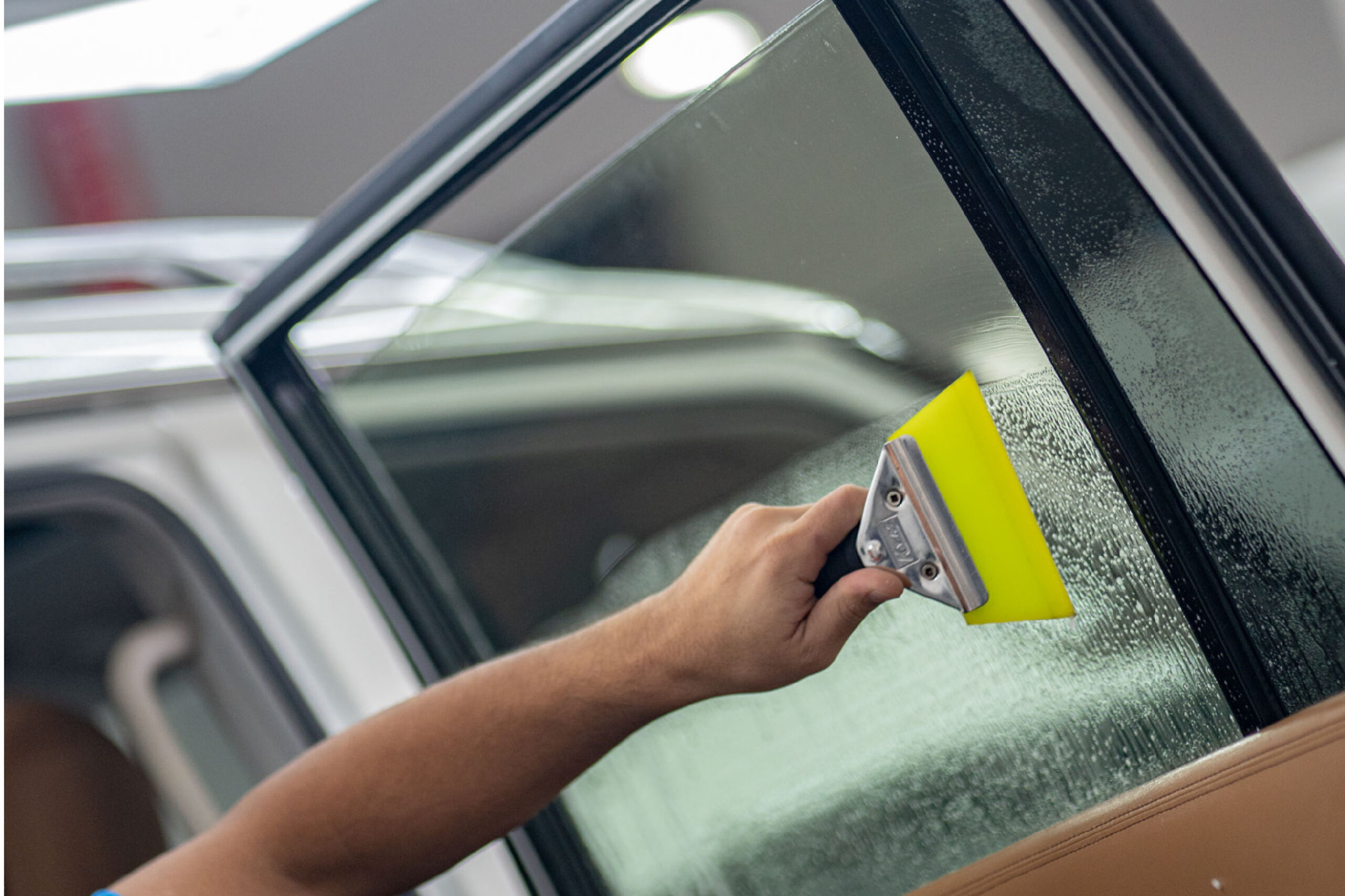
If you’d told me five years ago that the “coolest” cars in Dubai would have windows you could actually see through, I would have laughed. We grew up in a culture where a dark window tint was a status symbol—a shield against both the prying eyes of the public and the relentless glare of the sun.
But walk through any high-end valet stand today, and you’ll see the “Fishbowl Flex.” The 2026 generation of luxury car owners is ditching the “black-hole” look for films that are almost entirely transparent. After researching the latest shifts in automotive glass technology, it’s clear that this isn’t just a fashion statement; it’s a technological necessity.
1. The “Bespoke Interior” Flex
In 2026, luxury isn’t just about the badge on the grille; it’s about the artisan craftsmanship inside the cabin. When you’ve spent an extra 100,000 AED on bespoke Hermès leather, hand-stitched silk floor mats, and open-pore Koa wood trim, why would you hide it behind a 5% tint?
Owners are now opting for high-clarity car window tint because they want the world to see the interior architecture. A clear tint allows the cabin’s ambient lighting and premium materials to be part of the car’s exterior presence.
2. The Rise of “Smart Glass” (SPD-Tech)
Many 2026 luxury models now come equipped with Suspended Particle Device (SPD) SmartGlass. This tech allows the driver to dim the roof and side windows electronically with a slider on the infotainment screen.
When your glass can already turn opaque at the touch of a button, traditional dark window tint becomes redundant. Instead, owners are applying ultra-clear nano-ceramic films to these “smart” windows to provide a permanent layer of Infrared (IR) rejection without interfering with the glass’s ability to change states.
3. The HUD and LiDAR Conflict
Modern luxury cars are essentially supercomputers on wheels. The 2026 models are packed with Augmented Reality (AR) Head-Up Displays and LiDAR sensors mounted behind the glass.
I’ve seen dozens of cases where a “cheap” dark tint distorted the AR projections or interfered with the ADAS (Advanced Driver Assistance Systems) cameras. A crystal-clear, high-index film is the only way to ensure these safety systems function with surgical precision. If your tint is too dark or uses the wrong metallic base, your car might literally “lose its sight” on the highway.
The Science: Rejection Without Darkness
The biggest myth that died in 2026 is that a tint needs to be dark to be cool.
The “nitty-gritty” truth is that heat comes from Infrared radiation, not visible light. I recently saw a test of a 70% “Clear” nano-ceramic film that rejected 97% of IR heat. Meanwhile, an old-school 5% “Limo Tint” was only rejecting about 45%. You could be sitting in a pitch-black car and still be baking, while the guy in the “clear” car next to you is shivering in the AC.
Why Choosing the Right Specialist Matters
When you’re dealing with the complex glass of a 2026 luxury vehicle, you can’t trust a generalist. You need a team that understands the nitty-gritty of sensor calibration and thermal expansion.
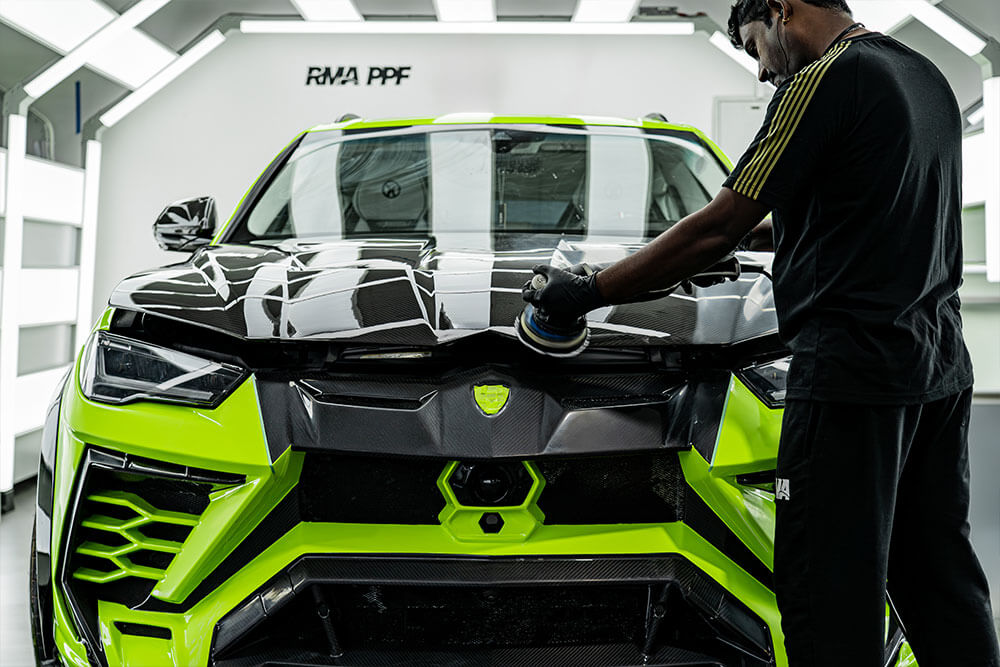
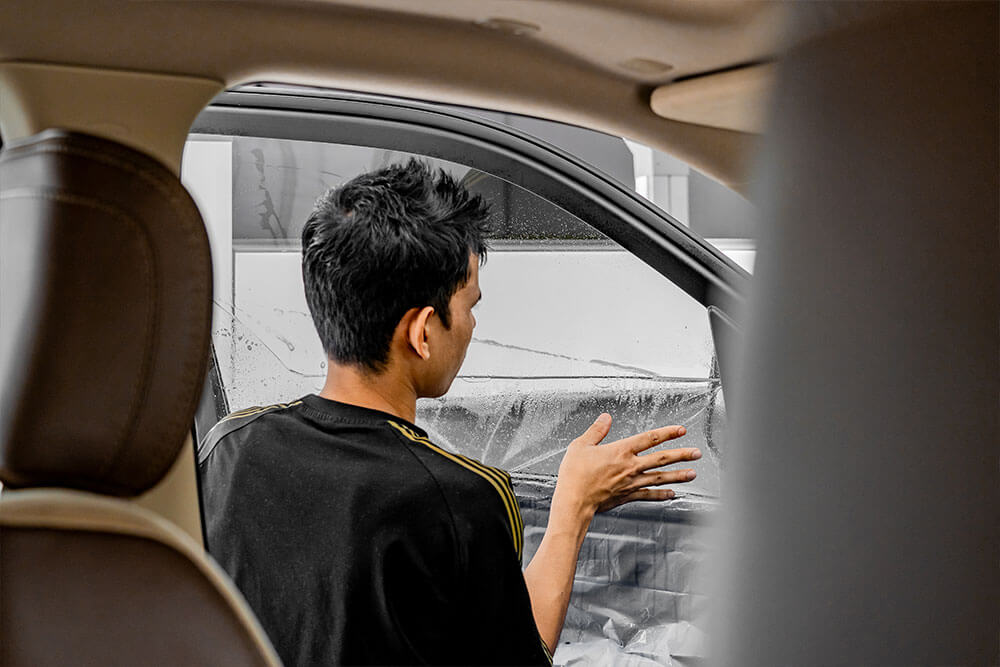
This is why the most discerning owners I know head to RMA PPF. They aren’t just installers; they are genuine car enthusiasts who understand the technical evolution of glass. They specialize in high-clarity, high-performance films that offer the 2026 “Crystal Clear” look while providing a thermal barrier that outperforms the darkest films of the past. Their reputation for excellence comes from their ability to handle these high-tech installs without a single bubble or sensor interference.
The Verdict
The “Limo Tint” is a relic of the past. In 2026, transparency is the new luxury. By choosing a high-VLT, high-IRR window tint, you’re protecting your interior, ensuring your tech works perfectly, and showing off the craftsmanship of your cabin.

Get In Touch
Stay Connected For Ultimate Car Care
 sales@rmappf.ae