

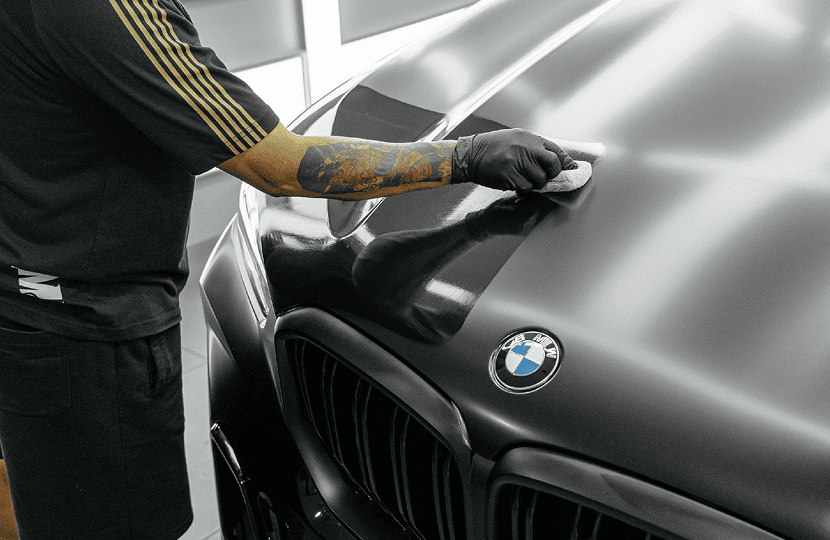
In the world of high-end car detailing, most enthusiasts know that a sponge is a relic of the past. The microfiber towel has long been the gold standard for touching automotive paint. However, there is a deeper, more technical layer to this tool that remains a mystery to many: the GSM (Grams per Square Meter).
The “Micro-Fiber Friction” Theory suggests that using the wrong weight of towel—even a clean one—on specific paint types can be the hidden cause of the swirl marks and “haze” that plague luxury vehicles in the UAE.
Understanding the Metric: What is GSM?
GSM measures the density of the microfiber. Simply put, it tells you how many fibers are packed into a square meter of fabric.
- Low GSM (200–300): Short, tight loops. High “bite” and scrubbing power.
- Medium GSM (300–500): The “all-rounder.” Balanced plushness.
- High GSM (600–1200+): Long, shaggy fibers. Massive liquid absorption and “cushion.”
While a higher GSM feels “softer” to the human hand, it isn’t always safer for your car’s paint.
The Friction Theory: Why “Plush” Can Be Dangerous
The common mistake in car detailing is assuming that the fluffiest towel is the best for every task. Here is why the friction theory matters:
1. The “Drag” Factor on Soft Paint
On “soft” clear coats (common on many Japanese and some British luxury brands), a high-GSM towel (800+) creates a massive amount of surface tension. Because the fibers are so long and dense, they “grab” the paint rather than gliding over it. This microscopic tugging creates friction that can lead to “towel marring”—tiny, straight-line scratches visible only under sunlight or inspection LEDs.
2. The “Leveling” Crisis in Ceramic Coatings
When a detailer is “leveling” (wiping off) a ceramic coating, a high-GSM towel is often the enemy. The plush fibers can actually pull too much of the coating out of the paint’s pores, leading to uneven protection. Conversely, if the towel is too dense, it may skip over “high spots,” leaving behind dark streaks that harden into permanent defects.
3. The “Debris Trap” Logic
A primary goal of car detailing is to move dirt away from the paint. High-GSM towels are designed to trap dust deep within their long fibers. However, if those fibers are too long, they can become heavy and “matted” during the wipe, potentially dragging trapped particles across the surface like a piece of sandpaper.
The Right GSM for the Right Task
To achieve a true “show car” finish, a detailer must match the towel density to the mechanical requirement of the surface:
The “Paint Hardness” Variable
The “Micro-Fiber Friction” Theory also dictates that the towel must be chosen based on the Mohs Scale (hardness) of the car’s clear coat. A towel that works perfectly on a “hard” German ceramic clear coat might cause instant marring on a “soft” vintage restoration. A master detailer doesn’t just reach for a towel; they “read” the paint first.
Conclusion
The next time you watch someone work on your vehicle, look at their towels. Are they using a one-size-fits-all approach, or are they switching tools based on the surface? At the highest levels of car detailing, the difference between a flawless mirror finish and a hazy “swirled” surface often comes down to a few hundred grams of fiber. Understanding the science of GSM is the boundary between a simple car wash and true automotive preservation.


Get In Touch
Stay Connected For Ultimate Car Care
 sales@rmappf.ae