

If you’ve bought a car in the last five years, you know exactly what we’re talking about. Piano black trim—that ultra-glossy, deep black plastic that looks like a million bucks on the showroom floor. It’s elegant, it’s modern, and it’s arguably the most frustrating material ever put inside a vehicle.
Within weeks of ownership, that pristine surface usually looks like it’s been cleaned with a handful of sand. Even a soft microfiber towel or a stray fingernail can leave behind a maze of “spider web” scratches. Because this trim is usually located around high-touch areas like the gear shifter and center console, it’s constantly under attack.
At RMA PPF, we don’t just accept this as “wear and tear.” Through expert car detailing, we’ve mastered the micro-precision fix to restore these surfaces and, more importantly, keep them that way.
Why Piano Black is So Vulnerable
The technical problem with piano black is that it isn’t actually “paint”; it’s usually an unpainted, injection-molded polycarbonate or acrylic.
Unlike your car’s exterior, which has a rugged clear coat designed for car paint protection, interior gloss plastic is incredibly soft. It lacks the UV inhibitors and hardeners found in automotive paint. When light hits these flat, dark surfaces, the contrast between the black background and the white edges of a scratch makes even the smallest defect visible to the naked eye.
The Micro-Precision Fix: Jeweling the Plastic
You can’t just take a heavy-duty buffer to your dashboard. Fixing piano black requires a delicate, tiered approach to car detailing:
- Surgical Cleaning: First, we remove every trace of dust using compressed air and ultra-plush towels. Rubbing even a single grain of sand during the polishing phase will create deeper gouges.
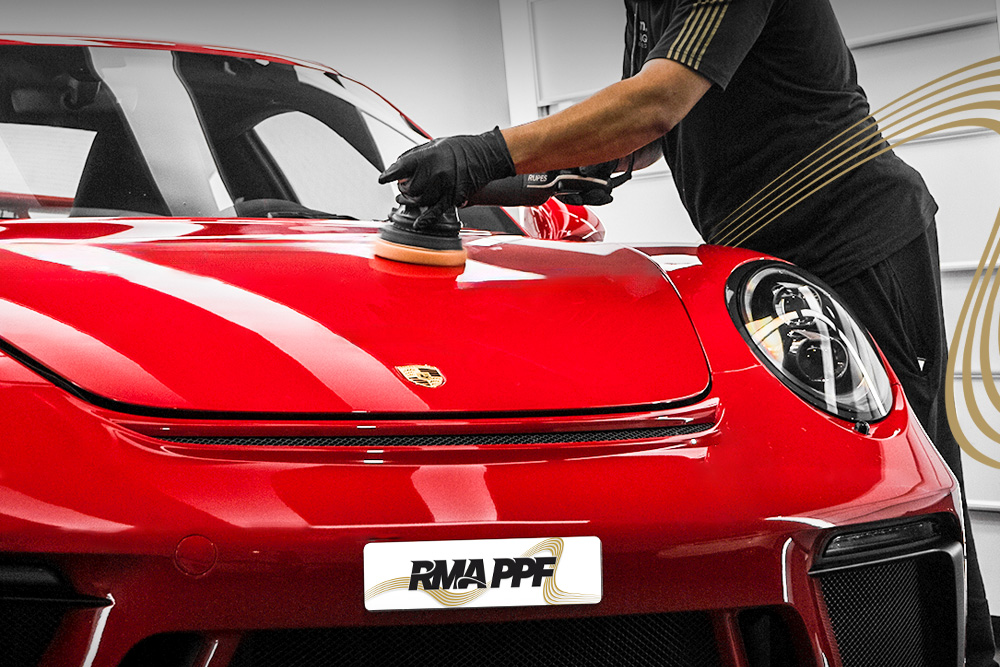
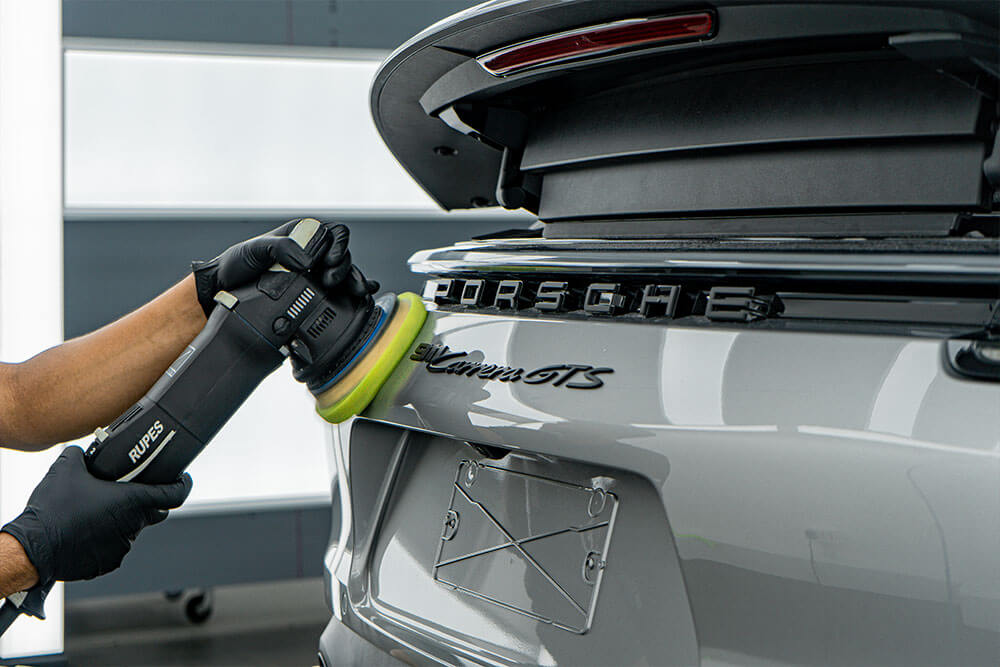
- Micro-Polishing: We use specialized “mini” rotary or dual-action polishers designed for tight spaces. Using a “jeweling” compound—a liquid with incredibly fine abrasives—we slowly heat the plastic surface just enough to level out the micro-scratches without melting the trim.
- Refinement: The goal is to bring back the “optical clarity” of the plastic, making it look like a deep pool of black ink once again.
Preventing the Return of the Swirls
Restoration is only half the battle. If you leave the plastic bare, it will scratch again the very next time you wipe away dust. This is where car paint protection technology crosses over from the exterior to the interior.
- Interior PPF: The “gold standard” fix. We apply a computer-cut, transparent Paint Protection Film directly over the polished piano black. Not only does this make the surface virtually unscratchable, but premium PPF has “self-healing” properties. If you do scuff it, the heat from the sun parked in the Dubai heat will make the scratch disappear.
- Ceramic Coating: For areas where film isn’t an option, a specialized interior ceramic coating adds a layer of chemical hardness, making the trim much slicker and easier to clean without marring.
Don’t Live with the Scratches
Your interior is where you spend 100% of your time while driving. You shouldn’t have to wince every time the sun hits your center console. By applying professional car detailing techniques and high-end car paintwork protection, we can turn your scratched trim back into the luxury statement it was meant to be.


Get In Touch
Stay Connected For Ultimate Car Care
 sales@rmappf.ae