

In the world of exotic and high-end car rentals, a vehicle is only making money when the keys are in a customer’s hand. For fleet owners, the biggest enemy isn’t high mileage—it’s downtime.
A single rock chip on the hood of a Lamborghini or a scuff on the door of a Range Rover doesn’t just hurt the car’s aesthetics; it pulls that asset off the road for days of paintwork, costing thousands in lost rental revenue.
Here is how professional-grade Paint Protection Film (PPF) has become the “secret weapon” for the world’s most successful rental fleets.
1. Eliminating the “Paint Shop Pivot”
Standard maintenance—oil changes, tire rotations, brake checks—can be scheduled. Paint damage cannot. Without PPF, a weekend rental through a construction zone can result in “sandblasting” on the front bumper.
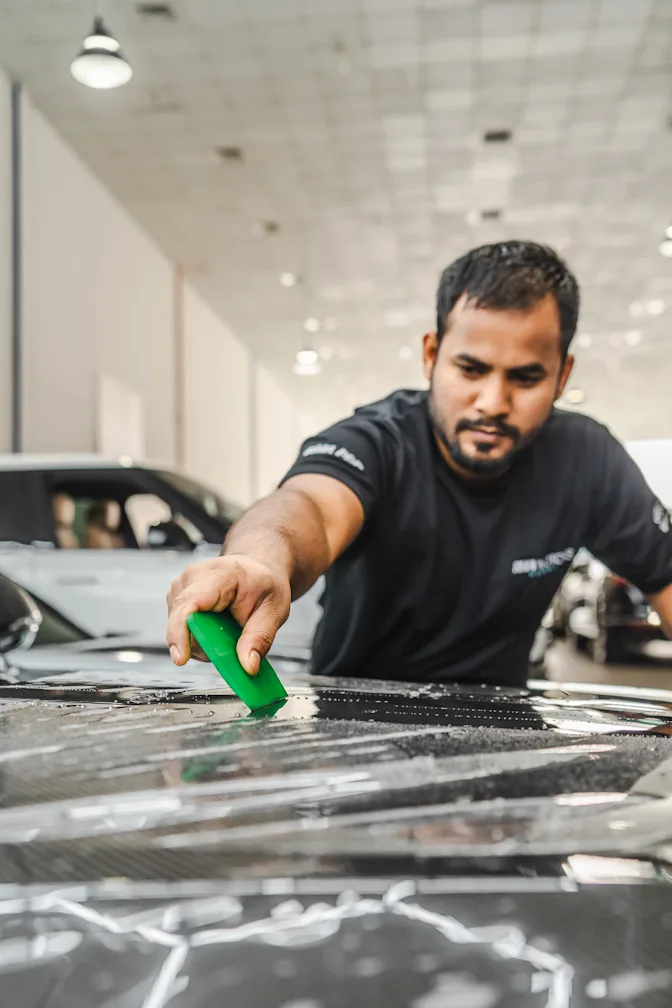
By applying a high-quality TPU (Thermoplastic Polyurethane) film, those impacts are absorbed. Instead of sending the car to the body shop for a three-day respray, a simple heat-gun application or a quick panel swap of the film keeps the car available for the next booking immediately.
2. Preserving the “New Car” Experience
Rental clients paying $500 to $2,000 per day expect perfection. They are paying for the fantasy of driving a brand-new supercar. If a car shows up with visible “road rash” or swirl marks from frequent washing, the perceived value drops, leading to bad reviews or demands for discounts.
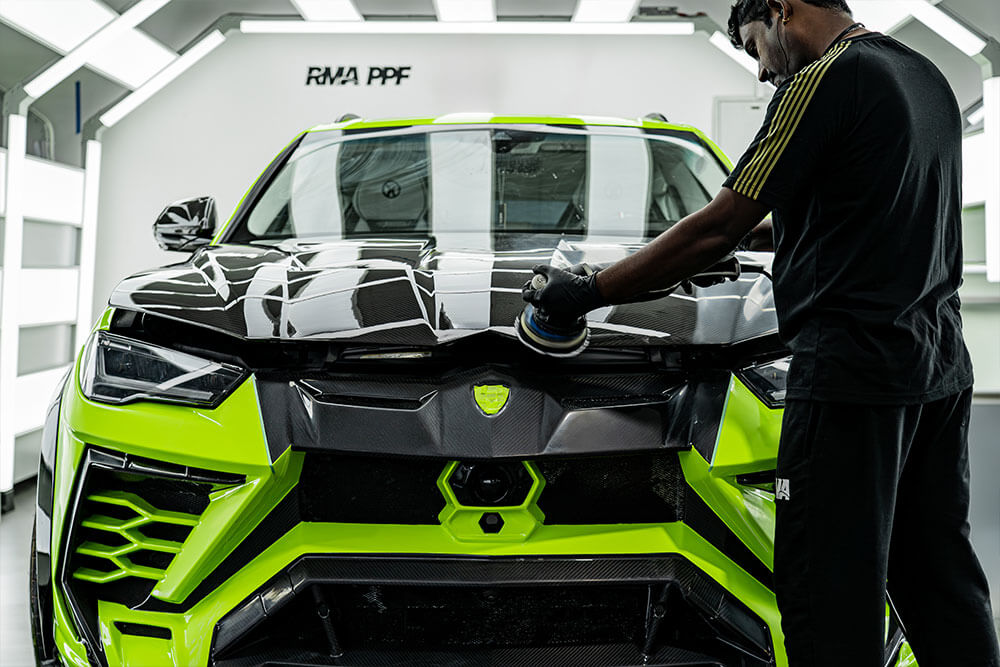
PPF’s self-healing properties ensure that swirl marks from automated washes or minor surface scratches disappear with exposure to sun or engine heat. The fleet stays looking “showroom ready” without constant polishing.
3. Protecting the Exit Strategy (Resale Value)
High-end rental fleets typically cycle their inventory every 12 to 24 months. To maintain a healthy bottom line, the “exit price” of the vehicle must be as high as possible.
When it comes time to sell, a car with original factory paint is worth significantly more than one that has been resprayed to cover rental wear-and-tear. When the PPF is peeled off at the end of the car’s rental life, the paint underneath is a time capsule—flawless, untouched, and ready for top-tier auction prices.
4. Simplified Claims and Maintenance
Dealing with insurance claims for minor chips is an administrative nightmare. PPF acts as a “buffer” that handles 95% of common road debris.
- Chemical Resistance: Protects against bird droppings and tree sap that can etch into paint during outdoor rentals.
- Hydrophobic Properties: Makes the cars easier and faster to clean between clients, reducing the labor time for your car detailing crew.
The Bottom Line: ROI That Scales
For a fleet of 10 cars, the cost of PPF is an upfront investment that pays for itself in a single avoided respray or one extra weekend of uptime. In an industry where “Time is Money,” PPF ensures your assets are always ready for the road, 365 days a year.

Get In Touch
Stay Connected For Ultimate Car Care
 sales@rmappf.ae