

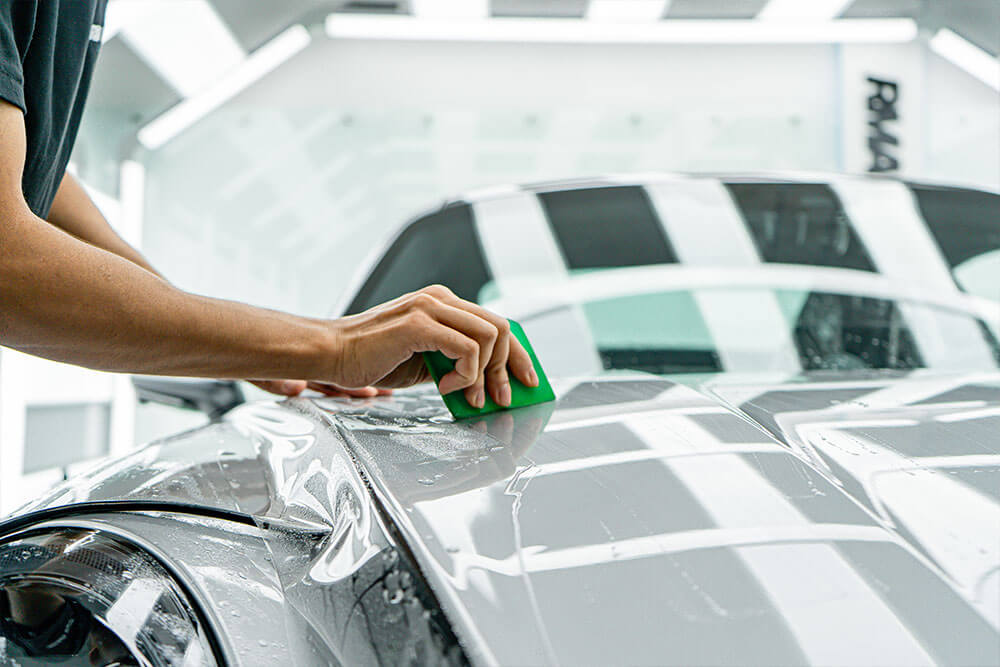
When you commit to protecting your vehicle with PPF (Paint Protection Film), the first question is always, “How much does it cost?” While the quality of the film (choosing a Best PPF like Profilm) and the expertise of the installer are crucial factors, one element immediately dictates the price: the size and complexity of your vehicle.
In short, a PPF car installation on an SUV or truck will always require a higher investment than the same coverage on a standard sedan. Here’s a breakdown of the two main reasons why vehicle dimensions and design directly impact the cost of your PPF coating.
1. Material Consumption: More Car, More Film
This is the most straightforward factor. An SUV is simply a physically larger vehicle than a sedan, which means covering it requires significantly more paint protection film material.
- Surface Area: Compare the dimensions of a coupe to a large 4×4. The SUV has a much larger roof, longer hood, and significantly more expansive side panels (like quarter panels and rocker panels). A full PPF automotive wrap on a large SUV can consume 25% to 50% more film than a compact sedan.
- The Cost Multiplier: Since high-quality PPF material is sold by the linear meter or square meter, the increased surface area instantly multiplies the material cost. Choosing a premium PPF coating that offers self-healing and superior durability is essential, but the sheer size of the SUV dictates the volume needed.
For luxury and performance SUVs, which often have unique body kits and aerodynamic elements, the cost difference can be even more pronounced.
2. Complexity and Labor: Time is Money
The cost of PPF on car installation is heavily weighted toward labor—the time and skill required of the technician. SUVs and crossover vehicles introduce complexities that sedans typically avoid.
- Intricate Curves and Angles: While a sedan may have smooth, simple body panels, an SUV or truck often features more pronounced, aggressive lines, sharp corners, and deep recesses (like bulky wheel arches and large rear spoilers). These complex surfaces require more time for the installer to mold the film using heat-shrinking techniques to avoid wrinkles and bubbles.
- Accessory Removal: SUVs often have more components that must be temporarily removed and reinstalled to achieve a seamless, edge-wrapped finish. This includes roof rails, bulky door handles, taillight clusters, and large mirror housings. This meticulous process requires greater attention to detail and adds valuable hours to the total labor time.
- Installation Time: While a full sedan wrap might take a certified team 20-30 hours, a full-size SUV can easily push labor time to 30-40 hours or more, directly increasing the total investment.
Making the Smart Investment
Regardless of whether you drive a sedan or an SUV, the goal remains the same: long-term car protection film that safeguards your investment.
By understanding that your vehicle’s size and design complexity directly impact material consumption and installation labor, you can better budget for your protection. Choosing a reputable installer ensures that you pay for certified expertise that guarantees a perfect, edge-wrapped finish, maximizing the value of every square meter of film applied.


Get In Touch
Stay Connected For Ultimate Car Care
 sales@rmappf.ae