

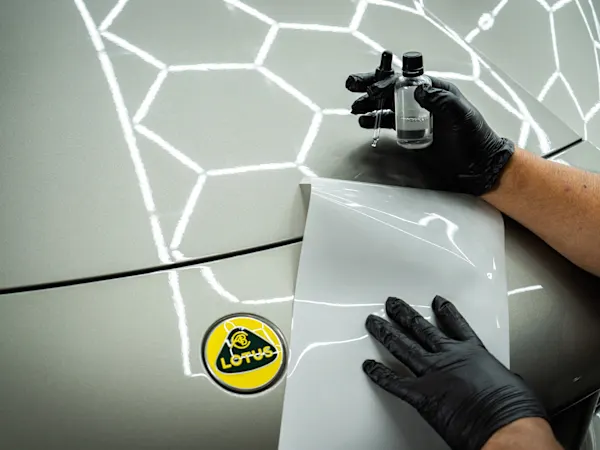
If you’ve ever watched a video of paint protection film (PPF) in action, you know the “magic.” A wire brush scratches the surface, someone pours hot water over it, and—presto—the marks vanish.
When I got my car wrapped, that was the selling point I clung to. I expected my car to be essentially invincible. So, you can imagine the sinking feeling in my stomach when I walked out to my car after a quick grocery run and saw a jagged, white line across my passenger door.
I didn’t panic at first. I drove home, grabbed a thermos of hot water, and poured it over the mark, waiting for the miracle.
Nothing happened. The scratch stayed exactly where it was.
For a few hours, I was convinced I’d been scammed. I thought my car PPF had failed me.
The Reality of the “Sacrificial Layer”
I eventually drove down to the studio to ask what went wrong. That’s when I got a much-needed education on the “Science of Scratches.”
The technician explained that PPF in Dubai is a multi-layered system. The top-most layer (usually about 0.5 mil thick) is the “self-healing” part. It’s made of an elastomeric polymer that acts like a memory foam; it can deform and return to its original shape when heated.
However, there is a limit.
If a scratch is deep enough to pierce through that top “healing” layer and into the urethane base or the adhesive below, the molecular bonds are actually severed. At that point, the “memory” is gone. My scratch had come from a metal edge of a trolley—it was deep, jagged, and had successfully bypassed the self-healing zone.
Why “Failure” is Actually a Win
I realized then that I was looking at it all wrong. I thought the film failed because the scratch didn’t disappear. The truth was, the film had done exactly what I paid it to do.
The scratch was in the film, not my paint.
If I hadn’t had paint protection film installed, that metal trolley would have gouged straight through my clear coat, through the color, and into the metal panel. I would have been looking at a 3,000 AED respray and a “repaired” mark on my car’s history. Instead, I was just looking at a slightly scarred piece of plastic.
The Technical “Nitty-Gritty”
I’ve learned that the best installations aren’t about making a car indestructible, but about managing expectations with high-quality materials. This is why choosing the right team matters.
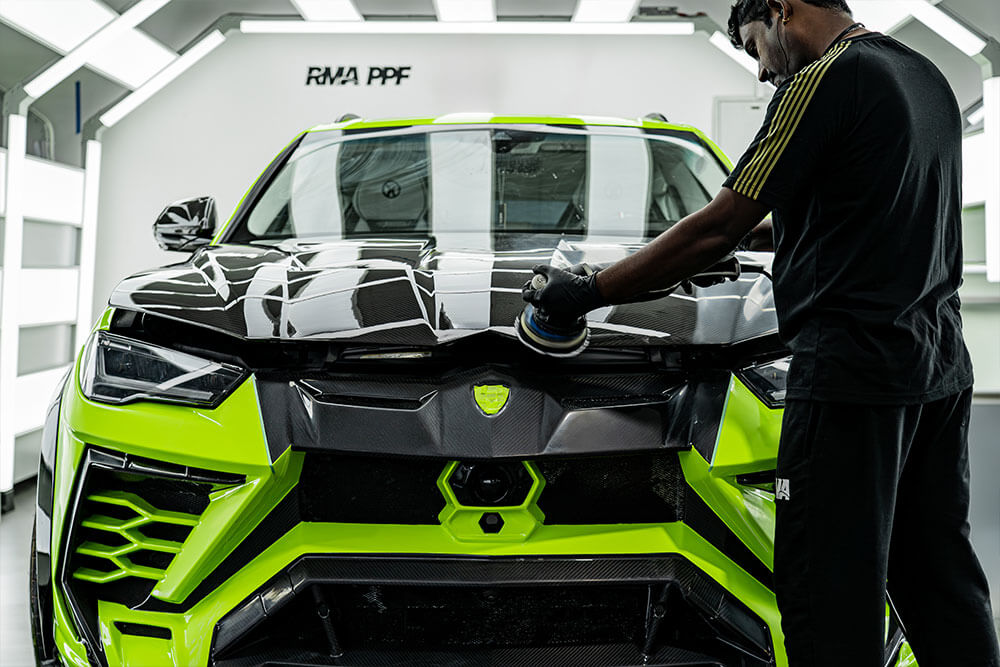
I originally had my work done at RMA PPF, and their approach to the “nitty-gritty” of the install is what saved me in the long run. They are a team of genuine car enthusiasts who didn’t just sell me a “magic trick”; they sold me a professional-grade shield.
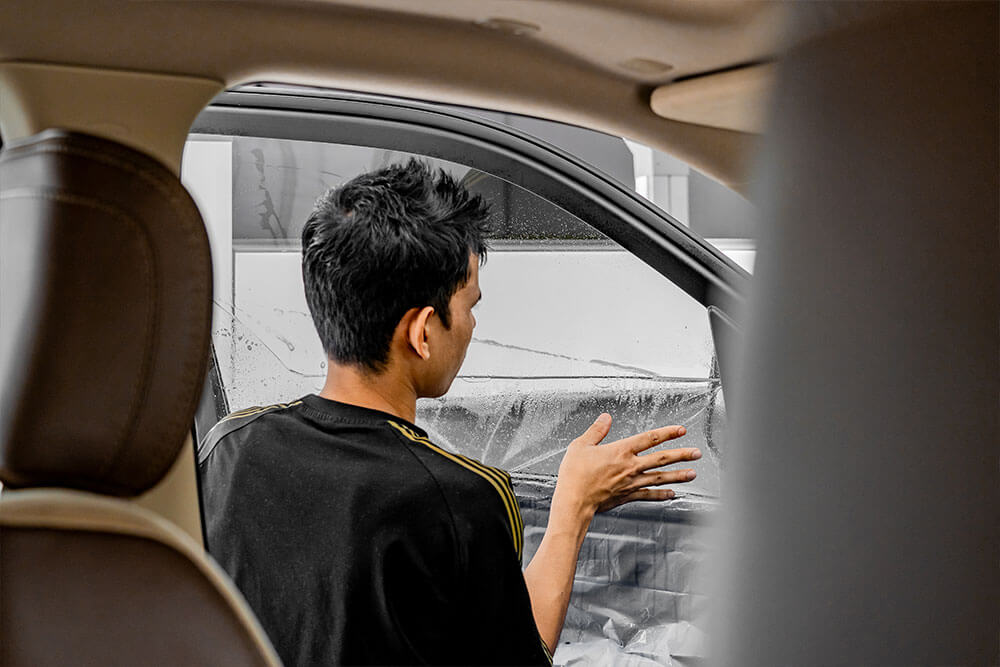
When I brought the car back to them with my “un-healable” scratch, they didn’t try to upsell me. They assessed the damage with a 5-star standard of honesty, explaining that while the film wouldn’t heal this specific gouge, the paint underneath was perfectly safe. Because they used high-end film with superior adhesive, we were able to replace just that one door panel without any residue or trouble.
The Lesson for Car Owners
If you’re considering PPF, remember this: it is a sacrificial layer. Its job is to take the hit so your factory paint doesn’t have to.
- Self-healing is for swirl marks, sand-blasting, and light scuffs.
- The Urethane Base is for the “big hits” that don’t heal but stop the paint from chipping.
Don’t get discouraged if a scratch doesn’t vanish. Instead, be thankful that the mark is on the film and not on your investment.
Is your film showing some “un-healable” battle scars? Visit the specialists who understand the nitty-gritty of car care to see if it’s time for a panel refresh.

Get In Touch
Stay Connected For Ultimate Car Care
 sales@rmappf.ae