
When choosing window tinting, most drivers focus on two things: maximizing privacy and blocking heat. These goals often lead to the desire for the darkest film possible. However, the darkest film—while offering maximum privacy—can become a serious safety hazard when the sun sets.
The challenge is achieving the perfect safety balance: a film dark enough to offer discretion during the day, yet clear enough to ensure unimpaired visibility and safe driving at night. Thanks to advances in film technology, you no longer have to compromise.
The Daytime Desire: Maximizing Privacy
During the day, a lower VLT (Visible Light Transmission) film is excellent for privacy. By blocking more visible light, it makes it difficult for outsiders to peer into your cabin, protecting occupants and discouraging smash-and-grab theft. The dark aesthetic also effectively filters harsh daylight, reducing eye strain and glare.
However, the safety concern of dark films escalates significantly after dark:
- Tunnel Vision: Excessively dark tints (e.g., 5% or 15% VLT) reduce peripheral vision and make it difficult to see pedestrians, cyclists, and objects in poorly lit parking garages or side roads.
- Reduced Mirror Clarity: Nighttime streetlights and oncoming headlights appear dimmer, severely compromising your ability to safely use side and rear-view mirrors for lane changes and reversing.
These safety risks are why law enforcement and traffic authorities enforce strict limits on window tinting VLT percentages.
The Technological Solution: Spectrally Selective Film
The solution to the safety vs. style dilemma lies in modern spectrally selective films, such as nano-ceramic tints. These advanced films operate on a different principle than older, dyed films: they separate visible light from invisible heat.
- High Heat, Low Darkness: These films are engineered to block up to 95% of the invisible heat-causing Infrared (IR) rays using ceramic particles. This exceptional thermal performance is achieved without needing to rely on excessive darkness.
- Maximized VLT, Minimized Glare: You can choose a lighter, legally compliant VLT (e.g., 50% or 30%) and still achieve superior heat rejection than a dark, outdated film. The film provides enough shading to reduce distracting glare from headlights and streetlights at night, while ensuring that the total amount of light needed for safe visibility can enter the cabin.
This technology allows for a window tinting solution that maximizes safety by day and clarity by night.
Achieving the Perfect Balance
Choosing the right film means prioritizing performance metrics (TSER and IRR) over visual darkness (VLT).
- Safety First: Opt for a premium ceramic film that maximizes IRR while adhering strictly to local legal VLT limits. This ensures you maintain the required visibility for safe nighttime driving.
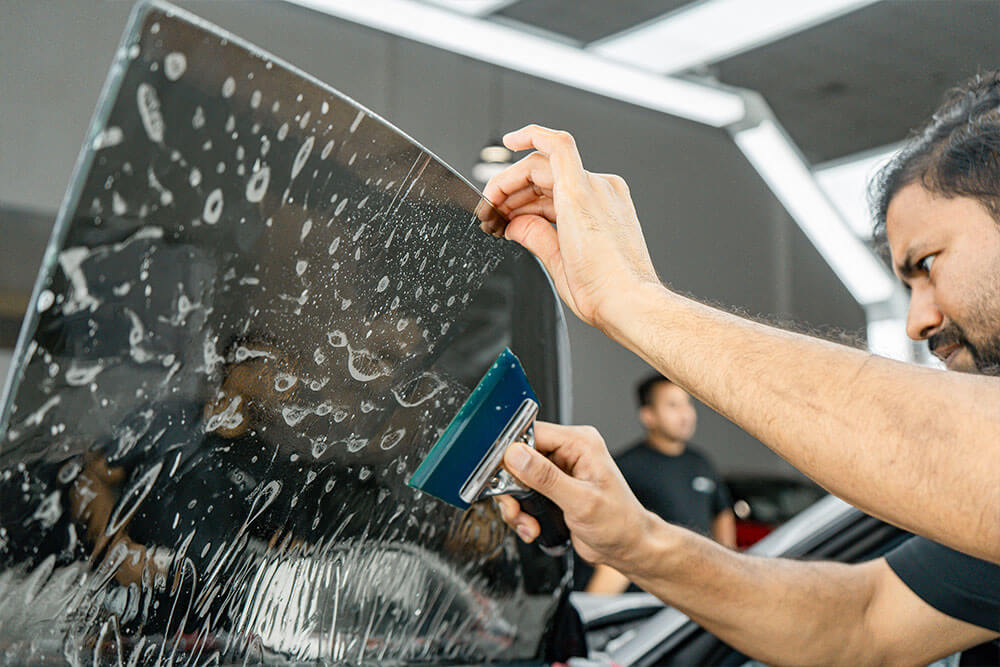
- Professional Application: A certified installer guarantees a flawless fit, ensuring the film is evenly applied with no distortions or bubbles that could further compromise visibility after dark.
By choosing smart, high-tech window tinting, you ensure that your vehicle provides the privacy and style you desire during the day, while guaranteeing the essential clarity needed for safe navigation when the sun goes down.


Get In Touch
Stay Connected For Ultimate Car Care
 sales@rmappf.ae