

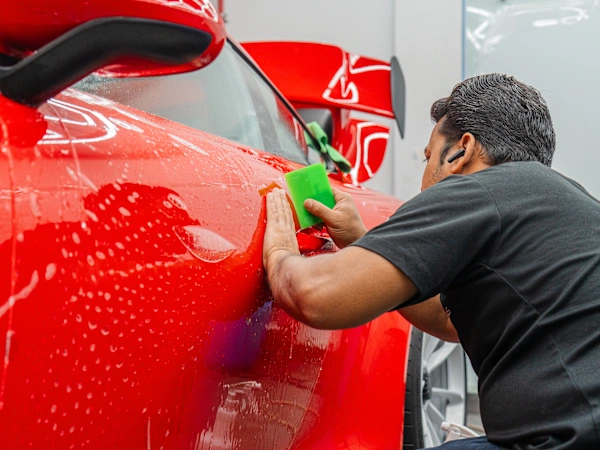
That feeling of seeing your flawless car—protected by cutting-edge PPF (Paint Protection Film)—is priceless. You know the self-healing technology is your ultimate shield against road wear. But wait. Did you know the biggest danger to that PPF car isn’t a stone chip, but your glass cleaner?
It’s true. Even the toughest car protection film is chemically vulnerable to attack from common household and low-quality products. The crucial self-healing elastomer top coat that mends micro-scratches can be instantly destroyed by the wrong chemical or abrasive. Stop sabotaging your shield! Here is the essential, conversational guide you need to protect your premium PPF automotive investment and keep your finish looking new.
The Chemical Assault: Solvents and Solvents
The self-healing top coat relies on a specific molecular structure (the elastomeric polymer) to function. Certain chemicals compromise this structure, rendering the self-healing property useless and potentially causing permanent hazing.
1. Strong Solvents and Degreasers
These products—often found in heavy-duty wheel cleaners, bug and tar removers, or industrial degreasers—are formulated to break down petroleum-based compounds.
- The Damage: Solvents attack the TPU and the polymer top coat, causing the film to swell, soften, or haze. They strip the protective coatings, leaving the surface exposed and brittle. Once the self-healing layer is chemically compromised, it loses its “memory” and cannot return to its original shape, meaning any new scratch becomes permanent.
2. High pH (Alkaline) or Low pH (Acidic) Cleaners
While standard car shampoos are safe, products at the extremes of the pH scale—such as harsh industrial truck wash soaps (high pH) or strong wheel cleaners containing heavy acid (low pH)—are dangerous.
- The Damage: These extreme chemicals weaken the adhesive bond and can chemically burn or etch the topcoat itself. This is particularly relevant when cleaning stubborn contaminants like bird droppings; you must use a dedicated, pH-neutral spot remover rather than a harsh acidic cleaner.
The Mechanical Attack: Abrasives and Friction
The second threat to your paint protection film is mechanical damage introduced through improper car paint protection techniques.
1. Abrasive Polishes and Compounds
Traditional car paint protection correction products like rubbing compounds, abrasive polishes, and cutting creams are designed to remove a thin layer of clear coat. They are specifically designed to destroy surfaces.
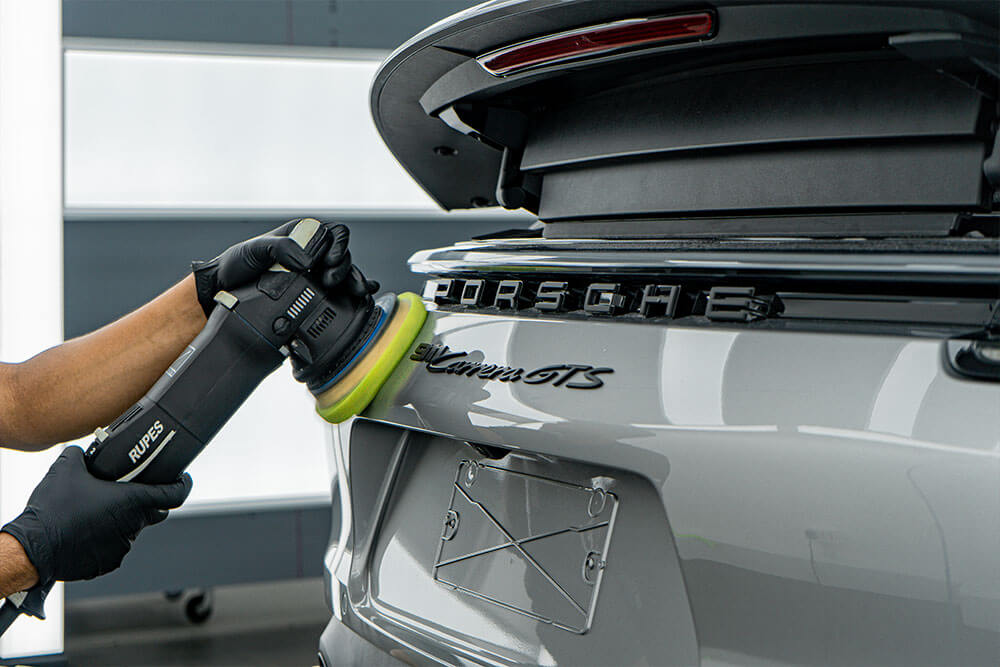
- The Damage: Using these products on your PPF will instantly abrade the self-healing topcoat, leaving behind irreversible micro-marring and haze. You are literally polishing away the technology you paid for. If your film requires correction (which is rare with premium films), it must be done with specialized PPF-safe products and low-speed polishers.
2. Old, Dirty Microfiber
We’ve stressed this before: never use dirty or low-quality towels. If a towel is contaminated with hard dirt particles, or if it has coarse, non-microfiber edges, it will inflict scratches that overwhelm the film’s self-healing capacity. The goal of the self-healing top coat is to mend minor abrasions, but heavy, deep scratches require professional panel replacement.
Maximizing Your Investment
The longevity of your PPF on car film depends entirely on disciplined maintenance. Always choose dedicated PPF-safe cleaning solutions and adhere strictly to the proper two-bucket wash method. This ensures that the advanced elastomeric memory of your film is preserved, allowing it to actively protect and heal your finish throughout its entire lifespan.


Get In Touch
Stay Connected For Ultimate Car Care
 sales@rmappf.ae