

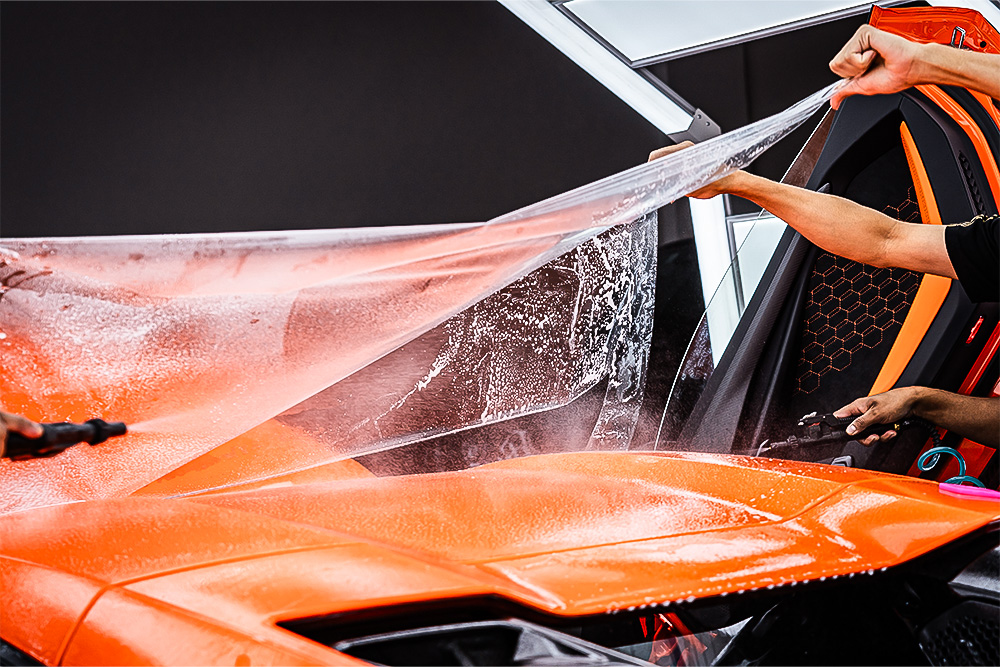
We talk a lot about the precision required to install Paint Protection Film (PPF)—the clean rooms, the custom software-cut patterns, and the expert squeegee techniques. But there is a silent phase of the PPF lifecycle that is just as critical to your vehicle’s health: The Removal.
Whether your film has reached the end of its 10-year warranty, sustained heavy impact damage, or you’re preparing the car for resale, how that film comes off determines whether your paint remains “factory perfect” or becomes a costly repair bill.
Here is why professional PPF removal is a non-negotiable service.
1. The Danger of “Paint Pull”
The primary goal of PPF is to bond to your clear coat. Over years of heat cycles and UV exposure, that bond can become incredibly strong. If you simply grab a corner and pull, the adhesive tension can actually exceed the bond between your paint and the primer—especially on repainted panels or plastics like bumpers.
Professionals use industrial steamers and controlled infrared heat to soften the adhesive layer to a precise temperature. This ensures the film releases from the paint rather than taking the paint with it.
2. Managing Adhesive Residue
Lower-quality films or aged PPF often leave behind a stubborn, tacky “ghosting” of adhesive. Using the wrong chemicals to scrub this off—like harsh hardware-store thinners—can soften your car’s clear coat or stain the finish.
Detailing professionals use specialized, paint-safe adhesive removers and plastic scrapers that won’t mar the surface. They understand the chemistry of the film and how to neutralize the glue without mechanical abrasion.
3. The “Yellowing” and Brittleness Factor
If PPF has been left on a vehicle too long (past its rated lifespan), it can become brittle. Instead of peeling off in large sheets, it may “shatter” into thousands of tiny flakes.
Removing a “failed” film is a painstaking process that requires hours of micro-scraping and heat management. Attempting this at home often leads to gouges in the paint from metal blades or fingernails used in frustration.
4. Proper Surface Decontamination
Removal is rarely the final step. Usually, the owner wants to either ceramic coat the car or install fresh PPF. A professional removal includes a multi-stage decontamination process:
- Chemical Decon: Removing leftover solvents.
- Mechanical Decon: Using a clay bar to pick up microscopic debris.
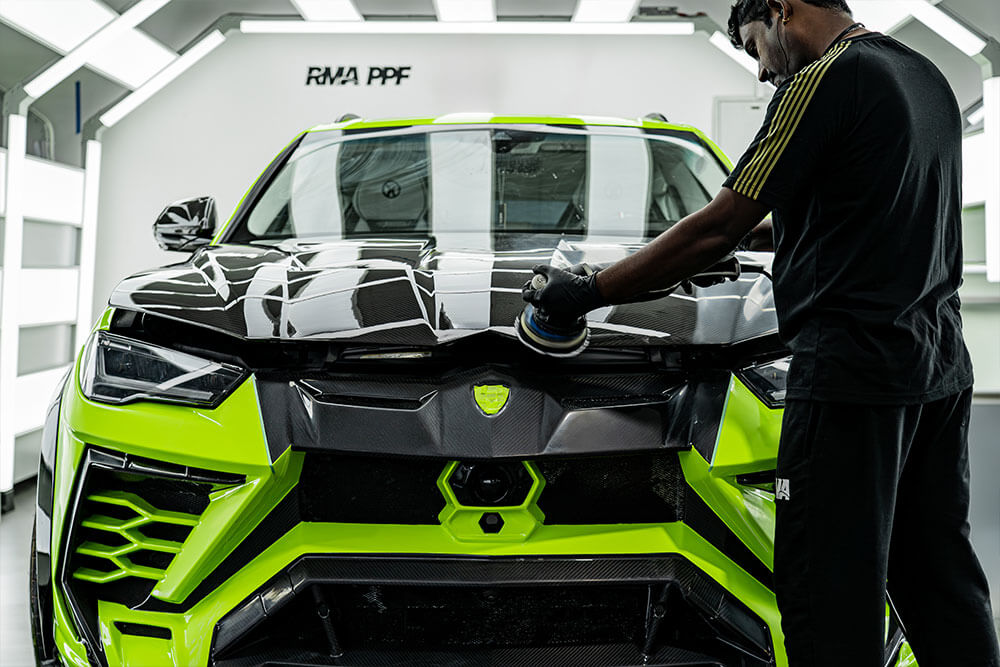
- Paint Correction: A light polish to ensure the paint looks as good as the day it was covered.
5. Protecting Trim and Sensors
Modern cars are covered in delicate rubber seals, parking sensors, and camera lenses. DIY removal often results in steam or chemicals being forced into areas where they don’t belong, or film tearing and getting stuck in tight body gaps. A professional knows the disassembly points and the “pull angles” required to keep the car’s electronics safe.
The Verdict: Don’t Risk the ROI
You invested in PPF to protect your car’s value. Don’t compromise that investment at the very end of the journey. Professional removal is the only way to guarantee that when the film is gone, your car truly looks like it was kept in a time capsule.

Get In Touch
Stay Connected For Ultimate Car Care
 sales@rmappf.ae