


SiO2 vs. Graphene vs. Titanium: Dude, Let’s Really Decode the Hype Behind Modern Ceramic Coatings (No BS!)
Alright, listen up, ’cause this is crucial. When you step into a proper, I mean a real-deal professional car detailing studio, a “flawless finish” isn’t just someone’s opinion, okay? It’s not some fluffy marketing talk. Nope. It’s a hard number. Seriously! These guys use this super cool little gadget called a gloss meter, and it literally measures how well a surface reflects light. They give you a score in something called Gloss Units (GU). Now, picture this: a brand-new car, fresh outta the factory? Might hit, like, 80-85 GU. Sounds pretty good, right? But a finish that’s actually gone through a true, painstaking, multi-stage paint correction? Oh man, that thing can blast past 95 GU! Or even higher! We’re talking about a measurable, undeniable, mirror-like perfection that is just visibly, obviously superior to anything you’d get straight from the factory. That, my friend, is the secret sauce the pros know: the difference between a car that just looks “clean” and one that makes you gasp and say “flawless”? It’s a measurable leap in optical clarity. It’s like, night and day, seriously.
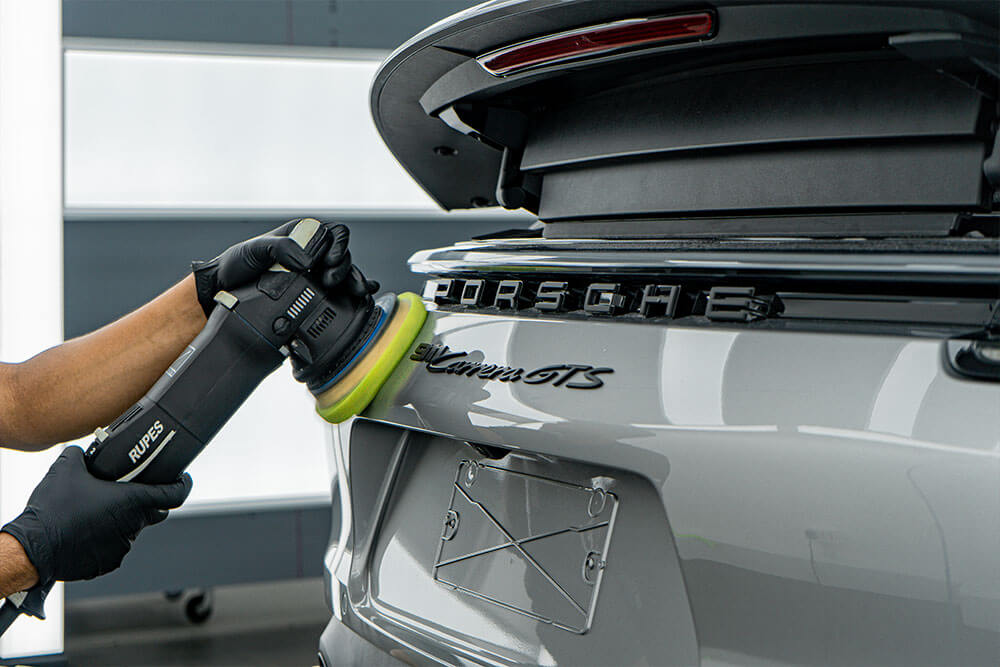
And you know what? That kind of perfection? You’re not getting it with just a quick polish or some lazy wax job. Those things, honestly, they just temporarily fill in those tiny, microscopic scratches and swirl marks that are really stealing your car’s shine. They hide ’em for a few weeks, then BAM! They’re back after a couple of washes. Annoying, right? Nah. This is about “Paint Correction”—a meticulous, almost surgical process that permanently gets rid of those imperfections by carefully, surgically leveling the clear coat itself. It’s not hiding problems; it’s healing them.
So, if you’re anything like me, you’re ready to graduate beyond basic “make it shiny for a bit” stuff. Let’s really dive deep into the three core stages that take a car from “looks pretty good” to “holy cow, that’s a masterpiece!” We’re talking Cutting, Polishing, and that super-special final touch, Jeweling. We’ll break down exactly how the real experts create that perfect, breathtaking canvas, getting it absolutely ready for the ultimate car paintwork protection.
The Foundation: SiO2 (Silicon Dioxide), The OG, The Proven Champion
Alright, before we even think about these new kids on the block, you gotta understand the reigning, scientifically-backed champ of the car detailing world: the SiO2-based ceramic coating. Get this: Silicon Dioxide (SiO2) – it’s basically the foundational chemical compound. The molecular backbone. It’s in virtually all true ceramic coatings you see on the market today. It’s the real deal.
This isn’t just some fluffy wax or a simple sealant you spray on, okay? When it’s applied by a pro, those microscopic SiO2 particles literally create this super durable, cross-linking bond with your vehicle’s clear coat. It forms a semi-permanent, hardened, glass-like layer. This is the tech that honestly set the gold standard for protection, and its real-world benefits? Man, they’re well-documented and totally proven:
- Insane Hydrophobicity: This coating creates a super low-energy surface that just hates water. It’s unbelievably water-repellent! Water beads up into these tiny, almost perfect little spheres that just roll right off, taking dirt and grime with them. It’s mesmerizing to watch, honestly.
- Serious Chemical Resistance: That hardened layer provides a formidable shield, like a tiny invisible force field, against common chemical attacks. Think acidic bird droppings (ugh!) and gross bug splatter. It stops them from actually etching into your clear coat. Phew!
- Robust UV Protection: The SiO2 structure actually helps block those nasty UV rays, which are, like, the primary reason paint fades and oxidizes. It keeps your car’s color vibrant and fresh.
For years, high-quality SiO2 coatings have been the benchmark. The reason? They deliver a measurable, undeniable improvement in gloss and a durable, sacrificial layer of protection that is scientifically proven to perform. This is the yardstick. This is what all the new, fancy-named technologies have to measure up against.
The Challenger: Let’s Bust Some Myths About “Graphene Coatings”
Okay, so the first big challenger to the mighty SiO2 throne? It’s the “graphene coating.” Man, the marketing for these things is powerful. They leverage the reputation of graphene, right? That Nobel Prize-winning “wonder material” known for being incredibly strong, flexible, super light, and a fantastic heat conductor. So, the claims often suggest this revolutionary leap in durability and performance for your car. Sounds too good to be true, sometimes? Yeah, maybe.
The Chemical Reality: Here’s the kicker, and it’s super important to grasp this: the “graphene coatings” you see on the car detailing market today are simply not made of pure graphene. Like, seriously. Creating a stable, transparent coating from pure graphene is just not commercially possible right now. It’s still lab-level stuff. Instead, these products are, at their very core, still SiO2-based ceramic coatings that have just been chemically modified with a small amount of Graphene Oxide. So, you’re getting a ceramic coating… with a little graphene twist.
The Performance Verdict: So, what does this Graphene Oxide additive actually do? Well, some really top-tier professional detailers and manufacturers do claim it can help a bit with reducing water spotting (which is cool!) and might slightly enhance the slickness of the surface. But here’s the absolute truth: the fundamental protective and hydrophobic properties of the coating are still being delivered by that same, proven SiO2 backbone. The performance benefits over a top-tier, pure SiO2 PPF coating are often pretty marginal, honestly, and it’s still a hot topic of debate among serious detailers. The “graphene” element? It’s more of an enhancement to a formula that already works, rather than a revolutionary, entirely new technology all on its own. It’s a sprinkles-on-the-ice-cream kinda deal.
The New Kid on the Block: Unpacking “Titanium Coatings”
Alright, latest entrant in this crazy car detailing chemical arms race? It’s the “titanium coating.” Again, the marketing for these products is super compelling. They play on the reputation of titanium metal, right? Promising extreme hardness, superior scratch resistance, and this intense, almost candy-like gloss for your vehicle. Sounds amazing, doesn’t it?
The Chemical Reality: Just like with our graphene story, the products they market as “titanium coatings” are not made of pure titanium. Think about it: a pure titanium coating would be totally opaque. You wouldn’t be able to see through it! Definitely not suitable for paint protection. Instead, these are, yep, you guessed it: advanced SiO2-based ceramic coatings that have been modified with a small amount of Titanium Dioxide (TiO2).
The Performance Verdict: Titanium Dioxide isn’t some new, groundbreaking, revolutionary ingredient in the world of coatings, either. It’s actually a super well-known and widely used compound! It’s been used for years in automotive paints themselves, and other industrial products, primarily because of its ability to enhance brightness, opacity, and UV resistance. It’s a common ingredient, like salt in cooking.
So, when it’s added to a PPF coating or a liquid ceramic formula, can TiO2 contribute to the overall gloss and maybe even beef up the coating’s ability to resist fading from sun exposure? Absolutely! It definitely can. However, it does not fundamentally change the core technology. The heavy lifting – the hardness, the chemical resistance, the awesome hydrophobicity – is still, overwhelmingly, coming from that rock-solid, cross-linking SiO2 ceramic backbone. The “titanium” element? It’s an additive. It enhances certain characteristics. It’s not a replacement for the proven ceramic foundation. Don’t get it twisted.
The Real Secret? It’s the Formula, Not the Crazy Buzzword, Man!
So, the big verdict in this modern ceramic coating “arms race” is pretty clear: the proven, the heavy-lifting, the actual working technology in all of these advanced coatings—whether they’re marketed as “ceramic,” “graphene,” or “titanium”—is, hands down, the scientifically-backed SiO2 ceramic structure. Those exotic-sounding new names? For the most part, they’re just additives used to tweak an already proven formula. And, let’s be super honest, they’re mostly there to create a powerful, compelling, and often confusing marketing story. It’s all about the buzz!
What truly matters in the world of professional car detailing isn’t the trendy buzzword slapped on the bottle. Nope. It’s the actual quality, the concentration, and the purity of the underlying SiO2 formula. It’s the sophistication of the carrier solvents that make it apply nicely. And, more importantly than anything else, it’s the meticulous preparation work and the pure skill of the professional applying it! That’s where the magic actually happens.
While the marketing for these new coatings is super compelling (and sometimes a bit misleading!), a high-quality, professionally applied SiO2 ceramic coating remains the undisputed, scientifically-backed champion for long-lasting, real-world protection. My expert recommendation? Forget the latest trend. Focus on the quality of the core product and the reputation of your installer. That, my friend, is the definitive path to achieving the ultimate in PPF coating and paint protection. You’ll thank me later. Trust me.


Get In Touch
Stay Connected For Ultimate Car Care
 sales@rmappf.ae