

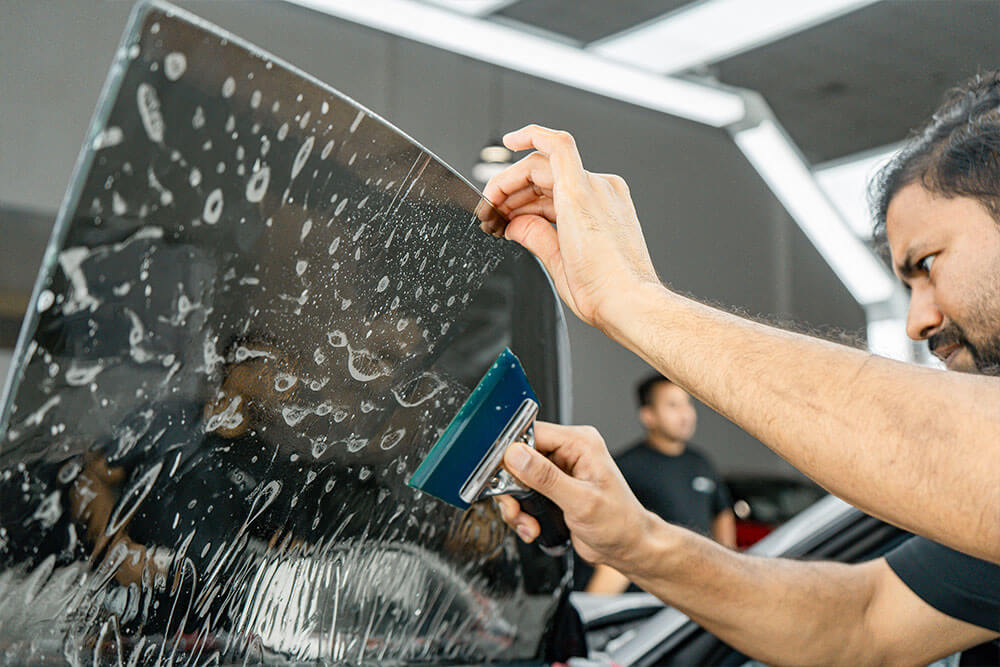
When I first picked up my car after getting it tinted last November, I was thrilled. The dark aesthetic completely changed the look of the car, and for the first few weeks, the cabin felt noticeably cooler. I thought I had scored a major win—I found a shop that did the whole car for about 400 AED, a fraction of the price the “specialist” studios were quoting.
But as the calendar turned to January and the Dubai sun started to show its teeth again, my bargain turned into an eyesore. What started as one tiny “pimple” on the rear glass soon turned into a full-blown “bubbly mess.” By the 60-day mark, the film on my driver’s side window started to peel away from the top edge every time I rolled it down.
I realized then that I hadn’t bought a window tint; I had bought a temporary sticker that was now rotting on my glass.
The Anatomy of the Failure: What Went Wrong?
I decided to do some digging into why a professional-looking job could fail so spectacularly in just eight weeks. After speaking with some genuine petrolheads who live and breathe car care, I learned that my car window tint didn’t fail because of “bad luck.” It failed because of physics.
1. The “Quick Clean” Trap
The most common cause of bubbling is trapped contaminants. In a high-volume, budget shop, “cleaning the glass” usually means a quick spray and a wipe with a reused rag. Even a microscopic speck of Dubai dust or a trace of oily residue from a previous cleaning product can prevent the film from bonding. Over time, the heat causes the air around that speck to expand, creating a visible bubble that never goes away.
2. Inferior Adhesives vs. 50°C Heat
Cheap dyed films use “pressure-sensitive” adhesives that are simply not engineered for the Middle East. In our climate, the glass can reach temperatures that actually liquify low-grade glue. When the adhesive fails, the film begins to “gas out,” creating those ugly blisters that make a luxury car look like a neglected project.
3. The “Roll-Down” Friction
My peeling edges were a classic case of a rushed installation. A proper install requires a technique called “micro-shaving” or deep-tucking, where the film is heat-shrunk and secured slightly below the weather stripping. Budget shops skip this “nitty-gritty” step to save time, leaving the edge of the film exposed. Every time I rolled my window down, the rubber seal caught that edge, slowly pulling the window tint away from the glass.
The Lesson: Don’t Hunt for a “Deal” on Protection
I’ve learned the hard way that the most expensive tint is the one you have to pay for twice. To fix my mess, I had to pay for a professional removal (which is a tedious, sticky process) and then pay for a quality installation.
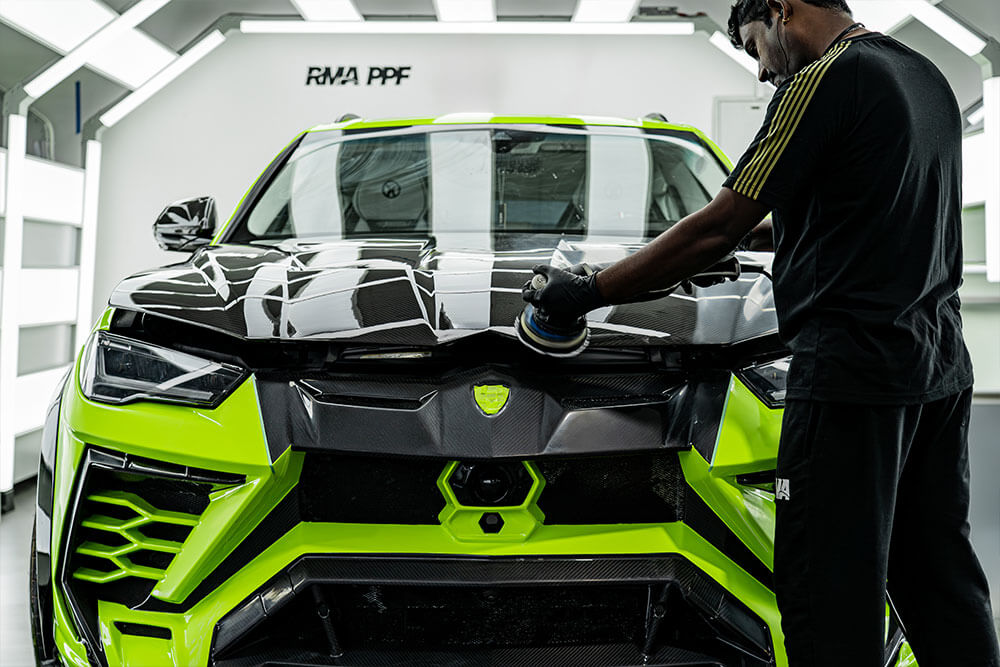
When I looked for a solution, I didn’t search for a “price” this time. I looked for a studio that understood the technical evolution of glass. I ended up at RMA PPF, and the difference was immediately obvious.
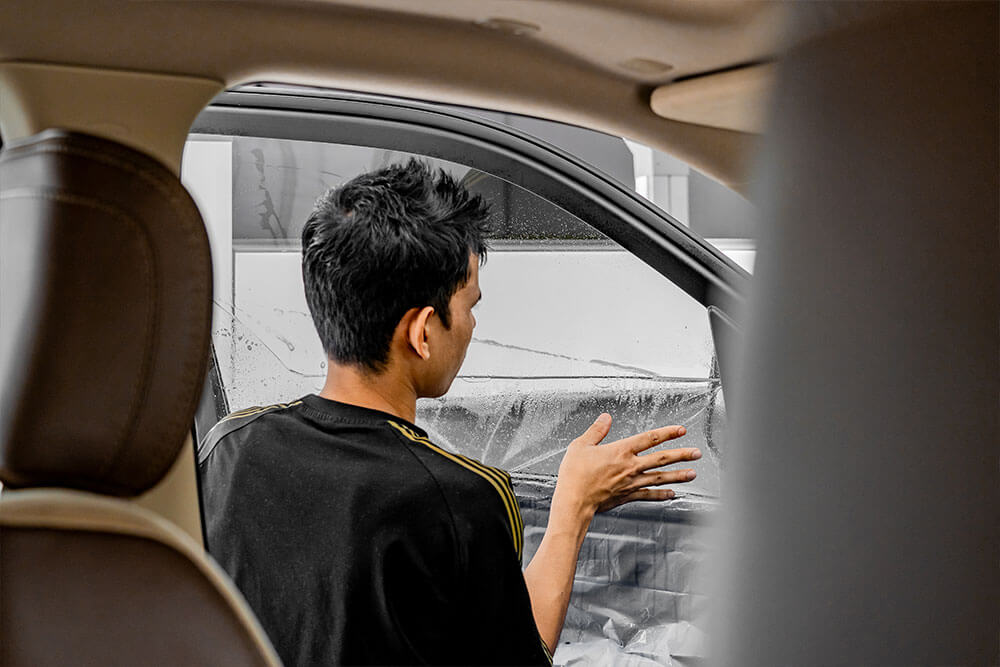
They aren’t just an assembly line; they are a team of enthusiasts who obsess over the nitty-gritty details. They explained that their process involves a surgical-grade decontamination of the glass and the use of nano-ceramic films that chemically bond to the window. Because they understand what works best for the high-intensity UV environment we live in, they don’t have to worry about the film “gassing out” or peeling.
The Verdict
If your car window tint is starting to show those tell-tale bubbles or white “fingers” at the edges, don’t wait. It’s a sign that the film’s UV protection has already failed, leaving your interior (and your skin) vulnerable.
My advice? Skip the mall-parking-lot “deals.” Invest in a specialist who treats your car with the excellence it deserves. It’s the only way to ensure that your view of Dubai stays crystal clear for years, not just weeks.

Get In Touch
Stay Connected For Ultimate Car Care
 sales@rmappf.ae