

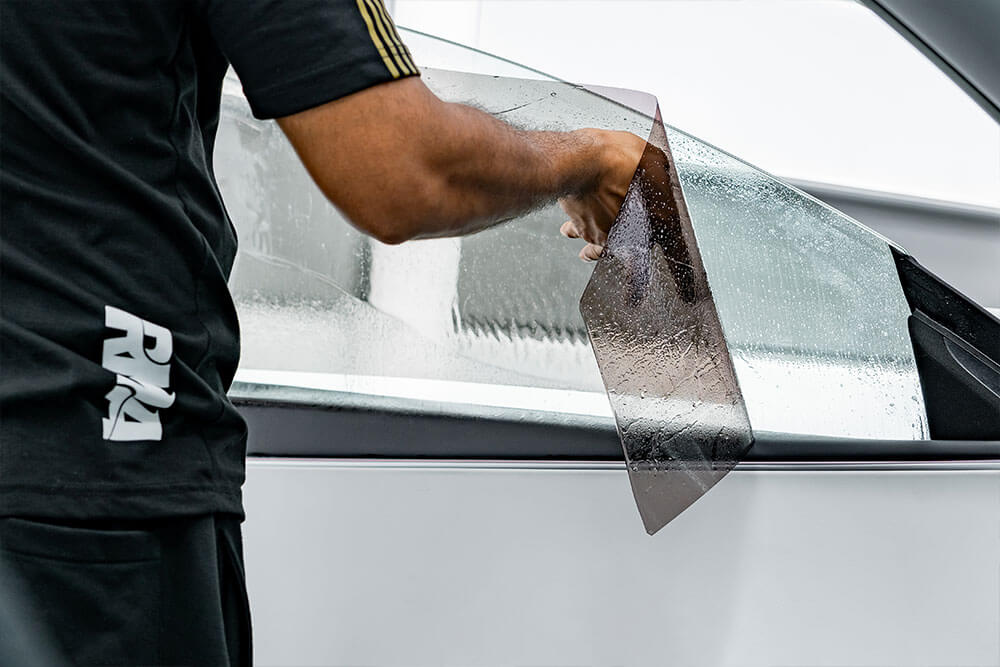
You’ve invested in professional window tinting to protect your car from the sun and keep it looking flawless. But did you know that the biggest threat to your film isn’t road debris or heat—it’s often lurking under your sink?
Many popular household and automotive cleaning products contain harsh chemicals that are toxic to the adhesive and film material of your tint. Using the wrong glass cleaner can silently degrade your investment, leading to bubbling, fading, and peeling that the warranty might not even cover. Here is your essential guide to understanding which chemical culprits you need to banish from your garage and how to safely care for your premium window tinting.
The Toxic Trio: Chemicals to Avoid
The strength of your tint depends entirely on the bond between the film and the glass. When this adhesive layer is exposed to certain volatile chemicals, that bond weakens, causing irreversible damage.
1. Ammonia and Windex-Style Cleaners
This is the number one enemy of any quality window film. Ammonia is a powerful solvent designed to cut through grease and grime quickly. While great for cleaning bare glass, it is a devastating corrosive agent for window tinting.
- The Damage: Ammonia attacks the film’s adhesive, causing it to break down and turn cloudy or milky. It can also dry out the film itself, causing it to become brittle and eventually crack. This adhesive failure is what leads to the classic, unsightly bubbling we often see on failing tints.
2. Alcohol-Based Wipes and High-Concentration Sprays
Products containing high levels of isopropyl alcohol (IPA) or denatured alcohol, such as certain multi-surface wipes or strong degreasers, are too harsh for the delicate polyurethane layer of your film.
- The Damage: Alcohol strips the protective topcoat of the film. This topcoat is what gives your tint its scratch resistance and color stability. Once stripped, the film becomes vulnerable to scratches, discoloration, and rapid UV degradation, causing it to fade faster than normal.
3. Vinegar or Citrus-Based Products
While often touted as natural cleaners, acids—even weak ones like those found in vinegar or citrus juices—are not suitable for your tint.
- The Damage: Acidic solutions can compromise the integrity of the film’s outer layer and adhesive, potentially leading to etching or staining that professional cleaning cannot fix.
The Golden Rule: Use Only Tint-Safe Products
Caring for your window tinting doesn’t have to be complicated, but it does require discipline. The solution is simple: stick exclusively to products labeled as ammonia-free and tint-safe.
- Use pH-Neutral Cleaners: Look for dedicated automotive glass cleaners or interior detailers that specify a pH-neutral formula. These are gentle enough to clean the glass without harming the adhesive or film.
- Use Soft Microfiber: Never use paper towels, abrasive cloths, or hard sponges on your tinted windows. Always use a clean, high-quality microfiber towel to wipe the glass. This eliminates the risk of scratching the film’s surface.
- Wipe Gently: Always wipe from top to bottom, not in circular motions, to minimize friction and prevent accidentally pushing dirt under the vulnerable edges of the film.
By avoiding these chemical culprits and adopting proper cleaning habits, you ensure the adhesive remains strong and the film maintains its clarity and color for its entire lifespan. Your investment in premium window tinting deserves nothing less than meticulous care.


Get In Touch
Stay Connected For Ultimate Car Care
 sales@rmappf.ae