

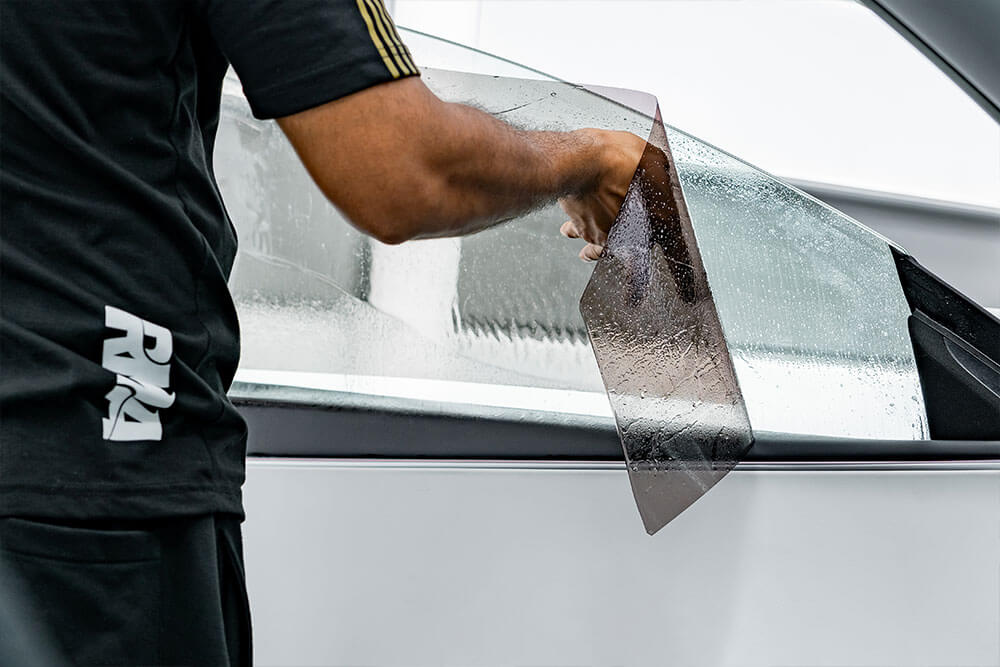
For decades, the primary goal of window tinting has been to shield our skin from UV rays. We know that UV exposure leads to premature aging and skin damage, especially under the intense UAE sun. However, a new frontier in automotive safety has emerged: protecting your eyes from High-Energy Visible (HEV) light, commonly known as “Blue Light.”
At RMA PPF, we are seeing a shift in how enthusiasts choose their car’s paint protection film. It is no longer just about the “SPF” for your skin; it’s about the optical health of the driver.
1. What is the “Blue Light” Hazard?
Blue light sits on the edge of the visible spectrum, right next to UV radiation. Unlike UV rays, which are mostly absorbed by the front of the eye, blue light penetrates all the way to the retina.
- The Driving Reality: On the long, bright highways between Dubai and Abu Dhabi, your eyes are bombarded by blue light scattered by the atmosphere. This causes “blue blur,” which reduces contrast and forces your eye muscles to work harder to maintain focus.
- The Forensic Clue: If you finish a long drive with a headache or “heavy” eyes, you aren’t just tired—you are likely suffering from digital-eye-strain-like symptoms caused by solar blue light.
2. Enhancing Visual Contrast and Clarity
Standard dark tints reduce the amount of light entering the car, but they don’t always filter specific wavelengths. A high-quality nano-ceramic window tinting is engineered to selectively filter HEV light.
- The Benefit: By filtering out the blue light “haze,” these films actually improve your visual acuity. Colors appear more natural, and road markings become sharper. It’s like wearing a pair of high-end polarized sunglasses for your entire car.
3. Night Driving and Glare Reduction
The “Blue Light” hazard isn’t just a daytime issue. Modern LED headlights and streetlights emit a high concentration of blue-spectrum light. This is why oncoming traffic often feels “blindingly” sharp.
- The Protection: A specialized car protection film on your side windows and rear glass helps to neutralize the harsh blue glare from other vehicles. This reduces the “recovery time” your eyes need after being flashed by high beams, making night driving significantly safer.
4. Long-Term Optical Health
Cumulative exposure to HEV light has been linked by some experts to a higher risk of macular degeneration over time. Given that Dubai drivers spend a significant amount of time in their vehicles, the cabin becomes a primary site of exposure.
The RMA PPF Standard
Protecting your vehicle is our passion, but protecting the driver is our priority. When you visit RMA PPF for window tinting, we don’t just talk about “darkness levels.” We discuss Selective Filtration. By choosing a film that targets the blue light hazard, you are investing in a more comfortable, clearer, and safer driving experience.


Get In Touch
Stay Connected For Ultimate Car Care
 sales@rmappf.ae