

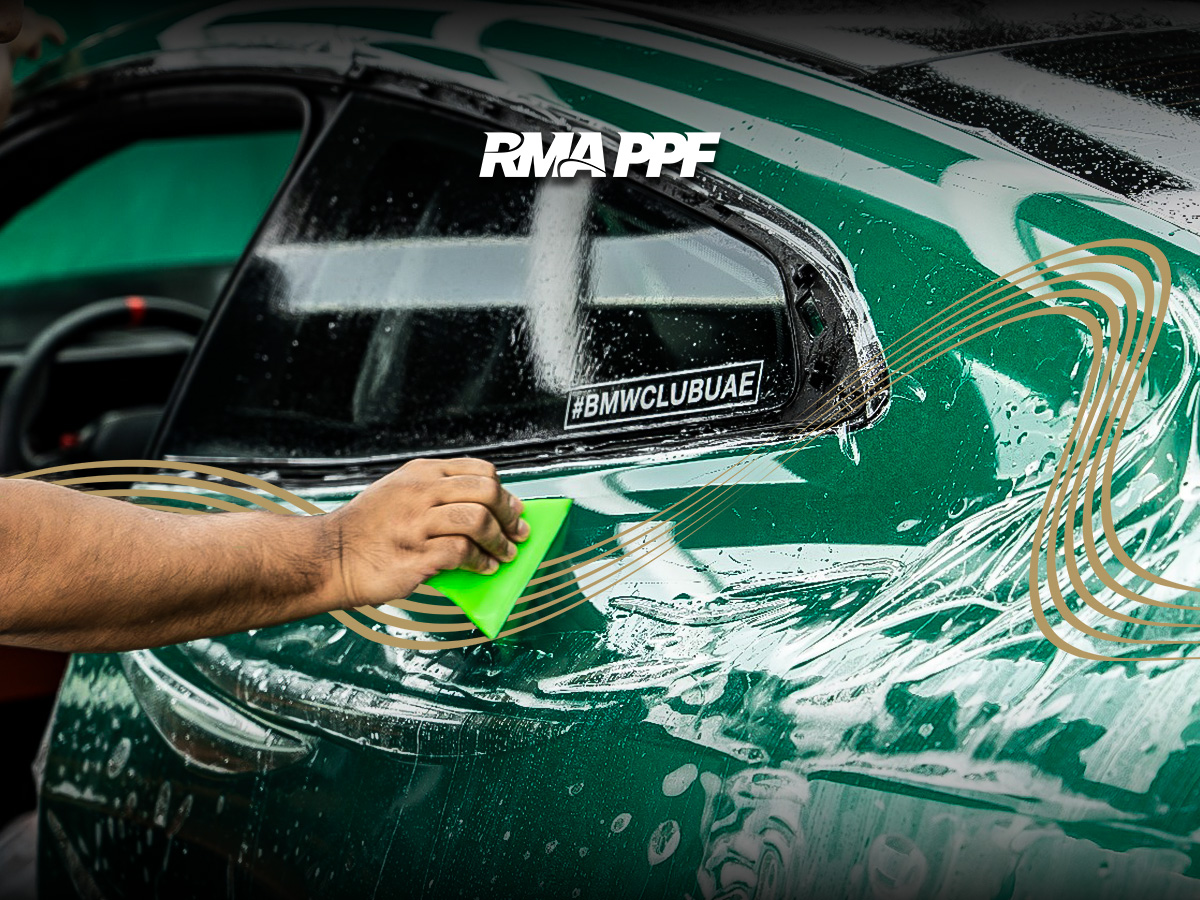
In the UAE’s thriving pre-owned market, a “clean” vehicle history report is only half the story. While a mechanic checks the heartbeat of a car, a master of car detailing looks at the “DNA” of the exterior. To the trained eye, the paint and panels of a vehicle tell a story of every curb, every fender-bender, and every cut corner in a repair shop.
Before you sign the papers on that “mint condition” luxury SUV, use these forensic detailing techniques to ensure you aren’t buying a polished-up lemon.
1. The “Orange Peel” Discrepancy
Factory paint is applied by robots in a sterile environment, resulting in a very specific texture called “orange peel”—a slight, uniform waviness in the clear coat.
When a panel is repainted in a body shop, the texture rarely matches the rest of the car. Use a flashlight (or your phone’s LED) at an acute angle across the side of the car. If the driver’s door looks smooth like glass while the rear fender has a heavy, bumpy texture, that fender has been repainted. In the world of car detailing, this is a massive red flag for a hidden accident.
2. Chasing the “Overspray” Ghost
A hurried repair job always leaves evidence. Open the door jams, the fuel filler cap, and look closely at the rubber window seals.
- The Tell: If you see tiny dots of paint or a “rough” feeling on the black rubber trim, it’s overspray.
- The Forensics: Factories paint cars before the trim is installed. If there is paint on the rubber, it means the car was taped up and sprayed afterward—a clear sign of a non-factory repair.
3. Panel Gap Symmetry
Precision is the hallmark of luxury brands like Porsche or Mercedes-Benz. The gaps between the hood, doors, and fenders should be identical on both the left and right sides of the vehicle.
Detailers check these “shut lines” by eye. If the gap between the hood and the headlight is 3mm on the left but 6mm on the right, the structural integrity of the front end has likely been compromised. A “lemon” often has panels that “fit” but don’t “align,” indicating a chassis that may have been pulled back into shape.
4. The “Sanding Mark” Mystery
When a repair shop fixes a dent using body filler (bondo), they sand it down before painting. If they don’t use fine enough sandpaper, those scratches remain visible under the new paint. Under direct sunlight, look for “pig tails” or straight-line scratches buried deep in the finish. No amount of professional car detailing or polishing can remove these; they are permanent scars of a structural repair.
| Feature | Factory Standard | The “Lemon” Sign |
| Paint Texture | Uniform “Orange Peel” | Mismatched or “dry” texture |
| Bolt Heads | Painted/Unmarked | Scratched or rounded (Indicates panel removal) |
| Rubber Seals | Clean and black | Paint overspray or crusty edges |
| Reflections | Straight and clear | Warped or “funhouse mirror” distortions |
| Panel Gaps | Perfectly symmetrical | Uneven or tapering gaps |
Conclusion
A car can be mechanically sound but “cosmetically fraudulent.” Buying a vehicle with poor-quality body repairs doesn’t just hurt your pride—it destroys your future resale value and can even compromise safety if the crumple zones were improperly welded.
Next time you view a car, don’t just look at it—inspect it like a forensic detailer. If the paint tells a story of a secret past, it’s time to walk away.


Get In Touch
Stay Connected For Ultimate Car Care
 sales@rmappf.ae