

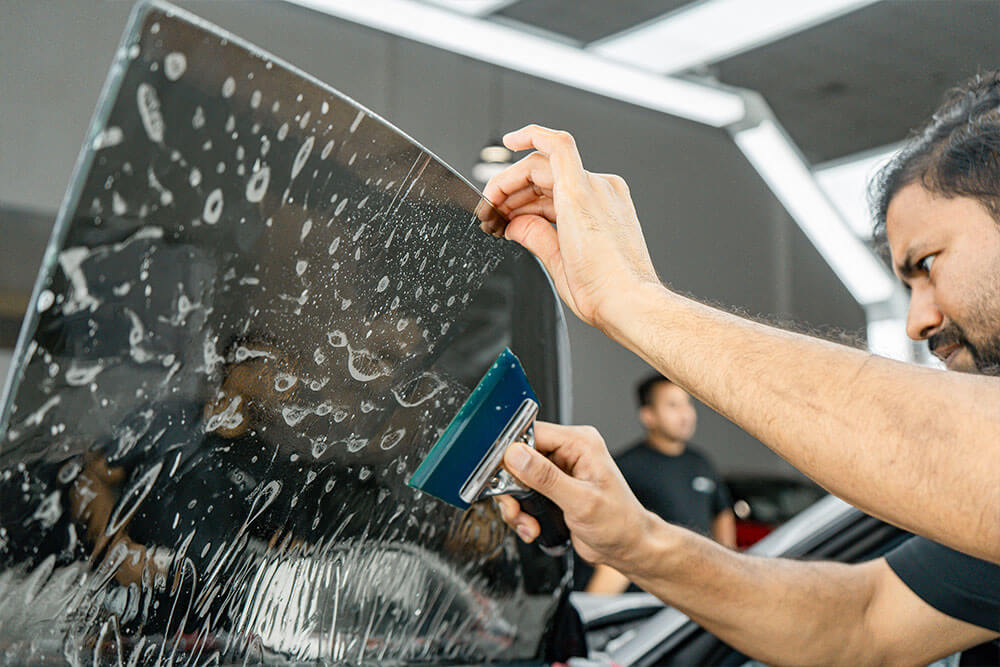
Window tinting offers both style and function, enhancing a vehicle’s look while providing practical benefits. With many people seeking better protection from heat, UV rays, and glare, tinting has become an essential feature for many car owners. But what exactly is window tinting, and how does it work? Here’s a closer look at the process and the benefits it provides.
Understanding Window Tinting
Window tinting is the application of a thin, multi layered film to the inside of a vehicle’s windows. These films are typically made from polyester, embedded with metal particles, dyes, or ceramic materials that filter light and heat. Tinting is available in various shades and thicknesses, allowing car owners to choose the level of light reduction and privacy they prefer.
The purpose of tinting is to block out certain wavelengths of light, especially UV and infrared rays, while allowing some visible light to pass through. By filtering out these rays, window tinting helps to keep the vehicle cooler, protect passengers from harmful UV exposure, and reduce glare that can impact driving safety.
How Window Tinting Works
Window tinting operates on the principle of selective light filtering. When sunlight hits the tinted window, the film works in multiple ways to manage different types of light:
- UV Protection
UV rays are known for causing skin damage and fading vehicle interiors over time. Quality window tints are designed to block nearly all UV rays, typically up to 99%. This level of protection shields passengers from exposure to harmful rays, creating a safer and more comfortable environment inside the car. Additionally, by blocking UV rays, the tint helps preserve the interior, preventing seats, dashboards, and other surfaces from fading or cracking. - Heat Reduction
Tinted windows can significantly reduce the amount of solar heat entering the car. Infrared rays are responsible for most of the heat we feel, and tinting materials, especially those embedded with ceramic or metallic particles, are crafted to block a high percentage of infrared light. By reducing heat, tinted windows keep the cabin cooler, which not only improves comfort but also reduces the strain on air conditioning, leading to better fuel efficiency. - Glare Reduction
Glare from the sun or headlights can make driving uncomfortable and even hazardous. Tinted windows help cut down on glare by filtering out excessive visible light. By reducing the intensity of incoming light, tints improve visibility and reduce eye strain, allowing drivers to see more clearly and react more quickly to road conditions. - Privacy and Security
Window tinting provides an added layer of privacy by limiting the view into the car’s interior. This is especially beneficial for those who carry valuables or simply prefer privacy on the road. Tinted windows make it more difficult for people outside to see into the car, adding a sense of security for passengers and possessions.
Types of Window Tinting
There are various types of window tints, each with its unique properties:
- Dyed Tint is an economical option that provides basic shade and glare reduction but doesn’t block as much heat.
- Metalized Tint contains metal particles that strengthen the film and improve heat reduction, though it may interfere with electronic signals.
- Ceramic Tint is highly effective at blocking heat and UV rays without interfering with electronics, making it a popular choice for high-end vehicles.
- Hybrid Tint combines dyed and metalized properties, offering a balance of heat reduction, durability, and appearance.
Final Thought
Window tinting goes beyond aesthetics; it’s a practical solution that protects you and your vehicle in multiple ways. By blocking harmful UV rays, reducing heat, and enhancing privacy, tinted windows create a safer and more comfortable driving experience. Whether for style, comfort, or safety, window tinting offers a versatile upgrade that serves both function and form, making every drive cooler, safer, and more enjoyable.


Get In Touch
Stay Connected For Ultimate Car Care
 sales@rmappf.ae