

When you decide to get your car’s windows tinted, you’re making an investment in aesthetics, comfort, and protection. But the final result—whether it’s a sleek, flawless finish or a bubbling, peeling disaster—is almost entirely dependent on the quality of the installation. A poor window tinting job can be more than just an eyesore; it can compromise the film’s effectiveness and lead to expensive repairs down the road.
This is a deep dive into the details that separate a professional installation from a DIY or budget job, explaining why the installer is just as important as the film itself—whether you’re dealing with window tint or paint protection film.
The Problem: A Bubbly, Peeling Mess
We’ve all seen it: a car with a tint job that has gone wrong. The classic signs are impossible to miss.
- Bubbling: Air or moisture trapped between the film and the glass creates unsightly bubbles that can be small and numerous or large and distracting.
- Peeling Edges: The film starts to lift and peel away from the edges of the window, especially in areas that are frequently touched, like the top of a roll-down window.
- A “Purple” Haze: A low-quality film that was improperly installed will often fade and turn a distinct purple or blue color due to sun exposure, a clear sign that the film’s UV inhibitors have failed.
- Contaminants: Tiny specks of dust, dirt, or lint are visible under the film, becoming magnified in the sunlight. These are the result of a dirty installation environment or a lack of proper surface preparation.
These issues don’t just ruin the look of your car; they signal that the film’s protective and heat-rejecting properties are no longer working as they should be.
The Professional Process: A Flawless, Lasting Finish
A professional installer follows a meticulous, multi-step process that eliminates these common flaws. It’s a precise craft that begins long before the film ever touches the glass.
1. Meticulous Preparation
The key to any great tint job is a perfectly clean, contaminant-free surface. A professional will:
- Thoroughly Clean the Glass: They use a specialized cleaning solution and razor blades to remove every last bit of dirt, grime, and residue from the glass.
- Decontaminate the Environment: The work area is kept as dust-free as possible. This prevents airborne particles from settling on the glass or film during the installation.
- Properly Cut the Film: Using advanced cutting software and templates, the film is precisely cut to the exact size and shape of your windows, ensuring a perfect fit with no gaps or overlaps.
2. The Art of Application
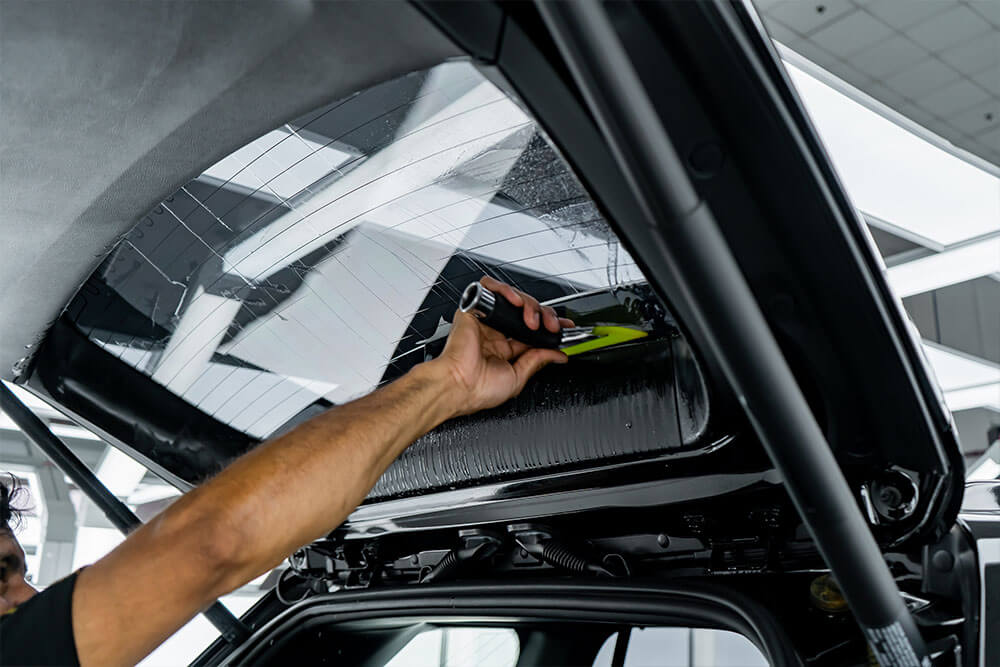
Once the glass is prepped, the real skill of the installer comes into play. They use a slip solution to float the film onto the glass, allowing for perfect positioning. With a squeegee and expert technique, they work the film, pushing out every last drop of water and air. This process, often called “laying the film,” is a delicate balance of pressure, heat, and precision to ensure a seamless bond.
3. Edge Sealing and Finishing
The final, crucial step is a professional edge seal. This involves using heat to shrink and secure the film’s edges, ensuring it adheres perfectly to the glass and won’t peel or lift over time. This is particularly important for roll-down windows, where the film is constantly subjected to friction. A professional leaves a clean, finished edge that’s nearly invisible.
In the end, the difference between a great window tinting job and a bad one is a commitment to precision, cleanliness, and skill. When you choose a reputable installer, you’re not just paying for the film—you’re paying for the peace of mind that comes with a long-lasting, flawless result.


Get In Touch
Stay Connected For Ultimate Car Care
 sales@rmappf.ae