

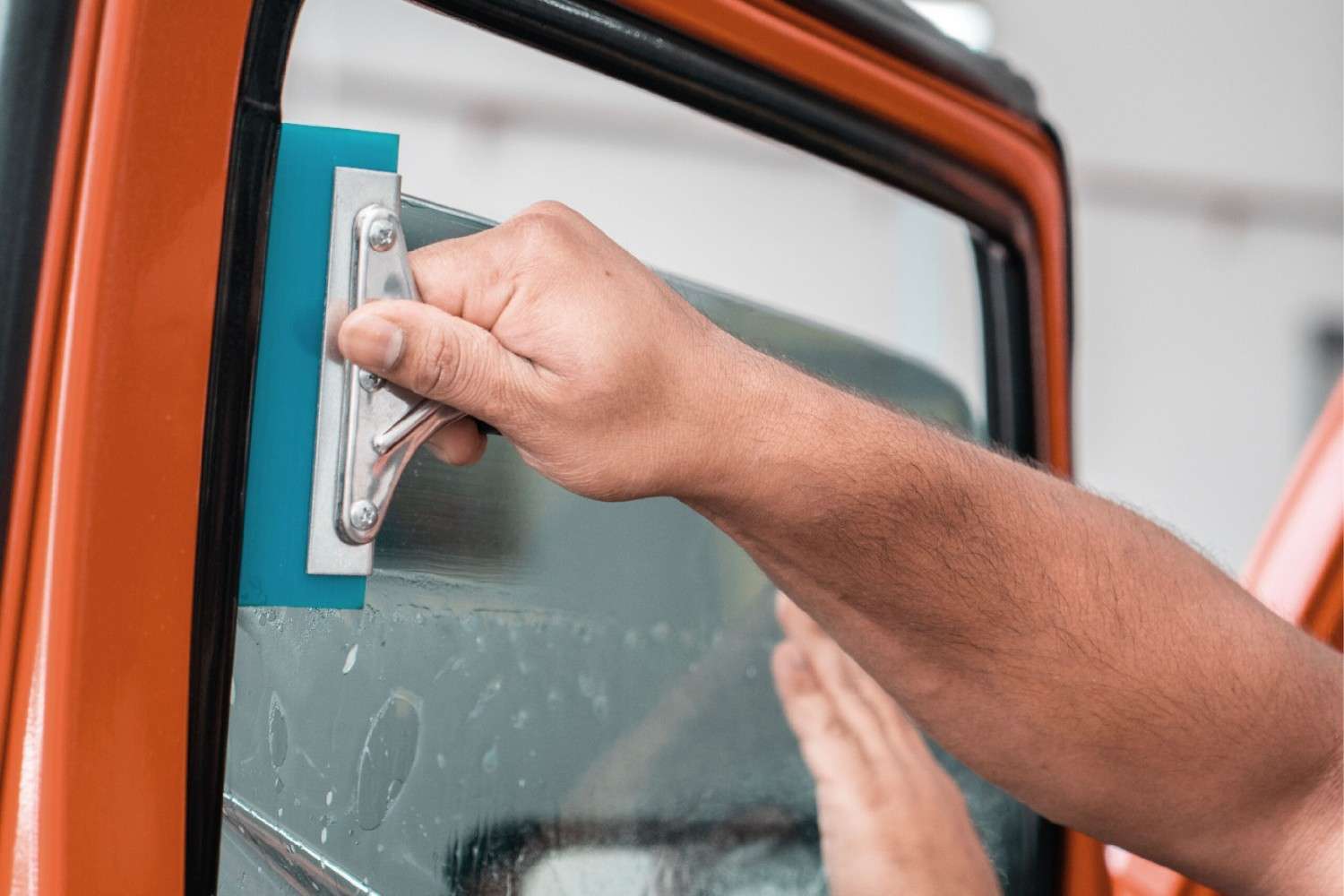
Most drivers in Dubai view window tinting as a tool for privacy or a shield against the sweltering desert sun. While its ability to reject 99% of UV rays and significant infrared heat is undisputed, there is a far more critical, life-saving benefit that often goes unmentioned: shatter resistance.
In a side-impact collision, your side windows are a vulnerable point of entry for debris and a major source of injury. Here is a forensic look at how professional window tinting and paint protection films can change the outcome of an accident.
1. Turning “Shatter” into “Spider-Web”
Standard side windows are made of tempered glass. This glass is designed to explode into thousands of small, blunt-edged pieces upon impact to prevent deep lacerations. However, in a high-speed collision, these “safe” fragments still fly through the cabin at high velocity, potentially causing eye injuries or skin abrasions.
- The Safety Angle: When you apply professional window tinting at RMA PPF, you aren’t just adding color; you are adding a robust, multi-layered polyester barrier bonded by powerful adhesives.
- The Result: In an impact, the glass still breaks, but the film holds the fragments together in a single, flexible sheet. This “spider-web” effect prevents glass from spraying onto the driver and passengers.
2. Preventing Occupant Ejection
One of the most dangerous aspects of a side-impact or rollover accident is “partial ejection,” where a passenger is thrown toward or through a shattered window.
- The Protective Barrier: A heavy-duty car protection film significantly increases the structural integrity of the window. By keeping the glass intact within the frame for longer, the film acts as a secondary net, helping to keep occupants safely inside the vehicle cabin where the side-curtain airbags can do their job.
3. Protection from External Debris
In a multi-car pileup or a collision near roadworks, it isn’t just your own glass you have to worry about. Flying debris, metal shards, or stones can easily penetrate an unprotected side window.
- The Shield: Automotive safety films are engineered to absorb and redistribute the energy of an impact across a wider surface area. This makes it much harder for external objects to pierce through the glass and enter the passenger space.
4. Why Spec Matters: Tint vs. Safety Film
It is important to note that not all tints are created equal. While a standard dyed film offers some shatter resistance, true car protection film (often called “Safety and Security Film”) is significantly thicker—typically ranging from 4-mil to 8-mil or more.
- RMA Pro Tip: If safety is your primary goal, look for high-tensile nano-ceramic films. These provide the heat rejection you need for Dubai’s climate while offering the high-impact strength required to protect your family in an emergency.
The RMA PPF Commitment
At RMA PPF, we don’t view window tinting as a cosmetic upgrade—we view it as an essential layer of your vehicle’s safety ecosystem. Our expert technicians ensure a flawless, edge-to-edge bond that maximizes the film’s adhesive strength, ensuring that if the unthinkable happens, your glass stays where it belongs: out of the cabin.


Get In Touch
Stay Connected For Ultimate Car Care
 sales@rmappf.ae