

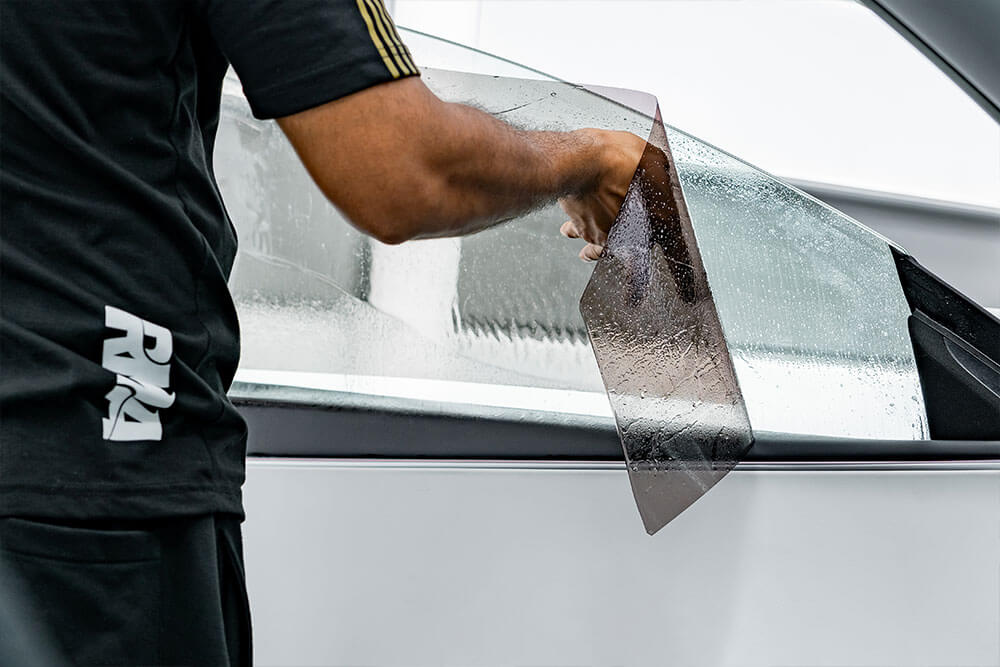
In the UAE, where the UV index regularly hits “extreme” levels before most people have finished their morning coffee, window tinting is often viewed as a luxury or a stylistic choice. But if you spend more than 30 minutes a day on the E11 or Sheikh Zayed Road, the conversation shifts from aesthetics to biology.
Is the film on your glass just a filter, or is it actually a piece of preventative medical equipment? For the modern UAE commuter, the answer is increasingly leaning toward the latter.
1. The “Driver’s Side” Aging Phenomenon
Dermatologists have long noted a specific pattern of photo-aging and skin cancer in frequent drivers: the left side of the face and the left arm typically show significantly more sun damage than the right.
While standard automotive glass is designed to block UVB rays (the ones that cause immediate sunburn), most factory windows allow UVA rays to pass through virtually unchecked. UVA rays penetrate deeper into the skin, breaking down collagen and damaging DNA. High-quality window tinting—specifically ceramic or crystalline films—acts as a total sunblock, neutralizing 99% of these harmful rays and protecting you from “commuter’s tan” and long-term skin health risks.
2. Ocular Health: Beyond the Sunglasses
Glaring at the horizon during a sunset drive toward Abu Dhabi isn’t just a nuisance; it’s a strain on your ocular health. Chronic exposure to high-intensity glare and UV radiation can contribute to:
- Cataract formation.
- Macular degeneration.
- Pterygium (often called “surfer’s eye,” though “driver’s eye” is just as accurate in Dubai).
Even with polarized sunglasses, light entering through the side windows can bounce off the interior surfaces of your lenses. Professional window tinting reduces this peripheral glare, significantly lowering eye fatigue and protecting your vision during those long, high-contrast commutes.
3. Mitigating Thermal Stress and Heat Exhaustion
We’ve all experienced it: the “blast furnace” effect when opening a car door in August. However, the medical concern is what happens during the drive.
When your cabin temperature remains high, your heart rate increases as your body struggles to cool itself down. For commuters with underlying conditions like hypertension or even those prone to migraines, this thermal stress is a major trigger. By rejecting up to 97% of infrared heat, ceramic window tinting maintains a stable, cool environment that reduces the physiological load on your body, keeping you focused and calm behind the wheel.
4. Specialized Medical Exemptions in the UAE
The UAE authorities recognize that for some, tinting is a literal prescription. Individuals with specific medical conditions—such as Lupus, Psoriasis, or extreme Solar Urticaria (sun allergy)—can apply for legal permits to exceed the standard tinting percentages. This formal acknowledgement by the government underscores that window tinting is viewed as a vital protective barrier for vulnerable residents.
The Verdict: More Than a Cosmetic Upgrade
In a climate as unforgiving as the Arabian Peninsula, your car is your second skin. Treating your glass with high-index film isn’t just about looking “VIP” at the valet; it’s about ensuring that your 10-hour work week behind the wheel doesn’t result in a lifetime of skin and eye complications.


Get In Touch
Stay Connected For Ultimate Car Care
 sales@rmappf.ae