

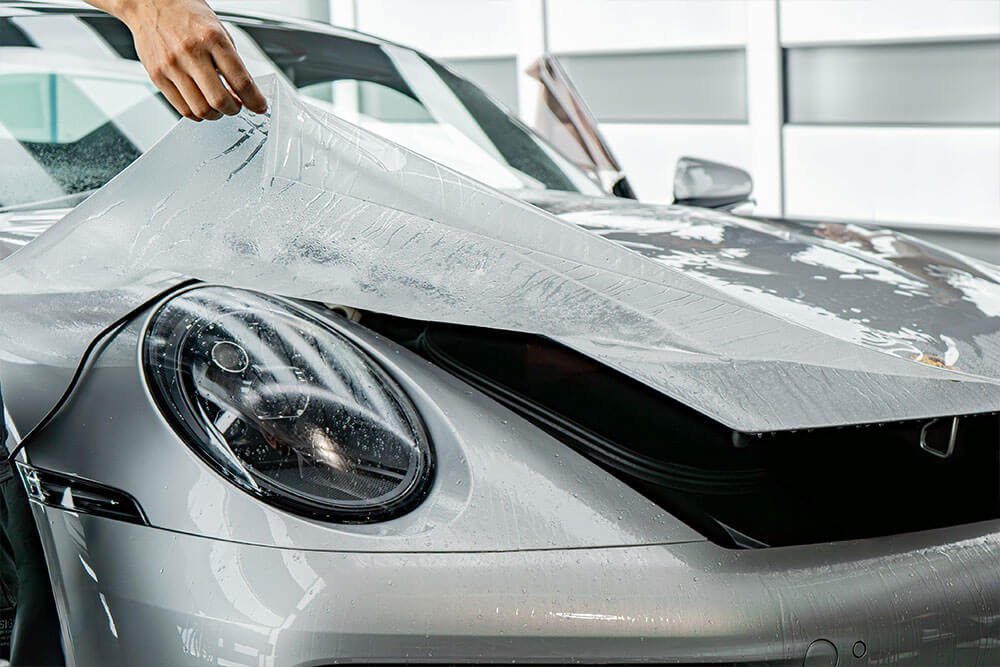
Let’s face it—nothing kills the look of a car faster than a yellowing film. You invested in PPF (paint protection film) to keep your ride looking flawless, but now instead of protecting the paint, the film itself has become the eyesore. And if you’ve seen cars where the once-clear film turns a dull, yellow haze, you know how frustrating it is.
But here’s the good news: not all PPF on car suffers this fate. Yellowing has specific causes, and modern high-tech films—like RMA PPF—are designed to fight back against it. So, before you rip off your existing film in frustration, let’s break down why yellowing happens in the first place, and how choosing the right car protection film makes all the difference.
Why Does PPF Turn Yellow?
Yellowing isn’t random—it’s chemistry. Over time, a few main factors cause the film to discolor:
UV Exposure
The Dubai sun (or any strong sunlight) is relentless. Cheaper PPF car products lack proper UV inhibitors, so the polyurethane layers gradually oxidize and shift to a yellow tint.
Environmental Contaminants
Road tar, tree sap, bug acids, and even constant desert dust can embed into the pores of the film. Without advanced top-coats, these stains build up, creating a dull, yellowish hue.
Inferior Adhesives
Older-generation car protection films used adhesives that weren’t fully resistant to heat and UV. Over time, the glue itself discolored, which bled through the film and gave it that stained look.
Improper Maintenance
If you’re running your PPF car through harsh, brush-based washes or skipping regular cleaning, micro-contaminants can bake into the surface. The result? A yellow tint that’s hard to reverse.
How RMA PPF Solves the Yellowing Problem
This is where RMA steps in. Their films are engineered not just for impact resistance, but also for long-term clarity. Here’s how they keep yellowing at bay:
Advanced UV Blockers
RMA integrates UV inhibitors directly into the film layers. That means your PPF on car resists sunlight damage and stays clear even under Dubai’s intense conditions.
Hydrophobic, Stain-Resistant Coatings
The top layer of RMA’s car protection film repels dirt, dust, bug acids, and tar. Instead of embedding, contaminants slide off or wash away easily, preventing that gradual yellow tint.
Non-Yellowing Adhesive Technology
Unlike cheaper alternatives, RMA films use optically clear adhesives that won’t discolor over time. No glue-stain effect, no hazy patches—just invisible protection.
Self-Healing Properties
Scratches and swirl marks don’t just dull your car’s shine—they can trap dirt and make the film look older. RMA’s self-healing surface smooths out minor scratches with heat, keeping the film crystal-clear.
Signs It’s Time to Replace Your Old PPF
Not all films can be saved. If your current PPF car already looks yellowed or cloudy, here are the red flags that it’s past its prime:
- Edges lifting or peeling
- Yellow tint that won’t come out with cleaning
- Cracking or bubbling across panels
- Rough texture or sandpaper-like feel
At this point, replacing the old film with a premium solution like RMA’s is the only way to restore your car protection film back to invisible mode.
The Bottom Line
Yellowing PPF is frustrating—but it’s not inevitable. It happens when low-quality films, outdated adhesives, or poor maintenance meet harsh driving conditions.
The solution? Choose a premium PPF on car that’s engineered to last. RMA PPF is built with advanced UV resistance, stain-proof coatings, and non-yellowing adhesives that keep your film clear and your car flawless.
If you’re serious about long-term car paintwork protection, don’t settle for just any car protection film. Go with a brand that guarantees clarity, because the best PPF car should be invisible—protecting your paint without ever stealing the spotlight.


Get In Touch
Stay Connected For Ultimate Car Care
 sales@rmappf.ae