

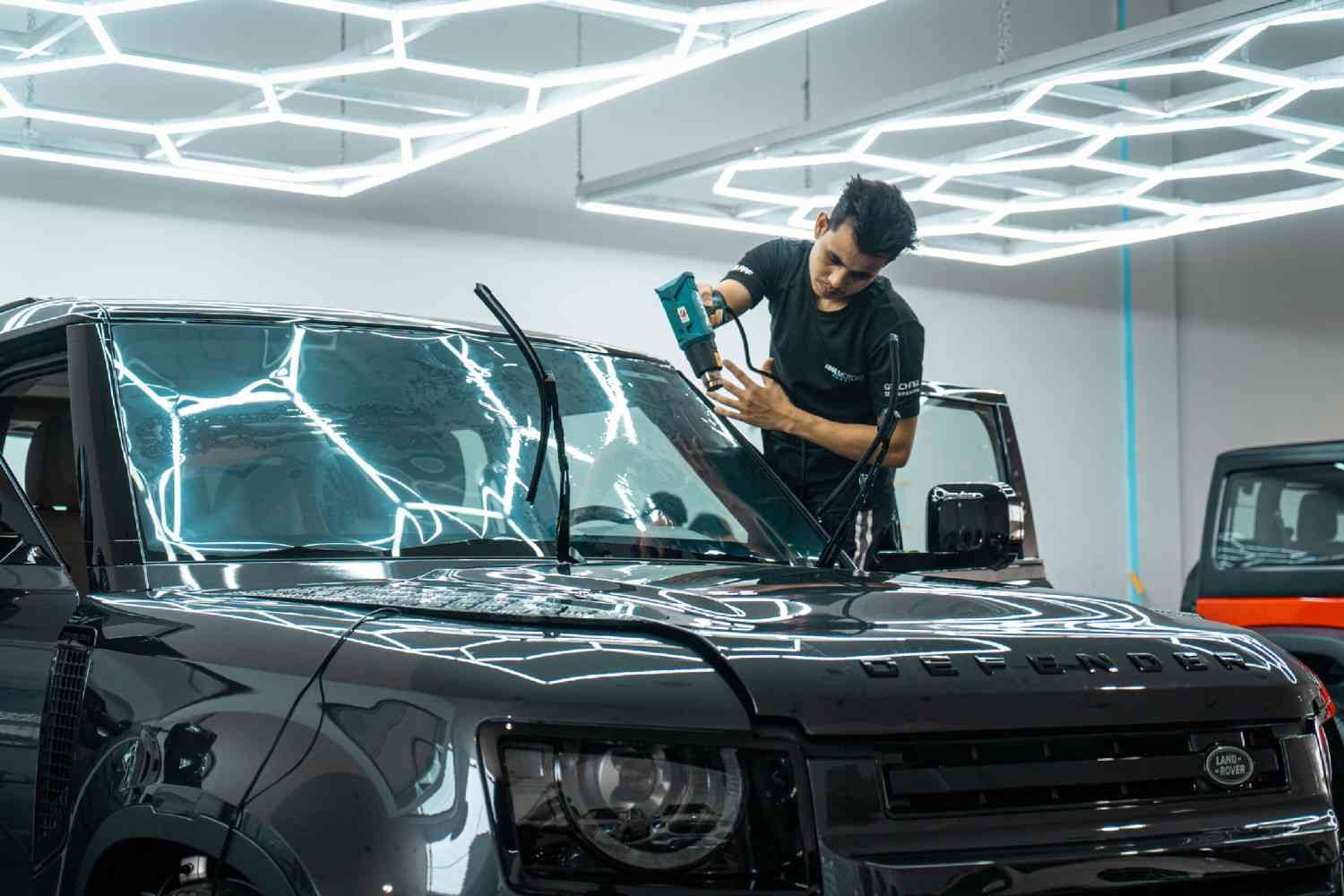
Window tint is more than a styling choice. It plays a direct role in cabin comfort, heat control, privacy, and interior protection. Among the most common options available today are ceramic tint, carbon tint, and dyed tint. While they may appear similar from a distance, their performance differences are significant, especially in regions like Dubai where heat and sunlight are constant factors.
Understanding how each type performs helps car owners make a practical decision based on long term comfort and durability rather than appearance alone.
Dyed window tint
Dyed window tint is the most basic and widely available option. It uses a layer of dye to reduce visible light entering the cabin. This gives the glass a darker appearance and provides a level of privacy.
However, its performance in heat rejection is limited. Dyed tint primarily blocks light rather than infrared heat. Over time, especially under strong sunlight, the dye can begin to fade, resulting in a purple or uneven appearance. Its lifespan is also shorter compared to advanced tint technologies.
Dyed tint is generally chosen for budget focused applications or temporary use, rather than long term performance.
Carbon window tint
Carbon tint is a step above dyed film and uses carbon particles instead of dye to block sunlight. This improves heat rejection and eliminates the fading issues commonly seen in dyed films.
Carbon tint provides a more stable appearance over time and offers better insulation against heat. It also reduces glare more effectively, improving driving comfort during bright conditions.
While it performs well in most environments, its heat rejection capability is still moderate when compared to higher grade ceramic films. It offers a balanced combination of cost and performance.
Ceramic window tint
Ceramic tint represents the highest performance category among the three. It uses non metallic ceramic particles designed to block infrared heat while maintaining high optical clarity. Unlike dyed or carbon films, ceramic tint does not rely heavily on visible darkness to reduce heat.
This allows the glass to remain relatively clear while still providing strong thermal insulation. It also offers superior UV protection, helping preserve interior materials such as leather, plastics, and dashboard surfaces.
Ceramic tint maintains performance over long periods without fading or discoloration. Its stability under intense sunlight makes it particularly suitable for climates with extreme heat exposure.
Key differences in performance
Each tint type differs in three main areas
Heat rejection
Durability
Optical clarity
Dyed tint focuses mainly on appearance and light reduction.
Carbon tint balances heat rejection with long term stability.
Ceramic tint prioritizes heat rejection, clarity, and durability.
In high temperature environments like Dubai, the difference in heat rejection becomes especially noticeable during peak summer conditions.
Practical application in real driving conditions
For daily city driving and short usage cycles, carbon tint can offer a reasonable balance between performance and cost. However, for luxury vehicles or long distance driving in high heat conditions, ceramic tint provides a significantly more comfortable cabin environment.
Dyed tint may still be used for temporary or budget oriented applications, but it is less suited for long term exposure to strong sunlight.
Material quality and installation consistency
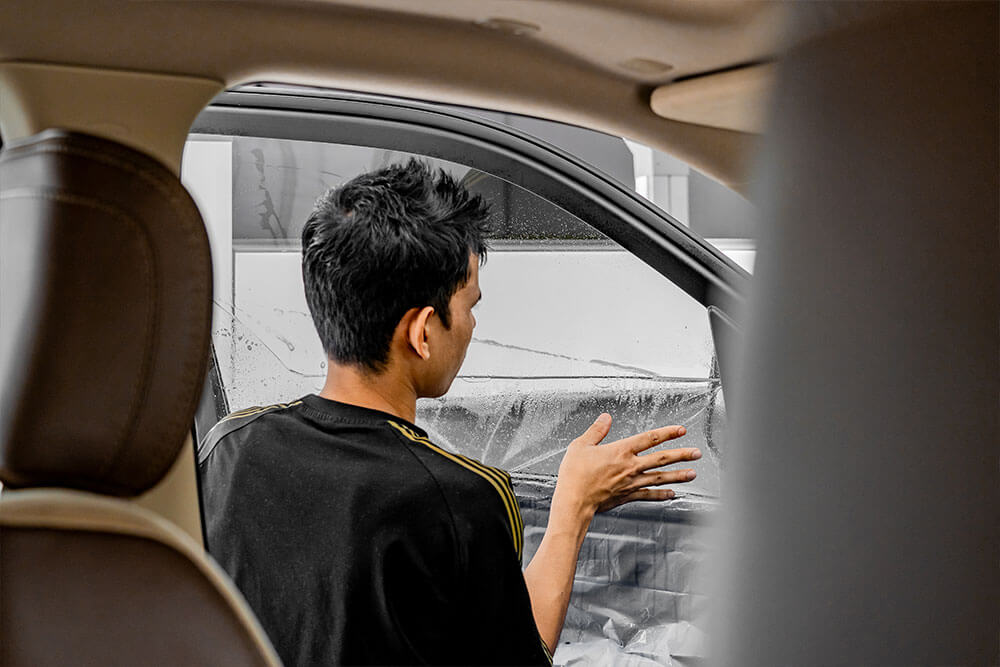
Regardless of tint type, installation quality plays an important role in final performance. Proper surface preparation and dust free application ensure optical clarity and prevent bubbling or peeling over time.
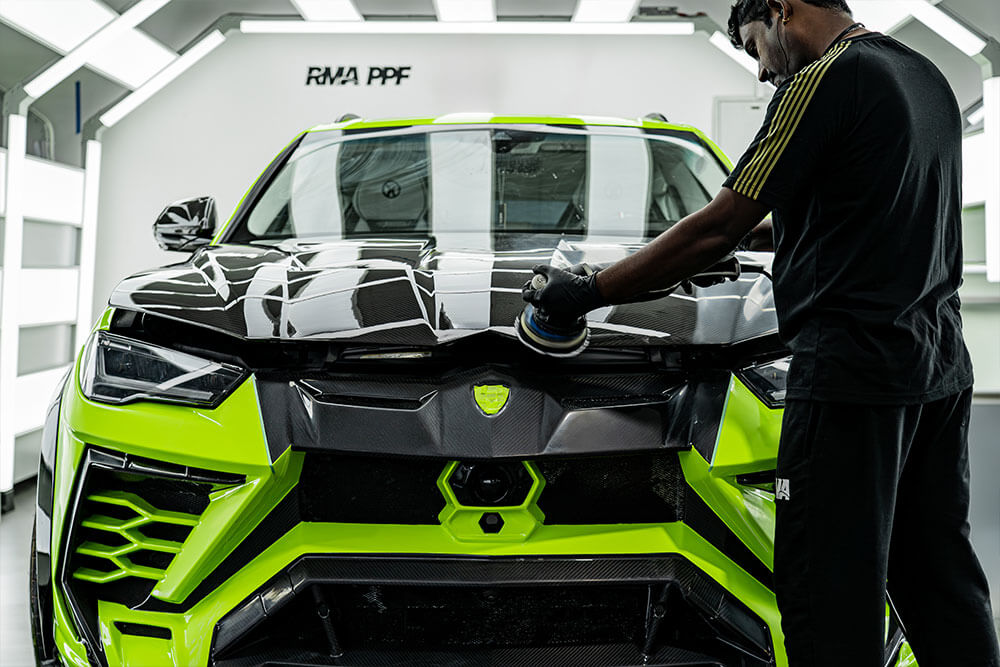
High quality films such as those integrated into professional automotive setups by shogun PPF maintain consistent performance standards when installed correctly. In Dubai, experienced installers such as RMA PPF ensure that tint films are applied with precision to achieve long lasting visual and functional results.
Technical insight for vehicle owners
The choice between ceramic, carbon, and dyed tint is ultimately a balance between budget, comfort, and long term expectations. While all three provide basic privacy and styling benefits, their ability to manage heat and maintain clarity over time varies significantly. In climates with intense sunlight exposure, higher grade materials consistently deliver more stable and reliable performance across daily driving conditions.

Get In Touch
Stay Connected For Ultimate Car Care
 sales@rmappf.ae