

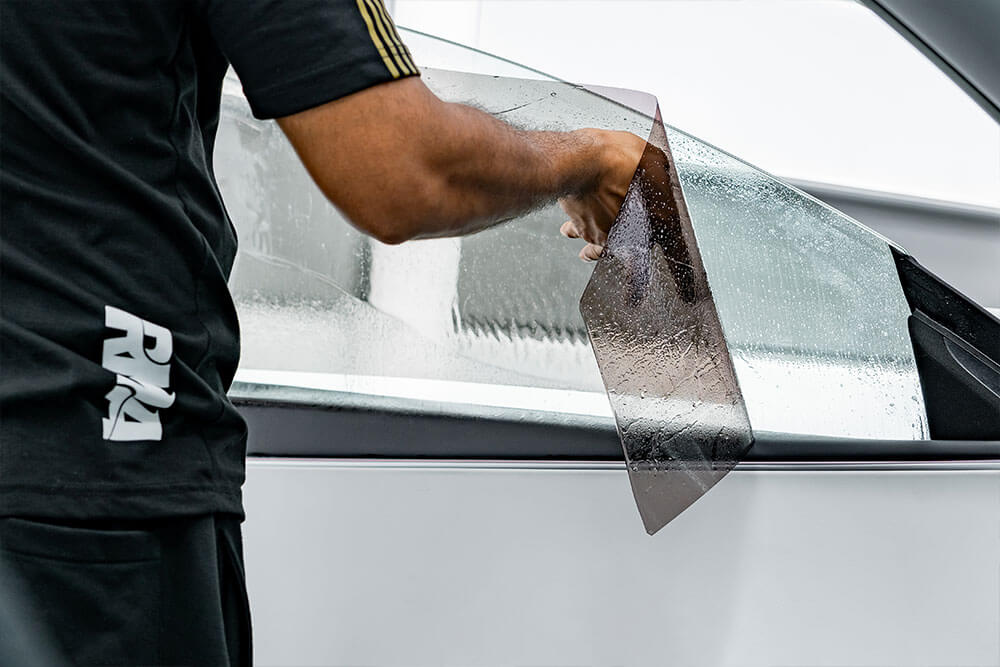
We’ve all been there: standing in a showroom, squinting at a wall of dark film samples, and picking the one that looks the “coolest.” When I got my first window tint, I thought it was a simple aesthetic choice. I walked in, asked for the darkest legal shade, and assumed my car would suddenly become a freezer on wheels.
I was wrong. My first experience was a steep learning curve in automotive physics and local regulations. Now that I’m on my third vehicle, I’ve realized that what you don’t know can actually make your driving experience worse. Here are the five most important lessons I learned the hard way.
1. Darkness Does Not Equal Heat Rejection
The biggest mistake I made was assuming that a 50% tint would keep me cooler than a 30% tint simply because it was darker.
In the “nitty-gritty” world of film technology, darkness is just VLT (Visible Light Transmission). The number that actually matters for your comfort in the Dubai sun is TSER (Total Solar Energy Rejected) and IRR (Infrared Rejection). I learned that a high-quality, almost clear nano-ceramic car window tint can actually block more heat than a pitch-black “budget” film. If you want to stay cool, look at the IRR specs, not just the shade.
2. The 50% RTA Rule is a Gift, Not a Suggestion
When I first started driving, the limits were much stricter. By 2026, the RTA-approved 50% standard has become the “sweet spot.”
My first job was a 70% “limo tint” that I thought I could get away with. Not only did it make night driving a terrifying guessing game, but I also ended up with a fine and a mandatory removal order. Sticking to the 50% standard isn’t just about legality; it’s about maintaining the optical clarity needed to spot delivery bikes and lane markings when the sun goes down.
3. The “Haze” is Part of the Process
Twenty-four hours after my first install, I panicked. I saw tiny water pockets and a slight “milky” haze through the rear glass. I almost drove back to the shop to demand a refund.
I wish I’d known about the curing period. High-performance films are thick, and the moisture used during the install needs time to evaporate through the pores of the film. In the UAE heat, this usually takes 3 to 5 days. If you see bubbles in the first 48 hours, leave them alone—physics will usually do the work for you.
4. Metallic Films are the Enemy of Connectivity
On my first car, I chose a metallic-based film because it was cheaper and looked reflective. Suddenly, my GPS started “glitching” and I’d lose my mobile signal in the middle of JLT.
I learned that metallic particles act like a Faraday cage, blocking the radio frequencies your car needs to communicate. For any modern car packed with sensors and navigation, nano-ceramic is the only way to go. It offers elite heat rejection without turning your car into a dead zone for signals.
5. The Installer is More Important Than the Brand
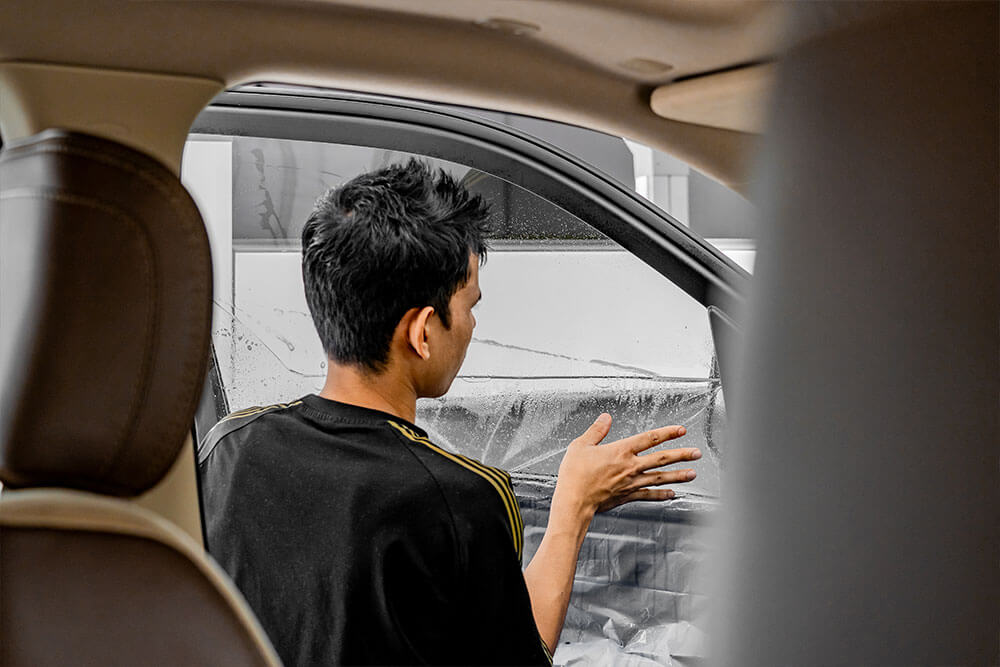
You can buy the most expensive film in the world, but if the person applying it doesn’t understand “micro-shaving” or how to decontaminate a felt seal, it will peel.
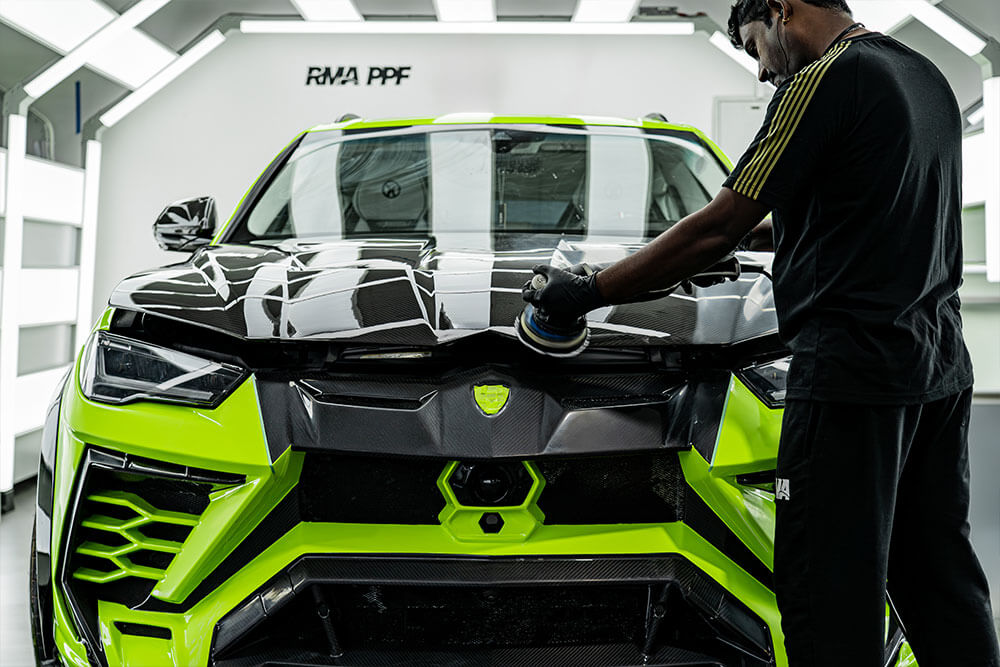
I’ve learned that choosing the right detailer is a strategic move. I eventually found the team at RMA PPF, and the difference in their approach was staggering. They are genuine car enthusiasts who understand the “nitty-gritty” of how 2026-spec glass behaves. They don’t just “stick and trim”; they treat the install as a surgical procedure.
While they are famous for their paint protection film (PPF) work, their window film team operates with the same enthusiast-led obsession with excellence. They understand the thermal expansion of the glass and ensure every edge is tucked perfectly. It’s this level of craftsmanship that prevents the bubbling and peeling I experienced with my first “bargain” job.
The Verdict
My first tint job was a disaster because I chased the lowest price and the darkest shade. My latest job is a success because I prioritized TSER, signal-friendly ceramic tech, and a specialist installation.

Get In Touch
Stay Connected For Ultimate Car Care
 sales@rmappf.ae