

Headlight oxidation is a common issue that affects both the appearance and functionality of modern vehicles. Over time, headlights lose their clarity and develop a cloudy or yellowed surface. This is not only a cosmetic concern but also a safety issue, as reduced transparency directly impacts nighttime visibility.
In regions like the UAE, where ultraviolet exposure and high temperatures are constant, headlight oxidation tends to occur more quickly if proper protection and maintenance are not applied.
What causes headlight oxidation
Most modern headlights are made from polycarbonate plastic rather than glass. While this material is lightweight and impact resistant, it is naturally vulnerable to ultraviolet radiation. To protect it, manufacturers apply a thin clear coat designed to block UV rays and maintain surface clarity.
Over time, this protective layer begins to break down due to continuous exposure to sunlight, heat, and environmental contaminants. Once the coating deteriorates, the underlying plastic becomes exposed and starts reacting directly with UV radiation, leading to oxidation.
Early signs of headlight damage
Headlight oxidation does not happen instantly. It develops gradually through visible stages. The earliest sign is a slight haze or dullness on the lens surface. This may be more noticeable under direct sunlight or when the headlights are turned on at night.
As oxidation progresses, the lens becomes increasingly yellow or cloudy. In advanced cases, the surface may appear rough or chalky, significantly reducing light output and affecting driving safety during nighttime conditions.
Impact of UV exposure and heat
Ultraviolet radiation is the primary factor behind headlight oxidation. In hot climates such as the UAE, strong sunlight accelerates the breakdown of the protective clear coat. Heat further intensifies this process by expanding and weakening the surface structure of the lens material.
Dust and sand particles in the environment also contribute by creating micro abrasions during cleaning or wind exposure. These small surface scratches allow UV rays to penetrate more deeply, speeding up oxidation.
Why oxidation affects visibility
As headlights become cloudy, light output is reduced and scattered unevenly. This decreases the effective beam range and makes nighttime driving less safe. Drivers may also notice that the headlights appear dim even when the bulbs are functioning correctly.
This reduction in clarity is not related to electrical performance but rather to the physical condition of the lens surface.
Restoration methods for oxidized headlights
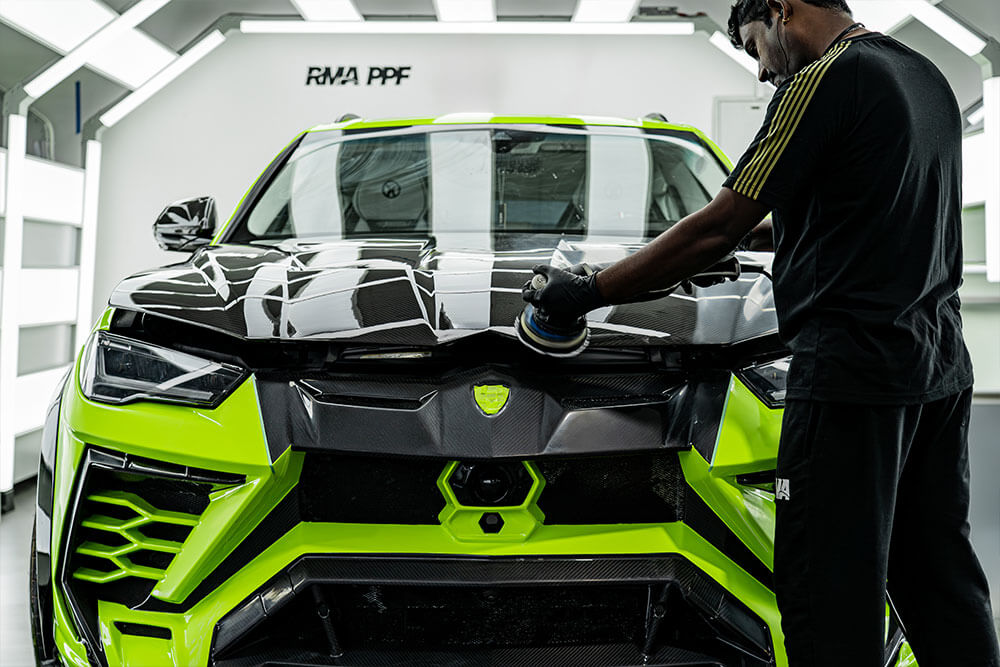
Headlight restoration typically involves a multi step process designed to remove the oxidized layer and restore clarity. The first step usually includes surface cleaning to remove contaminants and prepare the lens for correction.
Next, controlled sanding or polishing is used to remove the damaged outer layer. This process gradually restores transparency by leveling the surface. After correction, a protective coating is applied to slow down future oxidation.
In more severe cases, multiple stages of correction may be required to achieve full clarity restoration.
Importance of protective coating after restoration
Restoration alone is not sufficient for long term results. Without protection, headlights will begin oxidizing again relatively quickly. Applying a UV resistant coating or protective film helps preserve clarity and slows down future degradation.
Advanced automotive protection systems such as shogun PPF are often used to provide a durable barrier against UV radiation and environmental exposure, helping maintain long term headlight clarity.
Role of professional detailing services
Professional detailing plays an important role in both restoration and prevention. Experienced technicians understand how to assess the level of oxidation and apply the correct correction method without damaging the lens structure.
In Dubai, detailing specialists such as RMA PPF use structured restoration techniques combined with protective solutions to ensure headlights remain clear under extreme climate conditions.
Technical insight for vehicle owners
Headlight oxidation is a progressive form of UV damage that affects both appearance and safety. While it can be effectively restored through proper correction methods, long term clarity depends on consistent protection and maintenance. In high exposure environments, preventive care is essential to maintain optimal visibility and extend the functional lifespan of headlight lenses.


Get In Touch
Stay Connected For Ultimate Car Care
 sales@rmappf.ae