

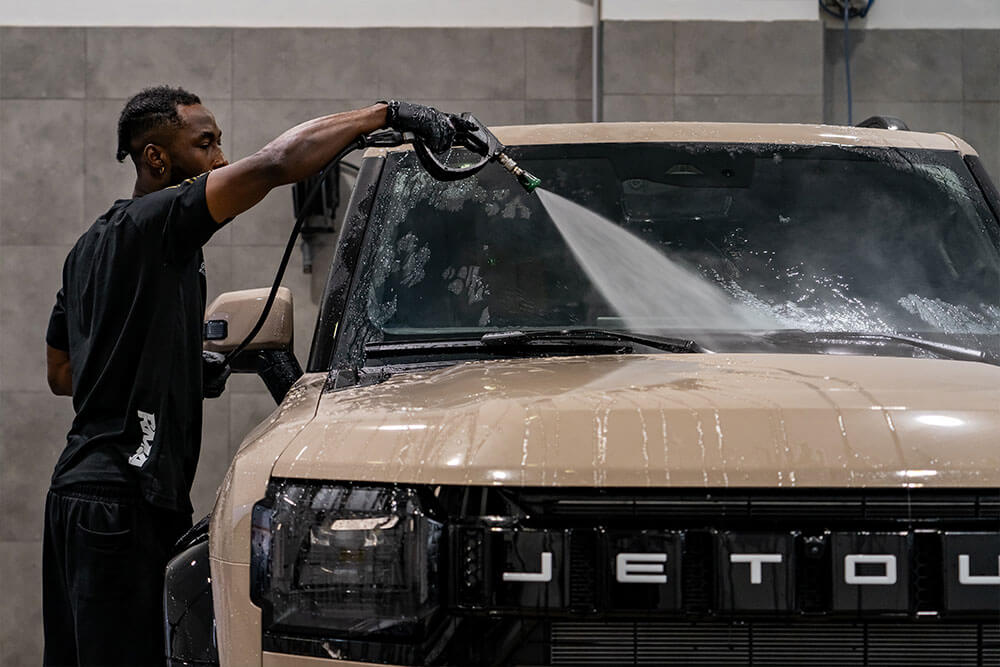
Interior fabric contamination is a common issue in vehicles that experience regular daily use. Fabric seats, carpets, and upholstery naturally absorb dust, spills, sweat, and airborne particles over time. In warm and dusty environments such as the UAE, contamination builds up faster and becomes more difficult to remove if not treated properly.
Understanding how fabric contamination develops and how deep cleaning works helps maintain interior hygiene, comfort, and long term material condition.
How fabric contamination builds up
Automotive fabric is designed to be breathable and comfortable, but this also makes it highly absorbent. Unlike leather or synthetic surfaces, fabric does not have a sealed protective layer, which means liquids and fine particles can penetrate deep into the fibers.
Everyday use contributes to contamination through food particles, drink spills, dust from shoes, and body oils. Over time, these contaminants settle into the lower layers of the fabric, making surface cleaning less effective.
Types of contamination in interior fabric
Fabric contamination can be divided into two main types. Surface contamination includes dust, loose dirt, and light stains that sit on the top layer of the material. These are relatively easy to remove with regular vacuuming and light cleaning.
Deep contamination involves embedded dirt, liquid stains, and organic residue that penetrate into the fabric structure. This type of contamination requires more advanced cleaning techniques to fully extract, Odors are also a common result of deep contamination, especially when spills or moisture are not cleaned properly.
Importance of vacuuming before deep cleaning
Vacuuming is the first and most important step in fabric cleaning. It removes loose particles and prevents them from turning into slurry when wet cleaning solutions are applied.
Professional vacuuming also helps expose hidden areas of contamination, allowing more targeted cleaning during the deep cleaning process.
Hot water extraction method
One of the most effective deep cleaning techniques for fabric interiors is hot water extraction. This process involves injecting a controlled mixture of hot water and cleaning solution into the fabric, followed by immediate extraction using a vacuum system.
This method lifts embedded dirt from deep within the fibers and removes it along with excess moisture. It is highly effective for removing stains, bacteria, and odor causing contaminants, Proper drying after extraction is essential to prevent moisture retention and mildew formation.
Foam and agitation cleaning technique
Foam based cleaning is another method used for fabric interiors. A specialized cleaning foam is applied to the surface and gently worked into the fabric using soft brushes or agitation tools.
The foam breaks down dirt and oils, allowing them to be lifted from the fibers. Once loosened, the residue is removed using microfiber towels or vacuum extraction, This method is particularly useful for light to moderate contamination.
Importance of stain treatment
Certain stains require targeted treatment before full cleaning. Oil based stains, beverage spills, and organic marks may need specialized cleaning agents to break down their composition. Applying the correct treatment ensures that stains are removed without damaging fabric color or texture.
Drying and post cleaning care
Proper drying is a critical part of fabric cleaning. Moisture left inside upholstery can lead to odors, mold growth, and recontamination. Air circulation and controlled drying methods help restore fabric to its original condition safely.
Using interior protection sprays after cleaning can help reduce future contamination absorption and make maintenance easier.
In advanced vehicle care systems, exterior protection solutions such as shogun PPF are used to shield paint surfaces, while interior fabric protection focuses on creating barriers against liquid and dirt penetration.
Role of professional detailing services
Professional detailing services are essential for effective deep cleaning of interior fabrics. Experienced technicians understand how to balance moisture, cleaning strength, and agitation to avoid damaging delicate fibers.
In the UAE, specialists such as RMA PPF use structured interior cleaning processes that ensure thorough contamination removal while maintaining fabric integrity under demanding environmental conditions.
Technical insight for vehicle owners
Interior fabric contamination is a progressive issue driven by daily use and environmental exposure. While surface cleaning helps maintain appearance, deep cleaning techniques are necessary to restore hygiene and remove embedded contaminants. Regular maintenance combined with professional detailing ensures long term cleanliness, comfort, and material durability in vehicle interiors.

Get In Touch
Stay Connected For Ultimate Car Care
 sales@rmappf.ae