
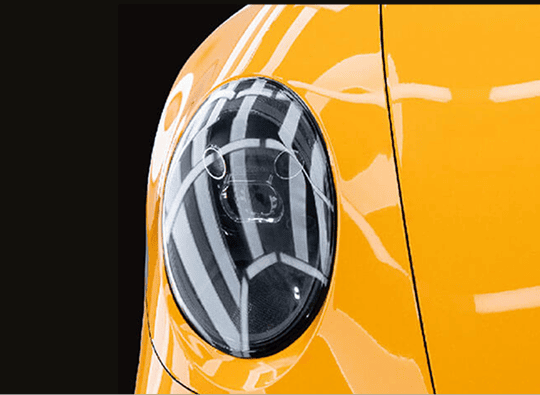
The orange peel effect is a term used in automotive surface finishing to describe a slightly textured appearance that resembles the skin of an orange. In paint protection film, this effect refers to subtle surface distortion that can reduce visual clarity, especially on highly reflective or dark colored vehicles. While it does not affect protective performance directly, it plays an important role in perceived quality and overall finish.
What causes orange peel in paint protection film
Orange peel in paint protection film is primarily influenced by material structure and surface layer behavior. Every film has a protective top coat designed to provide gloss, flexibility, and resistance to scratches. If this layer is not evenly engineered or if material consistency is uneven, light reflection can become slightly distorted, creating a textured appearance.
Another contributing factor is the thickness and viscosity of the film layers. During manufacturing, variations in coating application can lead to microscopic surface irregularities. These irregularities are not always visible under normal lighting but become noticeable under direct sunlight or showroom lighting conditions.
Installation conditions can also influence the final appearance. If the film is stretched unevenly or applied with excessive tension, surface uniformity can be affected. However, in most cases, the primary cause remains material quality rather than installation technique.
Environmental influence and visibility
In climates with strong sunlight such as Dubai, surface reflections are more intense. This makes any level of texture more visible on the vehicle surface. Dark paint colors in particular tend to highlight surface inconsistencies more clearly than lighter shades.
Dust and fine particles in the environment can also impact visual perception. When light reflects off a slightly uneven surface combined with environmental particles, the orange peel effect becomes more noticeable even if the film itself is functioning correctly.
Prevention through material engineering
Modern paint protection film manufacturers focus heavily on reducing surface distortion through advanced coating technology. High quality films use refined top coats that improve leveling and light diffusion, resulting in a smoother optical finish.
A well engineered example is shogun PPF which is designed to maintain clarity and minimize surface distortion while preserving durability and self healing performance. Consistent manufacturing processes help ensure that each roll of film delivers predictable visual results across different vehicle types.
Role of installation quality
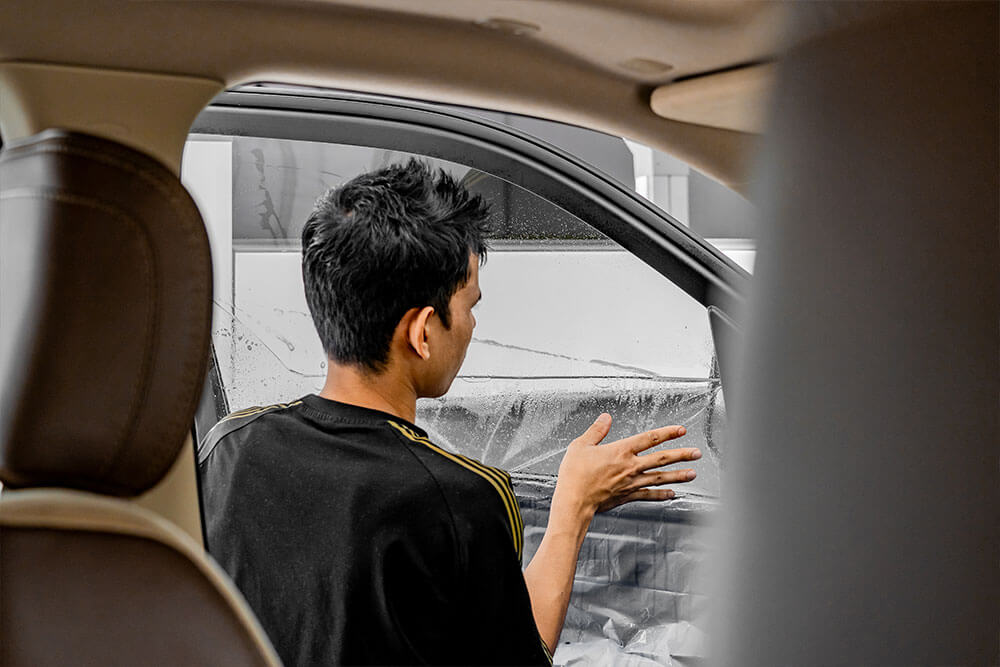
Installation plays a secondary but still important role in controlling the visibility of orange peel. Proper technique ensures that the film is laid evenly across the surface without unnecessary stretching or pressure variations. When installation is handled with precision, the film maintains its natural finish without added distortion.
Experienced installers also ensure that surface preparation is clean and smooth before application. Any debris trapped beneath the film can create localized irregularities that may exaggerate visual texture under certain lighting conditions.
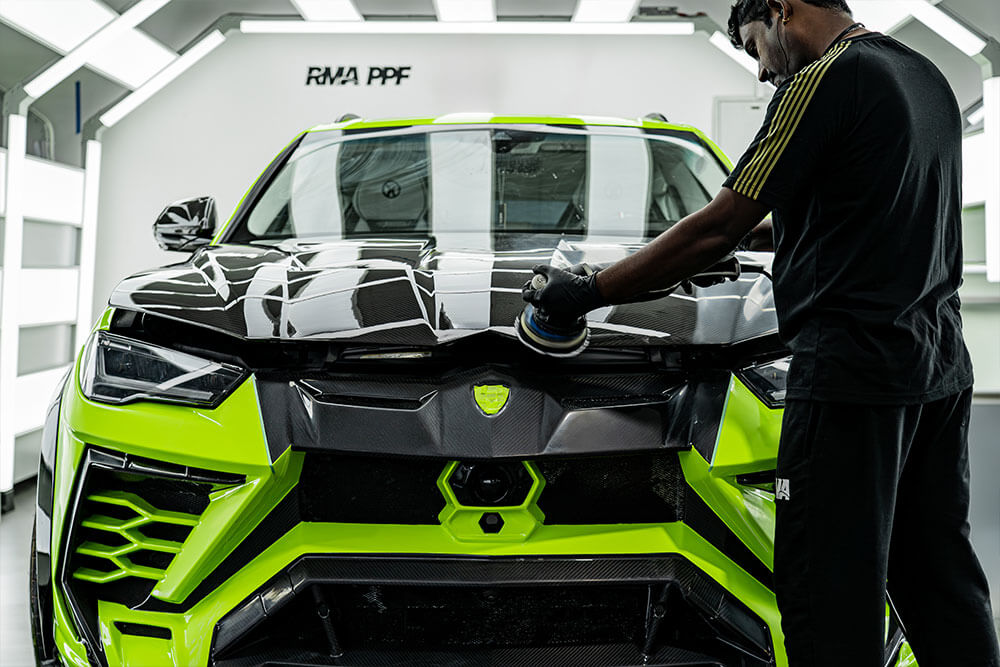
In Dubai, professional studios such as RMA PPF focus on controlled installation methods that preserve the intended finish of the film, especially on high end luxury and performance vehicles where visual perfection is expected.
Quality indicators for vehicle owners
For car owners, orange peel is often used as a visual indicator of film quality. Lower grade films tend to show more noticeable texture due to less refined surface layers. Premium films exhibit a smoother and more consistent finish, especially on flat panels such as doors and bonnets.
However, it is important to understand that a completely glass like surface is not always realistic in protective films. A minimal level of texture can still exist even in high quality products due to the functional nature of the material.
Technical perspective for vehicle owners
Orange peel should be viewed as a balance between optical clarity and functional durability. Paint protection film must remain flexible, impact resistant, and self healing while also maintaining visual consistency. The best results come from materials that minimize surface distortion without compromising protective performance, combined with precise installation practices that respect the natural behavior of the film.

Get In Touch
Stay Connected For Ultimate Car Care
 sales@rmappf.ae