

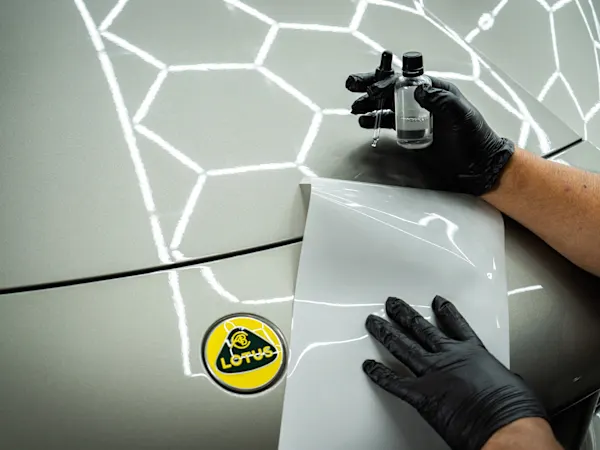
Paint protection film is often discussed in terms of durability, clarity, and resistance to damage. One technical detail that frequently comes up is thickness measured in microns. Many car owners assume that a thicker film automatically means better protection, but the reality is more nuanced. Film thickness is only one part of overall performance and must be understood alongside material quality and installation accuracy.
What microns actually mean
A micron is a unit of measurement used to describe the thickness of paint protection film. One micron equals one thousandth of a millimeter. Most automotive paint protection films fall within a range that is thin enough to remain visually invisible yet strong enough to absorb external impact.
Typical films used in the industry usually range between 150 and 200 microns depending on brand and product type. Within this range, the difference in protection is not determined by thickness alone but by how the material is engineered.
Does thicker film automatically mean better protection
A common assumption is that a thicker film provides superior resistance against scratches and stone chips. While thickness does contribute to impact absorption, it is not the deciding factor on its own.
If a film is thick but made from low quality material, it may not perform well under stress or heat. It could also lack clarity or flexibility, making installation more difficult and long term appearance less consistent.
On the other hand, a well engineered film with balanced thickness can perform better because it distributes impact efficiently while maintaining optical clarity and flexibility across curved surfaces.
Material composition matters more than thickness alone
Modern paint protection film is built using multiple layers including a clear coat, elastomeric layer, adhesive layer, and protective backing. Each layer contributes to performance in different ways such as self healing, UV resistance, and surface stability.
High quality films are designed to balance these layers rather than simply increasing overall thickness. This balance allows the film to remain stable under heat while still absorbing external impact without damage to the paint underneath.
A premium example used in professional installations is shogun PPF which is engineered to maintain clarity and durability while keeping a consistent thickness suitable for luxury and performance vehicles.
Installation accuracy and its effect on performance
Even the most advanced film will not perform correctly if installation is not handled with precision. Thickness can influence how a film behaves during application, especially around curves, edges, and complex body lines.
Experienced installers understand how to manage tension, alignment, and heat application so that the film sits evenly across the surface. Poor installation can create visible distortions, lifted edges, or trapped particles regardless of film thickness.
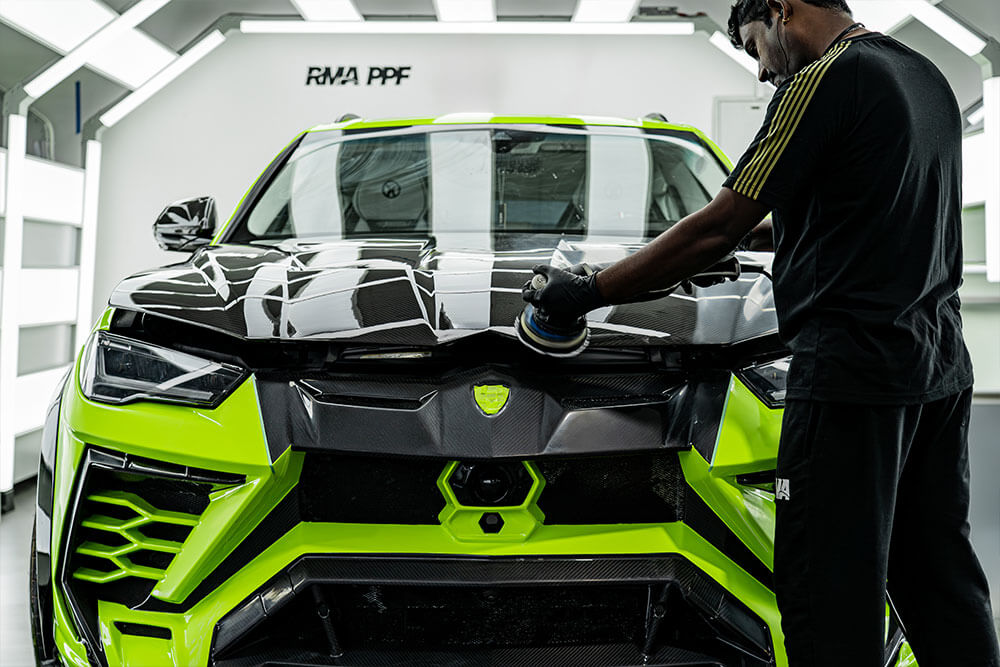
In Dubai, professional studios such as RMA PPF focus on controlled application techniques to ensure that the film performs as intended across different vehicle types and surface designs.
Thicker vs optimized design approach
Rather than focusing only on thickness, manufacturers now design films based on performance balance. A slightly thinner but more flexible and advanced film may outperform a thicker alternative that lacks structural consistency.
This is especially relevant for modern luxury and performance vehicles where surface curvature and paint finish quality require films that adapt smoothly without visual distortion.
Technical perspective for vehicle owners
For car owners in Dubai, understanding microns helps set realistic expectations. Thickness contributes to protection, but it does not replace material engineering or professional installation. The best results come from a combination of well designed film, correct thickness range, and precise application.
When these factors align, paint protection film provides consistent surface defense while maintaining the original appearance of the vehicle over time.


Get In Touch
Stay Connected For Ultimate Car Care
 sales@rmappf.ae