


Tar and road contamination are among the most stubborn forms of surface buildup affecting vehicle exteriors. These contaminants come from asphalt, road construction materials, and everyday driving conditions. In hot climates such as the UAE, tar softens more easily and bonds strongly to paint surfaces, making removal more challenging if not handled correctly.
Understanding how tar forms and how to remove it safely is essential for maintaining paint quality and preventing long term surface damage.
What tar contamination actually is
Tar is a sticky, petroleum based substance used in road construction and maintenance. When vehicles drive over freshly laid or softened asphalt, small particles of tar can attach themselves to tires, wheel arches, lower body panels, and even painted surfaces.
Once bonded, tar hardens as it cools and becomes resistant to normal washing methods. It appears as small black or brown spots that are difficult to remove through standard cleaning.
Why tar sticks more in hot climates
In regions like the UAE, high temperatures soften asphalt surfaces, increasing the likelihood of tar transfer onto vehicles. Heat also makes tar more pliable, allowing it to bond more effectively with paint and plastic surfaces.
Dust and sand in the environment further contribute by embedding tar particles into the surface layer, making contamination more persistent over time.
Risks of improper removal methods
One of the most common mistakes in tar removal is using excessive force or inappropriate tools. Scrubbing tar aggressively can damage the clear coat and create micro scratches on the paint surface.
Using harsh solvents without proper control can also weaken protective layers and dull the finish. These methods may remove tar quickly but often cause long term damage to the paint system.
Safe chemical removal techniques
The most effective method for tar removal involves using dedicated tar and adhesive removers. These products are formulated to break down petroleum based contaminants without harming the paint surface.
When applied correctly, the chemical softens the tar, allowing it to dissolve or be gently wiped away using a microfiber cloth. This minimizes physical abrasion and preserves the integrity of the clear coat, It is important to allow sufficient dwell time for the product to work before wiping, rather than attempting immediate removal.
Clay bar decontamination process
For more embedded contamination, clay bar treatment is often used after chemical removal. A detailing clay is designed to safely lift bonded particles from the paint surface without scratching.
When used with proper lubrication, the clay glides over the surface and removes remaining tar residue along with other contaminants such as industrial fallout and road film, This process restores smoothness to the paint and prepares the surface for protection.
Importance of surface protection after removal
After tar removal, applying a protective layer helps reduce future contamination bonding. Wax, sealants, or ceramic based coatings create a barrier that makes it harder for tar to adhere strongly to the surface.
In advanced automotive protection systems, high quality materials such as shogun PPF provide a physical shield against road contaminants, reducing direct contact with paint and making cleaning significantly easier.
Role of professional detailing care
Professional detailing services play an important role in safely removing tar without damaging the paint surface. Experienced technicians understand how to balance chemical strength, dwell time, and mechanical action for safe and effective results.
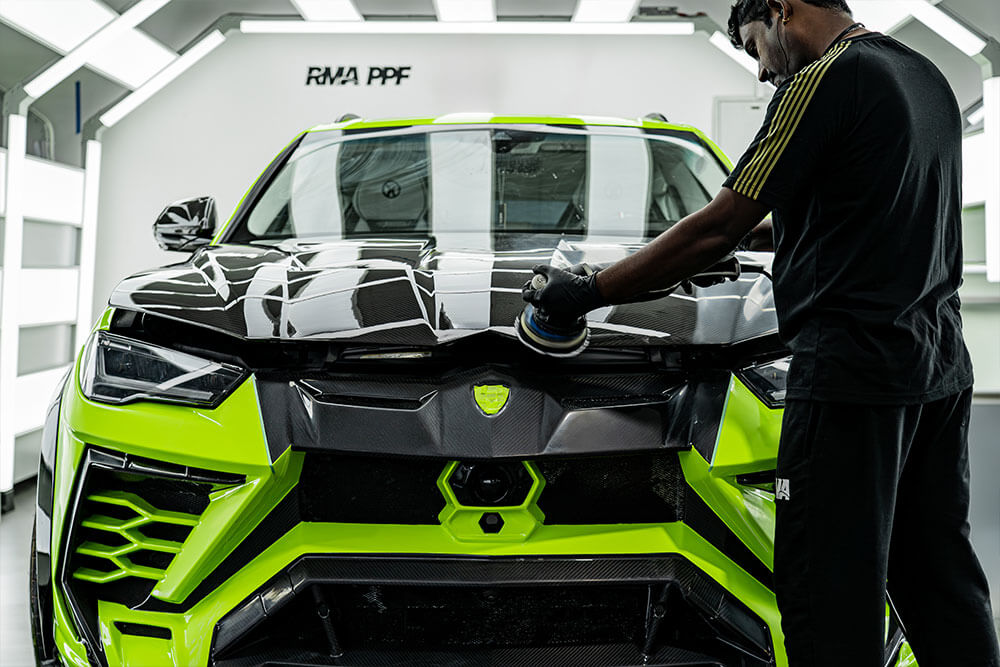
In the UAE, detailing specialists such as RMA PPF follow structured decontamination procedures that ensure thorough cleaning while preserving paint quality under harsh driving conditions.
Technical insight for vehicle owners
Tar contamination is a combination of heat activated bonding and environmental exposure. While it can be stubborn, it is safely removable when correct chemical and mechanical methods are used. Preventive protection and regular decontamination help maintain paint clarity, reduce long term staining risk, and preserve overall exterior finish quality in demanding road environments.

Get In Touch
Stay Connected For Ultimate Car Care
 sales@rmappf.ae