

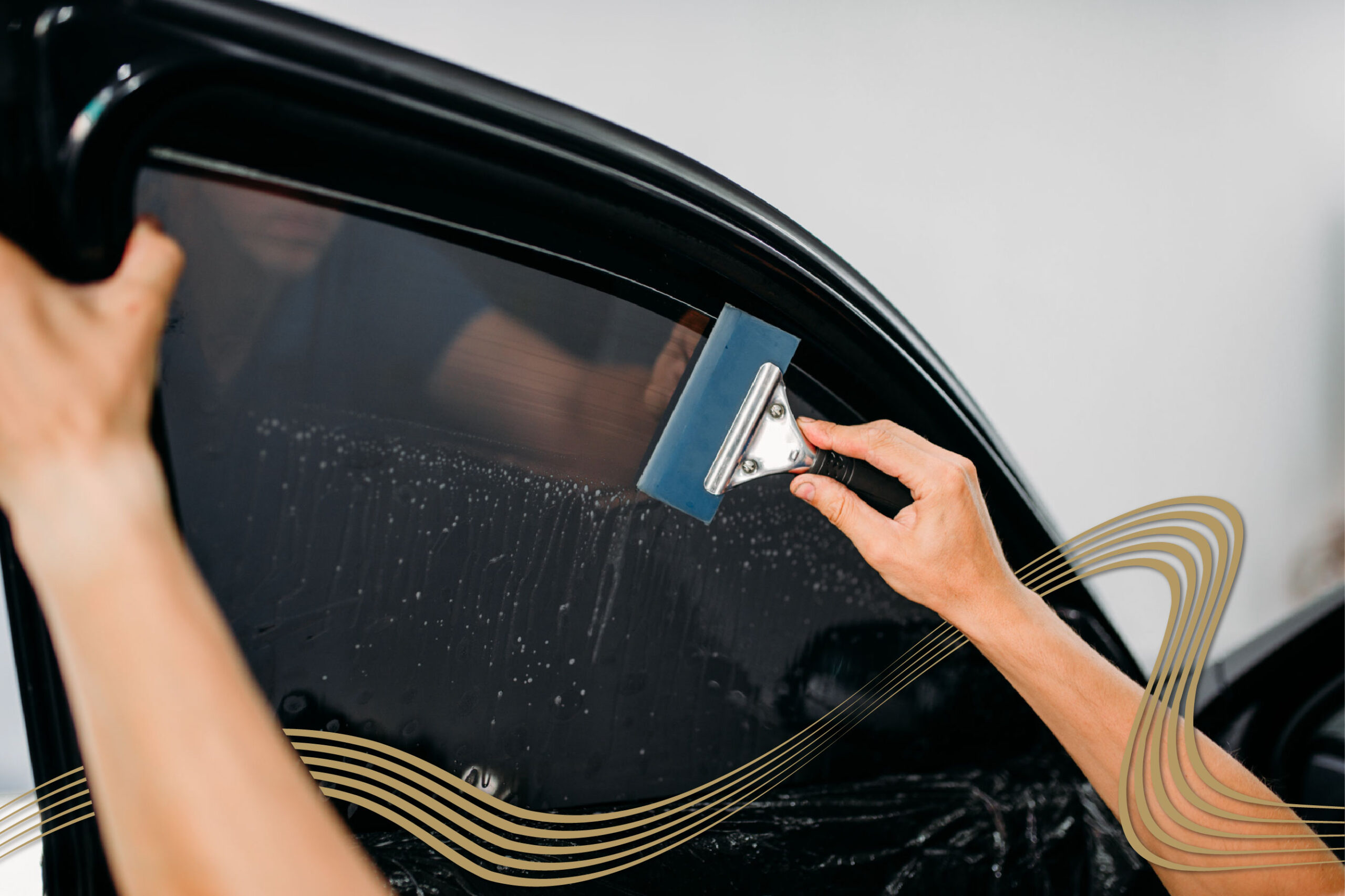
Smart Tint is an electronically switchable glass or film technology that allows users to change the appearance of glass with electrical control. Depending on the technology, smart film can switch between transparent and frosted privacy states, while smart glass systems such as SPD can move between lighter and darker tint levels while maintaining a view through the glass.
Unlike conventional window tint, which has a fixed appearance once installed, smart tint provides adjustable control over privacy, light, glare, and in some applications solar heat. It is being used in luxury vehicles, offices, meeting rooms, hotels, residential spaces, and modern architectural projects.
The technology is particularly interesting for applications where privacy or light levels need to change throughout the day.
Smart Tint at a Glance
| Feature | Smart Tint |
| Adjustable Privacy | Yes |
| Adjustable Light Control | Yes, depending on technology |
| Heat Reduction | Depends on product and technology |
| UV Protection | Product dependent |
| Electrically Controlled | Yes |
| Switching | Fast, depending on system |
| Power Required | Yes |
| Best For | Luxury vehicles, offices, hotels, homes, and specialised spaces |
The exact performance depends on the technology, glass construction, film specification, and installation. Smart tint should therefore be treated as a category of switchable glazing rather than one single type of product.
How Does Smart Tint Work?
The basic principle is relatively simple.
1. Electricity Is Applied
The smart film or glass is connected to a suitable electrical control system.
2. The Active Layer Responds
Depending on the technology, electrical energy changes the behaviour or alignment of particles or liquid crystals inside the active layer.
3. The Appearance Changes
The glass moves between different optical states.
4. The User Controls the Result
The system can be controlled using a switch, remote, controller, automation system, or other compatible interface.
PDLC, for example, uses liquid crystals within a polymer matrix. When powered, the crystals align so light can pass through more directly. When power is removed, the crystals scatter light, producing a frosted or opaque appearance.
SPD works differently. It uses suspended particles that respond to electrical control and can move between darker and lighter transparent states. This makes SPD particularly suited to adjustable shading where maintaining an outside view is important.
Smart Tint Is Not Just One Technology
This distinction is important when researching smart tint.
PDLC Smart Film
PDLC stands for Polymer Dispersed Liquid Crystal.
It is primarily associated with privacy switching. The glass can move between a clear state and a diffused or frosted state.
This makes PDLC particularly useful for:
• Office meeting rooms
• Vehicle privacy applications
• Hotel rooms
• Residential glass partitions
• Medical environments
• Interior glass walls
SPD Smart Glass
SPD stands for Suspended Particle Device.
Instead of simply switching between clear and frosted, SPD can provide variable tint levels while maintaining a transparent view. It is used in automotive applications including sunroofs, windows, and sun visors, as well as architectural glazing.
Electrochromic Glass
Electrochromic technology changes its optical properties through an electrochemical process. Unlike some fast switching systems, electrochromic glass generally changes tint more gradually.
This technology is another example of why the term “smart glass” does not describe only one technical system.
Smart Tint vs Traditional Window Tint
This is one of the most useful comparisons for someone considering the technology.
| Feature | Smart Tint | Traditional Tint |
| Privacy Control | Adjustable | Fixed |
| Light Control | Adjustable depending on technology | Fixed |
| Heat Rejection | Depends on technology | Depends on film |
| UV Protection | Product dependent | Product dependent |
| Electrical Power Required | Yes | No |
| Cost | Higher | Lower |
| Maintenance | Generally low | Generally low |
| Installation | More specialised | More straightforward |
Traditional window tint is still the more practical option for most everyday vehicles because it provides predictable performance without electrical components.
Smart tint becomes more interesting when adjustable privacy or light control is more important than simply reducing heat.
Where Is Smart Tint Commonly Used?
Smart tint is not limited to automotive applications.
| Application | Why It Is Used |
| Luxury vehicles | Adjustable privacy and light control |
| Executive offices | Privacy during meetings |
| Hospitals | Privacy without conventional curtains |
| Hotels | Premium guest experience |
| Residential homes | Adjustable privacy |
| Showrooms | Dynamic visual environments |
| Aircraft and trains | Passenger light control |
| Modern architecture | Adjustable shading and privacy |
Automotive smart glass is already being developed for applications such as sunroofs, windows, and sun visors, while architectural systems can be integrated with automated controls and sensors.
What Are the Benefits of Smart Tint?
The biggest advantage is control.
Adjustable Privacy
Instead of having permanently dark glass, users can change the optical state when privacy is required.
Flexible Light Control
Certain technologies allow users to control the amount of visible light entering the space.
Modern Appearance
Smart glass eliminates the need for some conventional blinds, curtains, or fixed privacy solutions.
Potential UV Protection
Some smart film products provide UV protection, but the actual level depends on the specific film. Product specifications should always be checked before making a performance claim.
Automation
Smart glass can be integrated with controllers, switches, sensors, and building or vehicle systems depending on the installation.
Smart Tint Benefits vs Limitations
A balanced view is important because smart tint is not automatically better than conventional tint.
| Benefits | Limitations |
| Instant or fast privacy control | Higher installation cost |
| Modern appearance | Requires electrical integration |
| Adjustable light control | Product availability varies |
| Can provide UV protection | Performance depends on technology |
| Automation capable | Professional installation required |
| No moving curtains or shades | Not suitable for every vehicle or glass type |
The switching speed also varies considerably between products. For example, some PDLC products are specified to switch in fractions of a second, while other systems can take longer depending on their construction and controller.
Is Smart Tint Right for Your Vehicle?
Smart tint is most useful when adjustable privacy is an actual requirement.
| If you | Smart Tint May Be Suitable |
| Want adjustable privacy | ✅ |
| Own a luxury vehicle | ✅ |
| Frequently use your vehicle for business meetings | ✅ |
| Want dynamic light control | ✅ |
| Need maximum heat rejection only | Compare with premium ceramic tint |
| Have a limited budget | Traditional ceramic tint may be more practical |
| Want a simple maintenance free solution | Traditional tint may be more suitable |
For a daily commuter who mainly wants heat reduction and UV protection, a high quality ceramic film may offer a simpler and more cost effective solution.
For a luxury vehicle where privacy needs change depending on the situation, smart tint can provide capabilities that conventional film cannot.
Smart Tint vs Ceramic Window Tint
This is one of the most important comparisons for car owners.
| Smart Tint | Ceramic Tint |
| Adjustable privacy | Fixed privacy |
| Electronic operation | No electronics |
| Dynamic transparency | Fixed VLT |
| Premium pricing | Generally more affordable |
| Specialised installation | Established installation process |
| Best for specialised applications | Best for most daily drivers |
| Heat performance varies by technology | Strong thermal performance available |
Ceramic tint remains a strong choice when the main goals are heat rejection, UV protection, glare reduction, and everyday comfort.
Smart tint becomes more compelling when adjustable privacy and light control are the priority.
The two technologies should therefore not always be treated as direct substitutes.
Does Smart Tint Reduce Heat?
It can, but this is where buyers need to look beyond the word “smart.”
Smart tint does not have one universal heat rejection specification. Performance depends on whether the product uses PDLC, SPD, electrochromic technology, additional solar control layers, or another construction.
For example, an SPD system can provide variable shading and glare control, while some smart film products primarily focus on privacy switching.
If heat rejection is your main objective, compare the product’s actual technical specifications rather than assuming that smart technology automatically means maximum thermal performance.
Common Smart Tint Misconceptions
| Myth | Reality |
| Smart Tint is simply darker window film | It uses electrically controlled technology |
| It replaces every type of conventional tint | Different products solve different problems |
| It automatically blocks all heat | Performance depends on the technology and product |
| Every smart film becomes completely clear | Optical performance varies between products |
| Smart Tint requires constant maintenance | The film itself generally requires limited routine care |
| All smart glass works the same way | PDLC, SPD, and electrochromic systems operate differently |
Understanding these differences is important before comparing prices.
What Happens If the Power Is Turned Off?
The answer depends on the technology.
Many PDLC systems are designed so that the film becomes frosted or opaque when power is removed and clear when power is applied. This is commonly called a fail opaque configuration.
Other smart glass technologies can have different operating principles.
This means buyers should ask the installer what state the specific system enters when power is interrupted.
What Should You Consider Before Installation?
Smart tint requires more planning than traditional window film.
Vehicle Compatibility
Not every vehicle window is suitable for every smart film system. Curvature, glass construction, available installation space, and electrical access all need to be considered.
Electrical Requirements
Smart film requires electrical connections and an appropriate controller. Automotive installations need careful integration with the vehicle’s electrical system.
Installation Expertise
Poor installation can affect optical quality, wiring, adhesion, and long term reliability.
Warranty Coverage
Ask what the warranty covers and whether it applies to the film, electrical components, controller, installation, or all of these.
Local Regulations
For vehicles in the UAE, window modifications should be checked against current requirements before installation. UAE traffic legislation gives licensing authorities control over vehicle modifications and requires applicable modifications to be approved and inspected under the relevant procedures.
Long Term Maintenance
Ask what happens if the controller, wiring, or film develops a fault. Smart tint has an electrical component that conventional tint does not.
Is Smart Tint the Future of Window Tinting?
Smart tint has clear potential, particularly where users want glass to become an active part of the vehicle or building rather than a permanently tinted surface.
Automotive smart glass is already being used and developed for applications such as sunroofs, windows, and sun visors. Some systems can also integrate with sensors and automated controls.
However, smart tint is not necessarily a replacement for conventional window film.
For most daily drivers, ceramic tint remains a practical solution for thermal comfort, UV protection, glare reduction, and privacy. Smart tint is more specialised and becomes valuable when dynamic control is the main requirement.
A Simple Decision Guide
Use this approach when deciding between smart tint and conventional film.
Choose Smart Tint If
• Adjustable privacy is important
• You want electronic control
• You own a luxury or specialised vehicle
• You want dynamic light control
• You are comfortable with a higher installation cost
Consider Ceramic Tint If
• Heat rejection is your main priority
• You want UV protection
• You want fixed privacy
• You want a simpler installation
• You want strong performance without electrical components
RMA PPF Insight
RMA PPF Insight: Smart tint is interesting because it changes what window film can do. Instead of providing one fixed level of darkness, switchable technology can give the driver or occupant greater control over privacy and light. But the technology should be selected based on the actual requirement. If heat rejection is the priority, a premium ceramic film may be more practical. If adjustable privacy is the priority, smart tint offers capabilities that conventional tint cannot provide.
The Bottom Line
Smart Tint is an electronically controlled glass or film technology that allows the optical properties of a window to change on demand. Depending on the system, it can provide switchable privacy, adjustable shading, glare control, and other functions that conventional window tint cannot offer.
The most important thing to understand is that Smart Tint is a category, not one single technology. PDLC, SPD, and electrochromic systems work differently and are suited to different applications.
For luxury vehicles, offices, hotels, homes, and specialised spaces, smart tint can provide a more flexible approach to privacy and light control. But for everyday car owners who mainly want heat rejection, UV protection, and fixed privacy, a quality ceramic window film may still be the more practical solution.
Before choosing a smart tint, compare the technology, switching behaviour, VLT, heat and UV performance, electrical requirements, warranty, vehicle compatibility, and local regulations. That gives you a much clearer picture of whether smart tint is genuinely the right solution for your needs.

Murray Kid
Automotive Expert
Murray Kid is an automotive expert with over 20 years of experience in vehicle protection and car care. Specializing in paint protection film (PPF) and detailing services, Murray has worked with leading brands to bring the latest in vehicle maintenance technologies. Passionate about educating car enthusiasts, he shares insights on the best practices for maintaining and protecting your vehicle’s paint, from PPF applications to ceramic coatings. When he isn't working on vehicles, Murray enjoys staying up-to-date with the latest trends in automotive technology and innovation.

Get In Touch
Stay Connected For Ultimate Car Care
 sales@rmappf.ae