

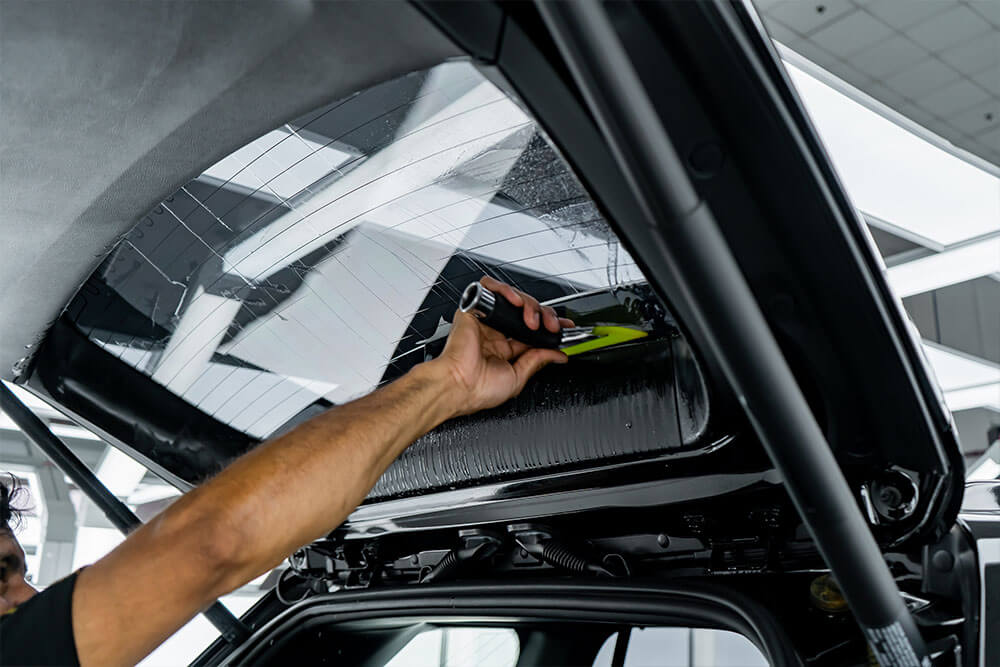
The heat shrinking process is one of the most important steps in professional window tint installation. It is what allows a flat sheet of film to conform smoothly to curved glass surfaces, especially on rear windshields and complex automotive windows. Without this process, achieving a clean and uniform finish would be extremely difficult, particularly on modern vehicles with heavily curved glass designs.
Understanding how heat shrinking works explains why professional installation produces a visually seamless result compared to basic or untrained application.
Why window tint needs heat shrinking
Window glass in vehicles is rarely flat. Rear windshields, in particular, often have a compound curve that bends in multiple directions. Window tint film, however, starts as a flat material. When applied directly without preparation, it would naturally wrinkle, bubble, or lift due to the mismatch between flat film and curved glass.
Heat shrinking solves this issue by reshaping the film before final installation. It allows the material to adapt to the exact curvature of the glass, ensuring smooth contact and consistent adhesion.
How the heat shrinking process works
Professionals begin by placing the tint film on the exterior side of the glass. This allows them to work with the natural curve of the window before installation on the interior surface.
Once positioned, controlled heat is applied using a heat gun. The heat causes the film to temporarily contract and relax. As the material responds, it begins to take the shape of the glass curvature. Installers carefully guide this process by moving the heat source evenly across the surface.
The goal is not to overheat the film but to gradually shape it until it mirrors the contour of the glass. This requires experience, as excessive heat can damage the film or cause uneven shrinkage.
The role of controlled sections and pattern shaping
On complex rear windshields, installers often divide the film into sections. Each section is shrunk individually to match different areas of the curve. This ensures that the film fits uniformly without tension points that could lead to lifting later.
Small imperfections are adjusted during this stage before the film is transferred to the interior side of the glass for final installation.
Why heat shrinking improves long term performance
Properly heat shrunk film adheres more evenly to the glass surface. Because the material has already been shaped to match the curvature, there is less internal tension after installation. This reduces the risk of bubbling, peeling, or edge lifting over time.
It also improves visual clarity. A properly shrunk film sits flush against the glass, reducing distortion and ensuring a smooth, factory like appearance.
Material quality and shrinkability
Not all window tint films respond to heat in the same way. High quality films are designed with stable polymer structures that allow controlled shrinking without compromising optical clarity or durability.
A well engineered example is shogun PPF which focuses on material stability and consistent performance under controlled installation conditions. Films with better shrinkability allow installers to achieve a cleaner finish with less risk of visual distortion.
Importance of installer skill
Heat shrinking is highly dependent on technician experience. Understanding how much heat to apply, how long to apply it, and how the film reacts in real time is critical. Every vehicle model behaves slightly differently, especially when glass curvature varies between manufacturers.
In Dubai, professional installation standards followed by studios such as RMA PPF ensure that tint films are shaped with precision before final placement, particularly on luxury and performance vehicles where visual perfection is expected.
Technical insight for vehicle owners
The heat shrinking process is essential for achieving a seamless window tint finish on curved automotive glass. It allows the film to match the exact geometry of the window, reducing stress within the material and improving long term durability. When performed correctly, it ensures that window tint not only looks smooth at installation but continues to maintain its appearance and adhesion over time under daily driving conditions.

Get In Touch
Stay Connected For Ultimate Car Care
 sales@rmappf.ae